


Judicial Activism, Judicial Restraint and Judicial Overreach

Judicial Activism, Judicial Restraint and Judicial Overreach are three important concepts that explain how courts use their powers in a democracy. In India, the judiciary plays a key role in protecting the Constitution, safeguarding Fundamental Rights, and ensuring justice. However, there is always a need to maintain a balance between the powers of the judiciary, legislature, and executive.
Thank you for reading this post, don't forget to subscribe!Understanding these three concepts helps us know when courts should actively protect citizens, when they should avoid interfering in government decisions, and when they may go beyond their constitutional limits.
What is Judicial Activism?
Judicial Activism means the judiciary takes an active role in protecting the rights of people and ensuring justice when other branches of government fail to act properly.
This concept first developed in the United States and later became important in India. The Supreme Court and High Courts have the power to examine whether a law follows the Constitution. If a law violates constitutional provisions, these courts can declare it unconstitutional.
However, subordinate courts in India do not have this power.
Origin of Judicial Activism
The term Judicial Activism was introduced by historian Arthur Schlesinger Jr. in 1947.
In India, the foundation of judicial activism was laid by respected judges such as:
- Justice V. R. Krishna Iyer
- Justice P. N. Bhagwati
- Justice O. Chinnappa Reddy
- Justice D. A. Desai
These judges expanded access to justice and encouraged courts to protect the rights of ordinary citizens.
Why Judicial Activism Became Necessary
Judicial activism became important because many public problems remained unsolved for years.
Some major reasons include:
- Failure of the executive to perform its duties.
- Delay in law making by the legislature.
- Corruption in public administration.
- Violation of Fundamental Rights.
- Increasing social injustice.
- Growing number of Public Interest Litigations (PILs).
When other organs of government failed to act effectively, courts stepped in to protect constitutional values and public welfare.
Importance of Judicial Activism
Judicial activism has helped India in many ways.
Its major benefits are:
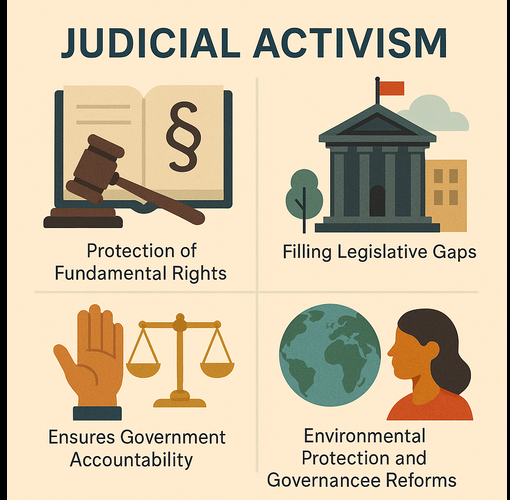
- Protects Fundamental Rights.
- Promotes social justice.
- Prevents misuse of government power.
- Helps weaker sections of society.
- Ensures accountability in public administration.
- Strengthens democracy and the rule of law.
It has also encouraged government authorities to perform their constitutional responsibilities more responsibly.
Famous Examples of Judicial Activism
Kesavananda Bharati Case (1973)
The Supreme Court introduced the Basic Structure Doctrine. It ruled that Parliament cannot change the basic structure of the Constitution through constitutional amendments.
Vishaka Case (1997)
The Supreme Court issued guidelines to prevent sexual harassment at workplaces because no law existed at that time. These guidelines remained effective until Parliament passed a proper law.
Hussainara Khatoon Case (1979)
The Court declared that the Right to Speedy Trial is a Fundamental Right under Article 21.
Sheela Barse Case (1983)
The Court acted on a journalist’s letter regarding the custodial violence faced by women prisoners and treated it as a writ petition.
Golaknath Case (1967)
The Supreme Court held that Parliament could not amend Fundamental Rights through constitutional amendments.
Criticism of Judicial Activism
Although judicial activism has protected citizens’ rights, it also faces criticism.
Some concerns include:
- It may reduce the authority of Parliament.
- It can disturb the balance among the three organs of government.
- It may violate the principle of Separation of Powers.
- Courts may enter areas better handled by experts or elected representatives.
Because of these concerns, judicial activism should always be exercised carefully.
What is Judicial Restraint?
Judicial Restraint is the opposite of judicial activism.
It means judges should exercise self control and avoid unnecessary interference in government policies. Courts should mainly interpret laws instead of making new policies.
Under judicial restraint, judges usually:
- Follow the original meaning of the Constitution.
- Respect previous court decisions.
- Avoid replacing the role of lawmakers.
- Allow elected governments to make public policies.
This approach helps maintain balance among the legislature, executive, and judiciary.
Importance of Judicial Restraint
Judicial restraint supports democracy in several ways.
It:
- Maintains Separation of Powers.
- Respects decisions of elected governments.
- Reduces unnecessary judicial interference.
- Ensures stability in the legal system.
- Encourages Parliament to perform its duties.
This approach recognizes that policy making should mainly remain with elected representatives.
Examples of Judicial Restraint
S. R. Bommai Case (1994)
The Supreme Court observed that certain political matters are beyond judicial review. This showed respect for the political process.
Almitra H. Patel Case (1998)
The Court refused to manage the day to day work of municipal authorities regarding Delhi’s cleanliness. Instead, it directed authorities to perform their legal duties.
These cases demonstrate that courts sometimes deliberately avoid interfering in executive functions.
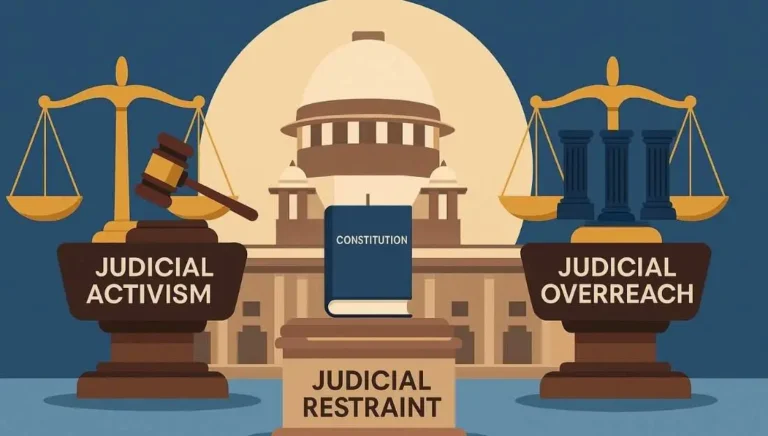
What is Judicial Overreach?
Judicial Overreach happens when courts go beyond their constitutional role and interfere excessively in matters belonging to the executive or legislature.
It is often described as judicial activism crossing its constitutional limits.
In such situations, courts may begin making decisions that should normally be taken by elected governments or administrative authorities.
Why Judicial Overreach is a Concern
Judicial overreach can create several problems.
These include:
- Weakening the Separation of Powers.
- Reducing the role of Parliament.
- Creating conflicts between constitutional institutions.
- Affecting democratic accountability.
- Interfering in administrative decisions requiring expert knowledge.
For a healthy democracy, each organ of government must work within its own constitutional limits.
Examples of Judicial Overreach
Jolly LLB 2 Film Case
The Bombay High Court appointed a committee to review the movie even though the Central Board of Film Certification was already responsible for film certification. Many legal experts viewed this as unnecessary judicial interference.
Liquor Ban Near Highways
The Supreme Court banned the sale of liquor within 500 metres of national and state highways to improve road safety.
While the decision aimed to reduce accidents, critics argued that it entered the policy making domain of the executive and affected state revenues and employment.
How Judicial Activism Works in India
Judicial activism is mainly carried out through the following methods.
Judicial Review
Judicial Review allows courts to examine whether laws and government actions follow the Constitution.
If a law violates constitutional provisions, the Supreme Court or High Courts can declare it invalid.
Public Interest Litigation (PIL)
Public Interest Litigation allows any public spirited person to approach courts for matters affecting society.
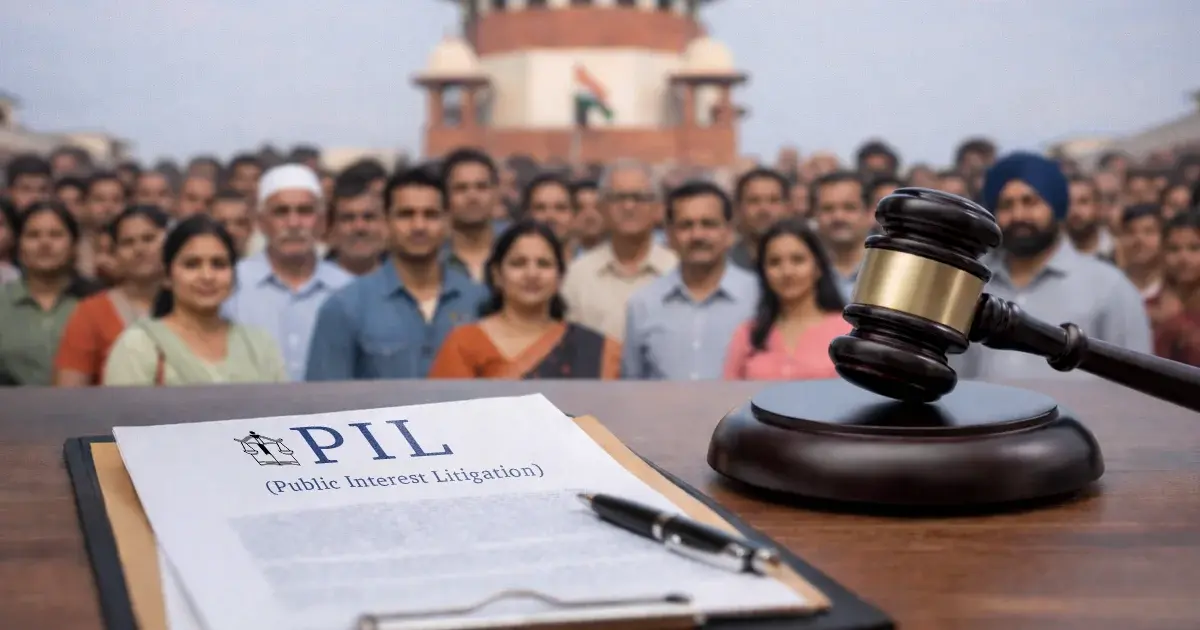
PIL has helped poor and disadvantaged people receive justice even when they could not approach the courts themselves.
Constitutional Interpretation
Courts interpret the Constitution according to changing social needs while protecting constitutional values.
This helps resolve new legal challenges that may not have existed when the Constitution was written.
International Law
Indian courts sometimes refer to international treaties and conventions while protecting constitutional rights, especially when domestic laws are silent on certain issues.
Difference Between Judicial Activism, Judicial Restraint and Judicial Overreach
| Basis | Judicial Activism | Judicial Restraint | Judicial Overreach |
|---|---|---|---|
| Meaning | Active role of courts to protect rights | Courts avoid unnecessary interference | Courts exceed their constitutional limits |
| Main Objective | Protect justice and rights | Maintain constitutional balance | Excessive interference in government functions |
| Role of Judges | Proactive | Limited and cautious | Overly interventionist |
| Policy Making | Sometimes influences policy | Leaves policy to legislature | Directly interferes in policy decisions |
| Effect | Protects citizens when government fails | Preserves Separation of Powers | Creates conflict among institutions |
Judicial Activism vs Judicial Restraint
Both approaches are important in a constitutional democracy.
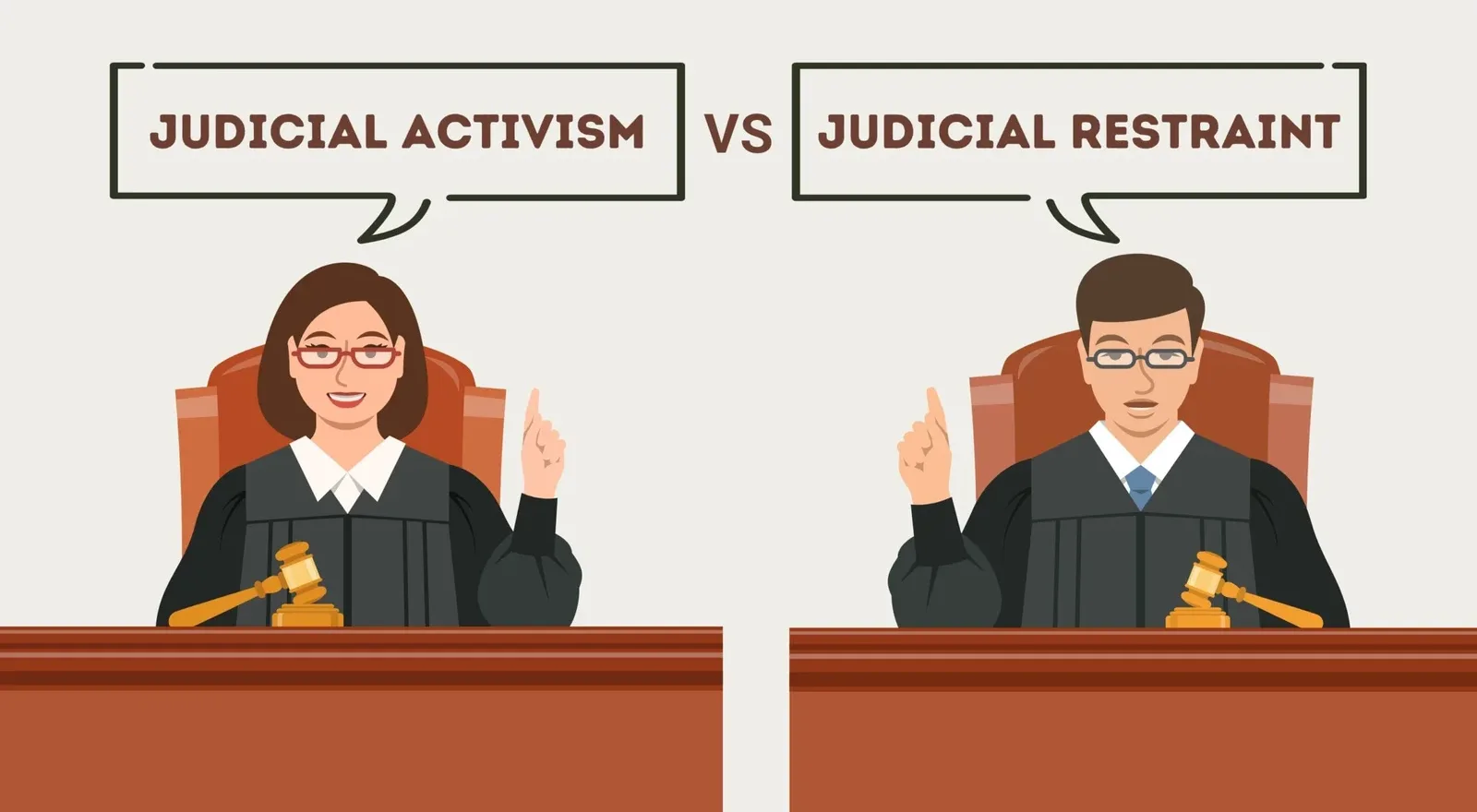
Judicial Activism is useful when citizens’ rights are threatened or when government authorities fail to perform their duties.
Judicial Restraint is necessary because judges should not replace elected governments in making policies.
A balance between these two approaches helps maintain constitutional governance.
Challenges Before the Judiciary
The judiciary today faces several challenges while maintaining this balance.
Some of them include:
- Increasing number of Public Interest Litigations.
- Delays in disposal of cases.
- Pressure from public opinion.
- Maintaining judicial independence.
- Avoiding unnecessary interference in executive decisions.
- Protecting constitutional values while respecting democratic institutions.
The judiciary must carefully decide when to intervene and when to exercise restraint.
Final Thoughts
Judicial Activism, Judicial Restraint and Judicial Overreach are essential concepts for understanding India’s constitutional system. Judicial activism has protected Fundamental Rights, promoted social justice, and strengthened democracy during difficult times. Judicial restraint reminds courts to respect the powers of the legislature and executive. Judicial overreach, however, can disturb the balance among constitutional institutions if courts go beyond their assigned role.
A strong democracy depends on cooperation among the judiciary, legislature, and executive. Each institution must perform its constitutional responsibilities while respecting the limits of its authority. When this balance is maintained, the Constitution remains strong, citizens’ rights are protected, and democratic governance becomes more effective.
FAQs
1. What is Judicial Activism?
Judicial Activism is when courts take an active role in protecting citizens’ rights and ensuring justice, especially when the legislature or executive fails to act.
2. What is Judicial Restraint?
Judicial Restraint is the approach where judges limit the use of their powers and avoid interfering in policy decisions made by the government.
3. What is Judicial Overreach?
Judicial Overreach happens when courts go beyond their constitutional powers and interfere in the functions of the legislature or executive.
4. What is the difference between Judicial Activism and Judicial Restraint?
Judicial Activism encourages courts to actively protect rights, while Judicial Restraint focuses on limiting judicial intervention and respecting the roles of other branches of government.
5. Why is Judicial Activism important in India?
It helps protect Fundamental Rights, promotes social justice, and ensures accountability when government institutions fail to perform their duties.
6. What is Judicial Review?
Judicial Review is the power of the Supreme Court and High Courts to examine whether laws and government actions are constitutional.
7. What is Public Interest Litigation (PIL)?
Public Interest Litigation (PIL) allows any public-spirited person to approach the court to protect the rights of the public or disadvantaged groups.
8. Can subordinate courts declare a law unconstitutional?
No. Only the Supreme Court and High Courts have the power to declare a law unconstitutional.