


Hate Crime: Meaning, Causes, Laws, Effects and Prevention

What is Hate Crime?
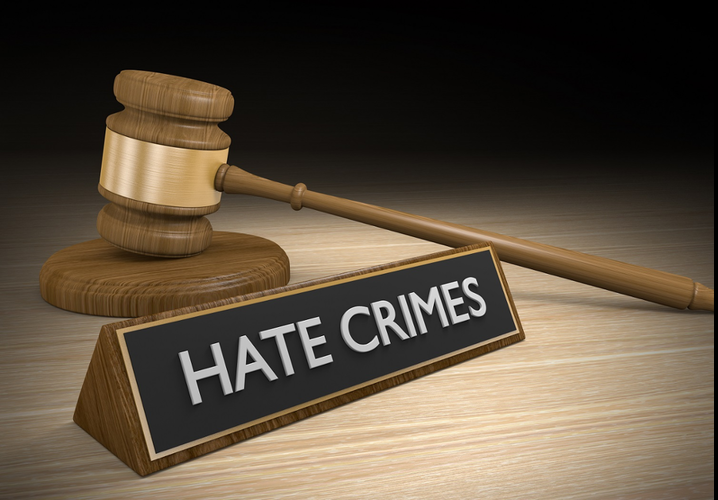
Hate Crime is a criminal act committed against a person or a group because of their religion, caste, race, language, ethnicity, culture, or other identity. In these crimes, the offender targets the victim because of prejudice or bias rather than any personal reason.
Thank you for reading this post, don't forget to subscribe!Today, hate crime is not limited to physical violence. It also includes threats, abusive language, hateful messages, discrimination, offensive speeches, and online harassment that encourage hatred or violence against a particular group.
A hate crime does not only hurt the victim. It also creates fear among people belonging to the same community and weakens peace and unity in society.
Key Features of Hate Crime
- Motivated by hatred or prejudice.
- Targets a person’s identity rather than personal actions.
- Can include physical violence, verbal abuse, threats, or property damage.
- Affects both individuals and the larger community.
- Creates fear, insecurity, and social division.
Hate Crime in India
In India, hate crime is generally understood as an offence committed against people because of their religion, caste, ethnicity, language, or community identity. Although the term “hate crime” is not officially defined in Indian law, many related offences are punishable under different legal provisions.
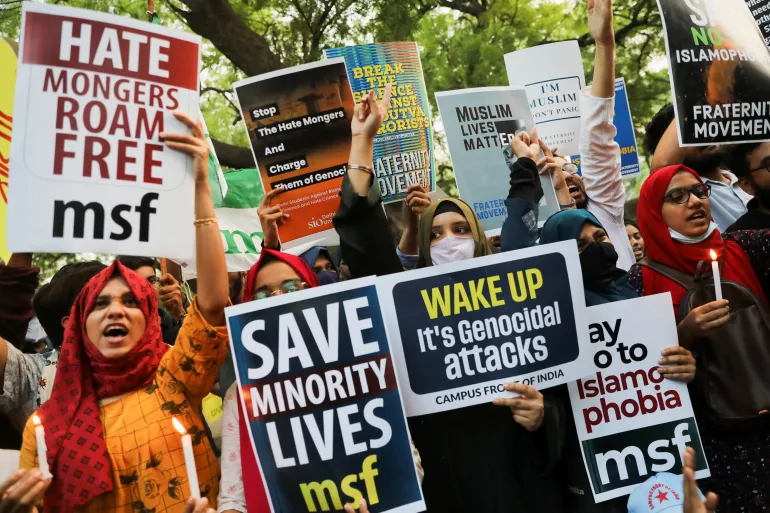
India is a country with many religions, cultures, and languages. Because of this diversity, maintaining harmony is very important. Hate crimes disturb social peace and can lead to conflicts between different communities.
Hate speech is also prohibited under several Indian laws when it promotes hatred or violence against any group based on religion, caste, race, language, or ethnicity.
Statistics Related to Hate Crime
According to various reports:
| Category | Details |
|---|---|
| Time Period | September 2015 to December 2019 |
| Total Reported Hate Crimes | Around 902 cases |
| Most Targeted Community | Dalits |
| Second Most Targeted Community | Muslims |
| Common Reasons | Caste discrimination, religion, honour killing, alleged love jihad and communal conflicts |
These figures show that hate crimes remain a serious social issue and require stronger preventive measures.
Causes of Hate Crime
1. Prejudice and Bias
The biggest reason behind hate crime is prejudice against a particular group. Some people develop negative opinions about others because of their religion, caste, race, or culture.
Such prejudice often leads to discrimination and sometimes violent crimes.
2. Social Environment
Society also plays an important role. When discrimination becomes common or accepted in a community, offenders may feel they can commit hate crimes without punishment.
An unequal social system increases the chances of such crimes.
3. Fear and Misunderstanding
Some people believe that certain communities threaten their jobs, traditions, religion, or social values. These false beliefs may encourage hatred and violence.
These threats are generally of two types:
- Realistic threats such as competition for jobs, housing, or resources.
- Symbolic threats where people think their traditions or values are under attack.
4. Influence of Rumours and Social Media
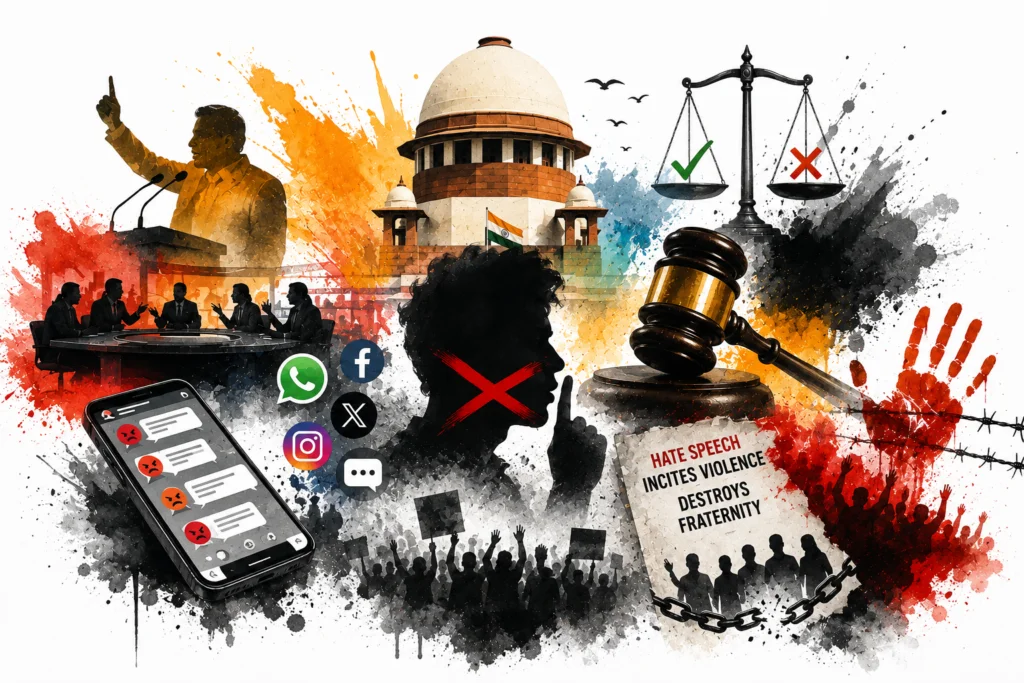
False information, fake news, and rumours spread through social media can quickly create anger and hatred. Many hate crimes begin because people believe misleading information without checking the facts.
5. Different Types of Offenders
Researchers have identified different kinds of people who commit hate crimes.
| Type | Description |
|---|---|
| Thrill Seekers | Commit crimes for excitement or entertainment. |
| Defensive Offenders | Believe they are protecting their community or territory. |
| Retaliators | Attack others as revenge for a real or imagined incident. |
| Mission Offenders | Believe it is their duty to remove or harm people who are different. |
Effects of Hate Crime
Psychological Problems
Victims of hate crime often suffer from serious emotional and mental stress.
They may experience:
- Fear
- Anxiety
- Depression
- Anger
- Loss of confidence
- Post-traumatic stress disorder (PTSD)
The emotional impact is usually stronger than ordinary crimes because victims are targeted for who they are.
Fear in the Community
A hate crime affects not only the victim but also the entire community to which the victim belongs.
People may begin to feel unsafe in schools, workplaces, neighbourhoods, and public places.
Weakening Social Unity
Frequent hate crimes reduce trust among different communities and increase social division. They can disturb peace and create long-term conflicts.
Damage to National Harmony
A country develops best when people live together peacefully. Hate crimes weaken national unity and reduce public confidence in law and order.
Indian Laws Against Hate Crime
Although the term hate crime is not directly mentioned in Indian laws, several legal provisions punish acts that spread hatred or violence.
Important Sections of the Indian Penal Code (IPC)
| IPC Section | Purpose |
|---|---|
| Section 153A | Punishes promoting enmity between different groups. |
| Section 153B | Punishes statements harmful to national integration. |
| Section 295A | Punishes deliberate insults to religious beliefs. |
| Section 298 | Punishes words intended to hurt religious feelings. |
| Section 505(1) | Punishes rumours that may create public disorder. |
| Section 505(2) | Punishes statements promoting hatred between communities. |
These laws help maintain peace by preventing speeches or actions that encourage communal hatred.
Representation of the People Act, 1951
The Representation of the People Act also contains provisions against hate speech during elections.
Important sections include:
- Section 8
- Section 8A
- Section 123(3)
- Section 123(3A)
- Section 125
These provisions treat hate speech during elections as an electoral offence or corrupt practice.
How to Prevent Hate Crime
Stronger Laws
India needs updated laws to deal with hate speech on the internet and social media. Existing laws can be strengthened by making suitable changes in the Indian Penal Code and the Information Technology Act.
Public Awareness
People should understand that every citizen has equal rights regardless of religion, caste, language, or community.
Awareness campaigns can help reduce prejudice and promote respect for diversity.
Community Policing
Police and local communities should work together to prevent hate crimes.
Regular interaction between police and citizens helps build trust and allows early reporting of suspicious activities.
Responsible Use of Social Media
People should verify information before sharing it online. Fake news and rumours should not be forwarded.

Social media platforms should also remove content that spreads hatred or violence.
Youth Education
Schools and colleges should teach students about equality, tolerance, and respect for different cultures.
Teachers can help students understand the harmful effects of discrimination and bullying.
Counselling and Guidance
Young people who show aggressive behaviour or prejudice should receive proper counselling to prevent future violence.
Police Training
Police officers should receive regular training on identifying, investigating, and reporting hate crimes. Proper investigation helps ensure justice for victims.
Importance of Preventing Hate Crime
Preventing hate crime is necessary to protect human rights and maintain social harmony. Every person deserves equal respect, safety, and dignity regardless of religion, caste, race, language, or culture.
A peaceful society grows when people accept diversity and solve disagreements through dialogue instead of violence. Strong laws, public awareness, responsible media, quality education, and active community participation can together reduce hate crimes and strengthen national unity.
FAQs
What is hate crime?
Hate crime is a criminal act committed against a person or group because of their religion, caste, race, ethnicity, language, culture, or other identity.
Is hate crime legally defined in India?
No. The term “hate crime” is not officially defined in Indian law, but many related offences are punishable under different sections of the Indian Penal Code and other laws.
What are the common causes of hate crime?
The main causes include prejudice, discrimination, social inequality, rumours, fake news, fear of other communities, and extremist beliefs.
Which communities are commonly affected by hate crimes?
Different communities may be affected depending on the situation. Reports have shown that Dalits and Muslims have been among the most targeted groups in several reported cases.
Which IPC sections deal with hate-related offences?
Important sections include IPC Sections 153A, 153B, 295A, 298, 505(1), and 505(2).
How can society reduce hate crimes?
Society can reduce hate crimes through stronger laws, public awareness, quality education, responsible social media use, community policing, counselling, and effective law enforcement.