


Disability Issues in India: Challenges, Rights and Government Initiatives

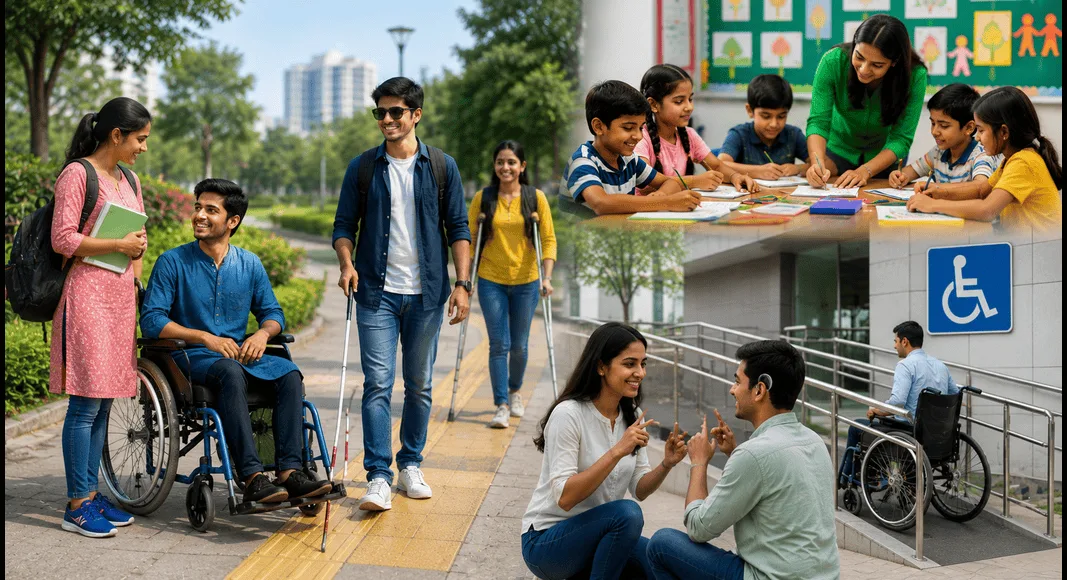
Disability Issues in India are an important social, economic, and human rights concern. Persons with disabilities (PwDs) face challenges in education, healthcare, employment, accessibility, and social inclusion. India has introduced several laws, policies, and welfare schemes to improve the lives of differently-abled people, but many challenges still remain. Ensuring equal opportunities, dignity, and accessibility for all persons with disabilities is essential for building an inclusive and developed society.
Thank you for reading this post, don't forget to subscribe!Disability is a broad term that includes physical, mental, intellectual, or sensory impairments that may limit a person’s ability to participate fully in society. Disability does not only refer to a medical condition. It also includes the barriers created by society that prevent people from living independently and equally.
According to the Census 2011, India has around 2.68 crore persons with disabilities, which is about 2.21% of the total population. Out of these, approximately 1.5 crore are males and 1.18 crore are females. Nearly 69% of disabled persons live in rural areas, where access to healthcare, education, and employment opportunities is often limited.
In recent years, India has taken several steps to protect the rights of persons with disabilities and improve their quality of life. However, many issues still need urgent attention.
Understanding Disability
Disability can be understood through three components:
Impairment
An impairment refers to a problem in body function or structure. For example, loss of vision, hearing impairment, or physical injury.
Activity Limitation
It means difficulty in performing tasks or activities, such as walking, reading, writing, or communicating.
Participation Restriction
This occurs when a person faces barriers in participating in social, educational, or professional activities.
Disability is therefore not only a personal condition but also a result of social and environmental barriers.
Constitutional Provisions for Persons with Disabilities
The Indian Constitution supports the welfare and inclusion of persons with disabilities.
Article 41
Article 41 under the Directive Principles of State Policy directs the State to provide:
- Right to work
- Right to education
- Public assistance during unemployment, sickness, old age, and disability
This support should be provided according to the economic capacity of the State.
State List Provision
The subject of relief and welfare of disabled persons is included in the State List of the Constitution, allowing state governments to make laws and policies for their welfare.
Rights of Persons with Disabilities Act, 2016
The Rights of Persons with Disabilities (RPwD) Act, 2016 is the most important law for persons with disabilities in India. It replaced the earlier Persons with Disabilities Act, 1995.
Key Features of the Act
Expanded Definition of Disability
The Act recognizes disability as an evolving concept and increases the recognized categories of disabilities from 7 to 21.
New categories include:
- Autism Spectrum Disorder
- Cerebral Palsy
- Muscular Dystrophy
- Mental Illness
- Parkinson’s Disease
- Thalassemia
- Hemophilia
- Sickle Cell Disease
- Speech and Language Disability
- Acid Attack Victims
- Multiple Disabilities
Benchmark Disability
A person with at least 40% disability is classified as a person with benchmark disability and becomes eligible for various benefits under the Act.
Reservation in Education and Jobs
The Act increased reservations:
- Government jobs: From 3% to 4%
- Higher educational institutions: From 3% to 5%
Right to Education
Every child with benchmark disability between 6 and 18 years has the right to free education.
Accessible India
The Act promotes accessibility in public buildings, transport systems, and communication facilities.
Special Courts
Special courts are established in districts to deal with cases involving violations of rights of persons with disabilities.
National and State Funds
Dedicated funds are created to support welfare programs and provide financial assistance.
Compliance with International Standards
The Act aligns India’s laws with the United Nations Convention on the Rights of Persons with Disabilities (UNCRPD).
Government Schemes and Initiatives
Accessible India Campaign
The Accessible India Campaign aims to make public spaces, transportation, and information systems accessible for persons with disabilities.
Its objectives include:
- Barrier-free public buildings
- Accessible transport facilities
- Improved access to information and communication
Deendayal Disabled Rehabilitation Scheme
Under this scheme, financial assistance is provided to NGOs that work for disabled persons through:
- Special schools
- Vocational training centers
- Community rehabilitation programs
- Early intervention services
ADIP Scheme
The Assistance to Disabled Persons for Purchase/Fitting of Aids and Appliances (ADIP) Scheme provides:
- Wheelchairs
- Hearing aids
- Artificial limbs
- Assistive devices
This helps improve mobility and independence.
National Fellowship for Students with Disabilities
The scheme encourages higher education among disabled students.
- Around 200 fellowships are awarded annually.
- It supports postgraduate and doctoral studies.
National Trust Schemes
The National Trust runs welfare programs for persons with:
- Autism
- Cerebral Palsy
- Intellectual Disabilities
- Multiple Disabilities
Major Issues Faced by Persons with Disabilities
Despite laws and schemes, persons with disabilities continue to face many challenges.
Healthcare Challenges
Many disabilities can be prevented through:
- Proper maternal care
- Vaccination
- Nutrition
- Early medical intervention
However, healthcare services remain inadequate, especially in rural areas.
Major concerns include:
- Lack of rehabilitation centers
- Shortage of specialists
- High cost of treatment
- Limited availability of assistive devices
Educational Challenges
Education is one of the biggest challenges for disabled children.
Problems include:
- Lack of inclusive schools
- Insufficient special schools
- Inaccessible infrastructure
- Shortage of trained teachers
- Lack of learning materials
Many schools are still not equipped to support students with disabilities effectively.
Employment Issues
Although many disabled individuals possess valuable skills and abilities, employment opportunities remain limited.
Challenges include:
- Employer discrimination
- Lack of workplace accessibility
- Limited vocational training
- Poor implementation of reservation policies
Employment rates among disabled adults are significantly lower than the national average.
Accessibility Problems
Accessibility remains a major concern in India.
Common barriers include:
- Buildings without ramps
- Inaccessible public transport
- Lack of elevators and accessible toilets
- Poor digital accessibility
Without proper accessibility, persons with disabilities face difficulties in education, employment, healthcare, and daily life.
Social Discrimination and Stigma
Social attitudes often create bigger barriers than physical disabilities.
Many people with disabilities face:
- Social exclusion
- Negative stereotypes
- Family neglect
- Lack of confidence due to discrimination
Persons with mental disabilities often face even greater stigma and isolation.
Lack of Reliable Data
Accurate disability data is essential for effective policymaking.
However, several issues exist:
- Different definitions of disability
- Under-reporting due to stigma
- Lack of comprehensive surveys
- Inconsistent data collection methods
This makes planning and implementation more difficult.
Poor Implementation of Policies
India has several laws and schemes for disabled persons, but implementation remains weak.
Common issues include:
- Delays in fund distribution
- Lack of monitoring
- Administrative inefficiency
- Low awareness among beneficiaries
As a result, many eligible individuals fail to receive benefits.
Importance of Empowering Persons with Disabilities
Empowering persons with disabilities benefits not only individuals but also society as a whole.
Promotes Equality
Equal opportunities ensure that every citizen can contribute to society regardless of physical or mental conditions.
Improves Economic Growth
When disabled persons receive education and employment opportunities, they become productive contributors to the economy.
Reduces Poverty
Many disabled individuals belong to economically weaker sections. Inclusion helps improve their financial condition.
Strengthens Human Rights
Respecting the rights of persons with disabilities reflects a commitment to justice, dignity, and equality.
Way Forward
Strengthen Preventive Healthcare
Early screening and intervention can prevent many disabilities.
Steps needed:
- Better maternal healthcare
- Universal vaccination
- Newborn screening programs
- Improved nutrition services
Increase Awareness
Public awareness campaigns should be conducted to:
- Remove social stigma
- Promote inclusion
- Encourage respect and acceptance
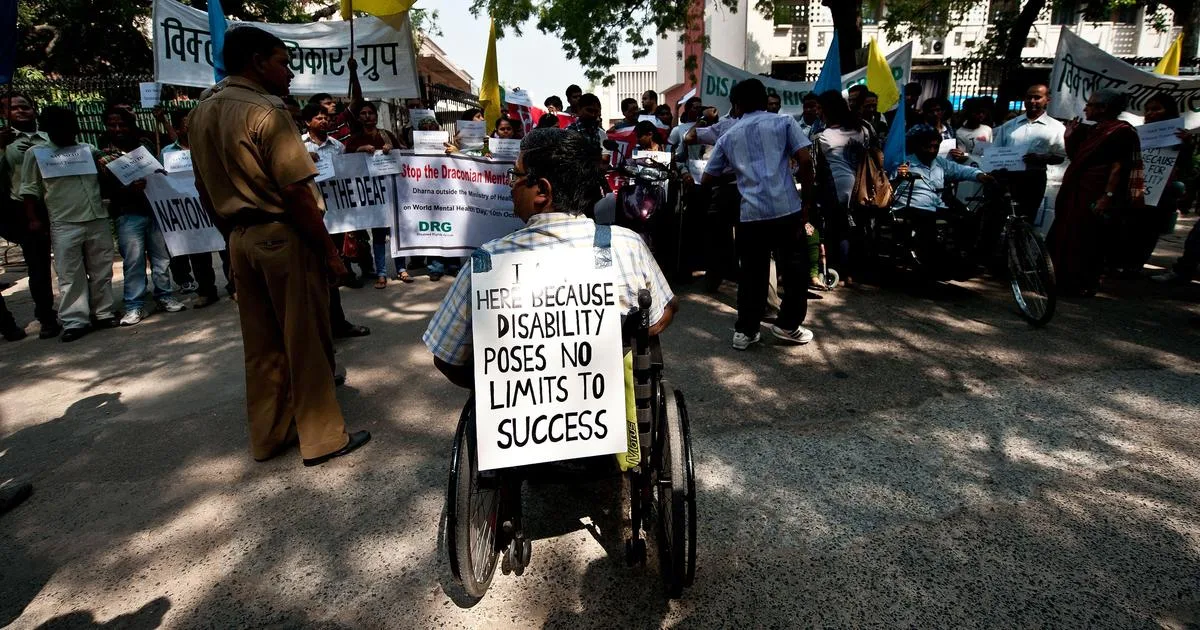
Success stories of disabled individuals should be highlighted.
Improve Education
India should:
- Expand inclusive education
- Train teachers
- Develop accessible educational materials
- Improve school infrastructure
Every child should receive quality education regardless of disability.
Enhance Employment Opportunities
Government and private sectors should:
- Increase recruitment of disabled persons
- Provide skill development programs
- Create accessible workplaces
- Encourage entrepreneurship
Improve Accessibility
Accessibility should become mandatory in:
- Public buildings
- Schools
- Hospitals
- Transport systems
- Digital platforms
Universal design principles should be adopted in all infrastructure projects.
Better Data Collection
Regular surveys and improved census methods can help generate accurate disability data for policymaking.
Increase Budget Allocation
Higher funding is needed for:
- Education
- Healthcare
- Rehabilitation
- Skill development
- Accessibility projects
A disability-focused budgeting approach can improve resource allocation.
Effective Monitoring
Strong monitoring mechanisms should ensure that laws and schemes are properly implemented at the ground level.
Conclusion
Disability Issues in India require a comprehensive and inclusive approach. While significant progress has been made through the Rights of Persons with Disabilities Act, 2016 and various government schemes, challenges related to healthcare, education, employment, accessibility, and social acceptance continue to affect millions of people.
An inclusive society is one where every individual has equal opportunities to learn, work, travel, and participate in community life. India must strengthen healthcare services, improve accessibility, enhance education and employment opportunities, and eliminate social discrimination. By empowering persons with disabilities and ensuring their full participation in society, India can move closer to the vision of equality, dignity, and sustainable development for all citizens.
FAQs on Disability Issues in India
1. What is disability?
Disability refers to physical, mental, intellectual, or sensory impairments that may limit a person’s participation in daily activities and society.
2. How many persons with disabilities are there in India?
According to Census 2011, India has around 2.68 crore persons with disabilities, which is about 2.21% of the population.
3. What is the Rights of Persons with Disabilities Act, 2016?
It is a law that protects the rights of persons with disabilities and provides reservations, education rights, accessibility, and social security benefits.
4. How many types of disabilities are recognized under the RPwD Act, 2016?
The Act recognizes 21 categories of disabilities, up from 7 categories under the earlier law.
5. What is a benchmark disability?
A benchmark disability refers to a disability of at least 40%, certified by the appropriate authority.
6. What reservation is provided for persons with disabilities in government jobs?
The RPwD Act provides 4% reservation in government jobs for eligible persons with disabilities.
7. What is the Accessible India Campaign?
It is a government initiative aimed at making public buildings, transportation, and information systems accessible to persons with disabilities.
8. What are the major challenges faced by persons with disabilities in India?
Major challenges include lack of accessibility, unemployment, poor healthcare, educational barriers, discrimination, and social exclusion.
9. How can education be improved for children with disabilities?
By promoting inclusive education, training teachers, improving infrastructure, and providing accessible learning materials.
10. Why is disability inclusion important?
Disability inclusion promotes equality, human rights, economic participation, and social development for all citizens.