


PPP Investment Model: Understanding Public-Private Partnership in India

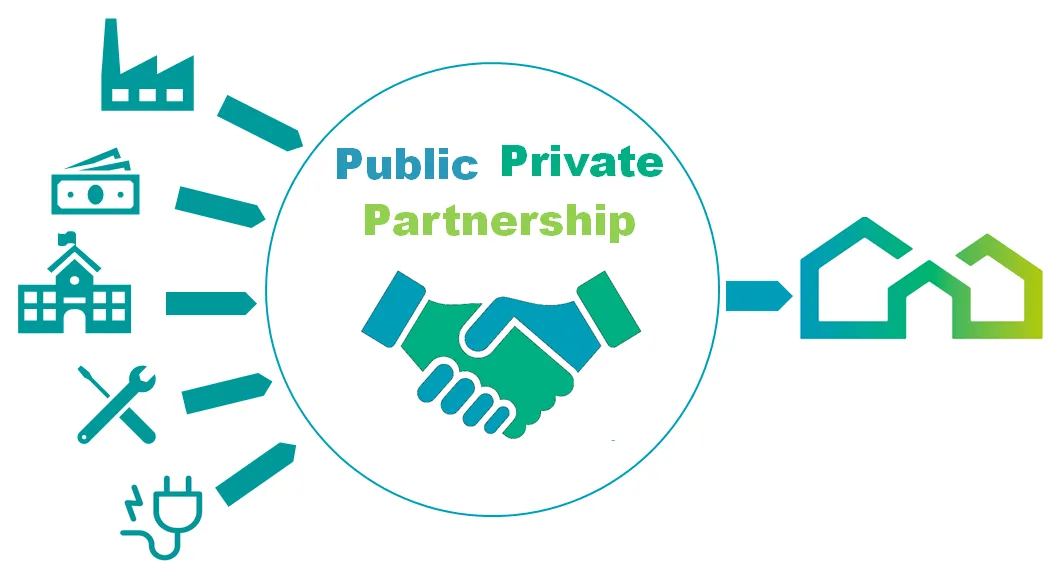
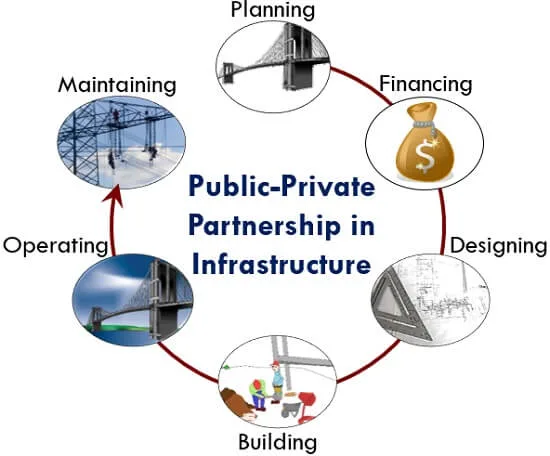
PPP Investment Model is one of the most important methods used for infrastructure development in India. Under this model, the government and private companies work together to finance, build, and manage public projects. These projects may include highways, metro rail systems, airports, hospitals, ports, and urban infrastructure.
The main aim of the PPP Investment Model is to combine the strengths of both sectors. The government provides support, regulations, and public interest goals, while private companies bring investment, technology, innovation, and management expertise.

As India continues to expand its infrastructure network, the PPP Investment Model has become an important tool for achieving economic growth and improving public services.
Why is the PPP Investment Model Important?
In recent years, the Indian government has increased its focus on infrastructure development. Several metro rail projects, highways, airports, and smart city projects have been launched across the country.
However, infrastructure projects require huge investments. Government resources alone are often insufficient to meet these growing demands. Therefore, private sector participation has become necessary.
The PPP Investment Model helps:
- Reduce financial burden on the government.
- Speed up project completion.
- Bring modern technology and expertise.
- Improve efficiency in project management.
- Create employment opportunities.
- Support economic growth.
Background of PPP in India
Before 2017, metro rail projects in India were mostly funded through government investments. The Ministry of Urban Development had recognized that metro projects involve high risks and require large capital investments.
Because of these challenges, PPP projects in metro rail systems were limited. However, in August 2017, the Government of India introduced a new Metro Rail Policy. Under this policy, private participation became an important condition for receiving central government support for metro projects.
This policy encouraged greater private investment in urban transportation projects across the country.
Types of Investment Models
India uses different investment models for development projects. These include Public Investment, Private Investment, and Public-Private Partnership.
1. Public Investment Model
In this model, the government finances projects using public funds collected through taxes and other revenues.
Benefits of Public Investment
- Promotes economic development.
- Creates jobs.
- Improves public infrastructure.
- Supports education and healthcare.
- Encourages long-term growth.
The government retains full control over project planning and implementation.
2. Private Investment Model
In the Private Investment Model, businesses and private companies invest their own funds in projects.
Private investment may come from:
| Source | Description |
|---|---|
| Domestic Investment | Investments made by Indian companies |
| Foreign Direct Investment (FDI) | Long-term investment by foreign companies |
| Foreign Portfolio Investment (FPI) | Investment through stocks and securities |
Advantages
- Greater efficiency.
- Faster decision-making.
- Better technology adoption.
- Increased competition.
- Improved productivity.
3. Public-Private Partnership (PPP) Model
The PPP Investment Model combines government support with private sector investment.
Under this arrangement:
- Government and private firms share responsibilities.
- Risks are distributed between both parties.
- Private companies invest and operate projects for a specified period.
- Government ensures public services remain available.
PPP is not the same as privatization because the government continues to maintain responsibility for public services.
Key Features of the PPP Investment Model
| Feature | Description |
| Shared Investment | Government and private sector both contribute |
| Risk Sharing | Risks are divided among partners |
| Competitive Bidding | Private companies are selected through transparent bidding |
| Performance-Based Payments | Payments depend on service quality |
| Public Ownership | Public interest remains protected |
| Long-Term Contracts | Projects usually operate for several years |
Common PPP Models in India
Different PPP structures are used depending on project requirements.
Build-Operate-Transfer (BOT)
Under BOT:
- Private company designs and builds the project.
- Operates it for a fixed period.
- Collects revenue from users.
- Transfers ownership back to the government.
Example: National highway projects developed by NHAI.
Build-Own-Operate (BOO)
In this model:
- Private company builds and owns the facility.
- Government purchases services or products generated by the project.
Build-Own-Operate-Transfer (BOOT)
This is a variation of BOT.
- Private company builds and operates the facility.
- Ownership remains with the company during the contract period.
- After the contract ends, ownership transfers to the government.
Examples: Ports and highways.
Build-Own-Lease-Transfer (BOLT)
Under BOLT:
- Private company builds and owns the project.
- Government leases the facility.
- Ownership is transferred to the government after the lease period.
Design-Build-Finance-Operate (DBFO)
The private company handles:
- Design
- Construction
- Financing
- Operations
for the entire concession period.
Lease-Develop-Operate (LDO)
In this model:
- Government retains ownership.
- Private company develops and operates the facility.
- Lease payments are made to the government.
Example: Airport development projects.
Advantages of the PPP Investment Model
Faster Infrastructure Development
Private funding helps start projects quickly without waiting for government budget allocations.
Better Efficiency
Private companies often use modern management practices and technology.
Reduced Government Burden
The government can focus its funds on welfare programs while private investors contribute to infrastructure financing.
Risk Sharing
Both partners share project risks instead of placing the entire burden on the government.
Innovation and Technology
Private firms introduce innovative solutions and advanced technologies.
Employment Generation
Large infrastructure projects create direct and indirect job opportunities.
Challenges of the PPP Investment Model
Despite its benefits, the PPP Investment Model faces several challenges.
Land Acquisition Issues
Many projects face delays because of difficulties in acquiring land.
Regulatory Hurdles
Complex approval processes often slow project implementation.
Financial Problems
Many infrastructure projects require huge investments and long repayment periods.
Contract Disputes
Disagreements between government agencies and private firms can delay projects.
Crony Capitalism Concerns
Some projects have faced allegations of favoritism and lack of transparency in awarding contracts.
Non-Performing Assets (NPAs)
Infrastructure loans have contributed significantly to bad loans in Indian banks.
Frequent Renegotiation
Private firms sometimes seek changes in contracts due to rising costs or lower revenues, creating additional burdens on public resources.
Vijay Kelkar Committee on PPP Reforms
To improve the PPP framework, the Government of India established a committee chaired by Dr. Vijay Kelkar.
The committee submitted important recommendations to strengthen PPP projects.
Major Recommendations
| Recommendation | Purpose |
| Focus on Service Delivery | Improve public benefit |
| Better Risk Allocation | Reduce disputes |
| Viability Gap Funding | Support financially weak projects |
| Performance Monitoring | Ensure accountability |
| PPP Adjudication Tribunal | Resolve disputes quickly |
| Sector-Specific Frameworks | Address industry-specific issues |
| Transparency Measures | Prevent corruption |
| Capacity Building | Improve project management skills |
| Strong Governance | Enhance accountability |
The committee also recommended discouraging unsolicited proposals to improve transparency and fairness.
PPP Investment Model and India’s Growth
India has ambitious infrastructure goals. According to government development strategies, higher investment rates are necessary for sustained economic growth.

Infrastructure sectors that can benefit from PPP include:
- Railways
- Roads and highways
- Airports
- Metro rail systems
- Smart cities
- Urban transportation
- Renewable energy projects
- Water supply systems
- Healthcare infrastructure
A strong PPP framework can help India achieve faster development while maintaining fiscal stability.
Future of PPP Investment Model in India
The future of the PPP Investment Model depends on improving transparency, reducing delays, and creating investor confidence.
Important steps include:
- Faster dispute resolution.
- Better project planning.
- Clear risk-sharing arrangements.
- Strong monitoring systems.
- Improved governance standards.
- Easier land acquisition processes.
- Encouragement of private investment in new sectors.
With proper reforms, PPP projects can play a major role in building modern infrastructure and supporting India’s economic transformation.
FAQs
What is the PPP Investment Model?
The PPP Investment Model is a partnership between the government and private companies to finance, build, and operate public infrastructure projects.
What are examples of PPP projects in India?
Examples include highways, airports, metro rail systems, ports, and urban infrastructure projects.
How is PPP different from privatization?
In PPP projects, the government continues to retain responsibility for public services, while privatization transfers ownership completely to private entities.
What is the BOT model?
Build-Operate-Transfer (BOT) is a PPP model where a private company builds and operates a project for a fixed period before transferring it back to the government.
Why is PPP important for India?
PPP helps mobilize private investment, improve infrastructure, increase efficiency, and support economic growth.
What are the main challenges of PPP projects?
Land acquisition delays, regulatory hurdles, contract disputes, financing difficulties, and transparency concerns are some major challenges.
Who chaired the committee for PPP reforms?
The PPP reform committee was chaired by Dr. Vijay Kelkar.
Which sectors can benefit from PPP investments?
Railways, roads, airports, healthcare, urban transport, renewable energy, and smart city projects can benefit from PPP investments.