


Uniform Civil Code Explained: Importance and Impact

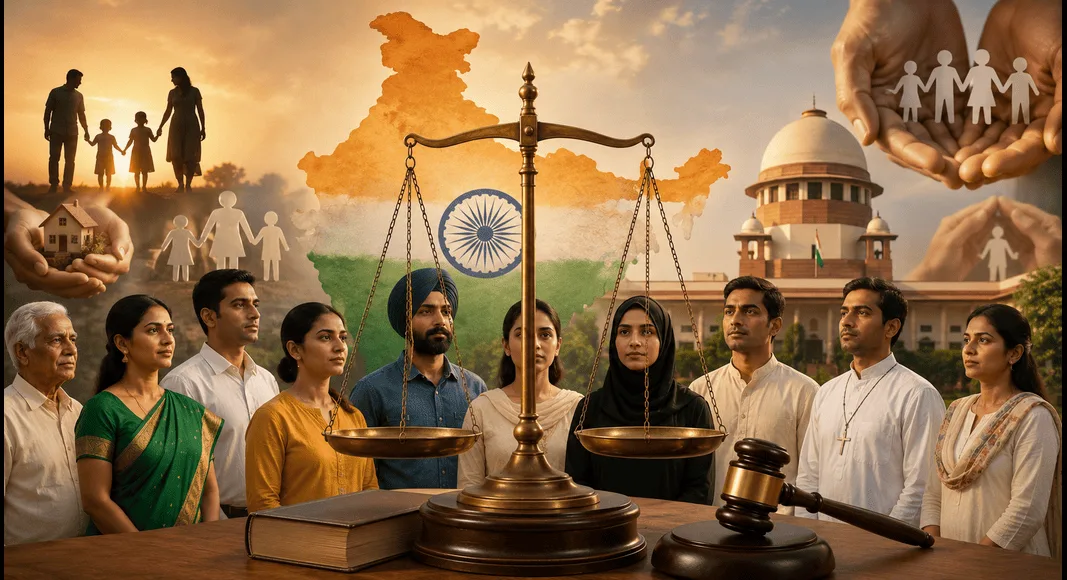
Uniform Civil Code (UCC) is one of the most debated topics in India. It refers to a common set of laws that would apply equally to all citizens of the country, regardless of their religion. These laws would govern personal matters such as marriage, divorce, inheritance, adoption, maintenance, and succession.
Thank you for reading this post, don't forget to subscribe!The idea of a Uniform Civil Code is mentioned in Article 44 of the Indian Constitution, which states that the State should strive to secure a Uniform Civil Code for all citizens throughout the country. Although the Constitution encourages its implementation, India still follows different personal laws for different religious communities.
The debate around UCC gained attention again when the Supreme Court observed that despite several recommendations and judgments, no significant steps had been taken to implement a Uniform Civil Code across India. The Court also praised Goa for having a common civil code that applies to all residents regardless of religion, with a few exceptions.
The Uniform Civil Code is often discussed in relation to equality, justice, secularism, women’s rights, and national integration. While many support its implementation, others believe that it may affect the cultural and religious diversity of the country.
What is Uniform Civil Code?
A Uniform Civil Code is a common legal framework that governs personal matters for all citizens without considering their religion, caste, community, or gender.
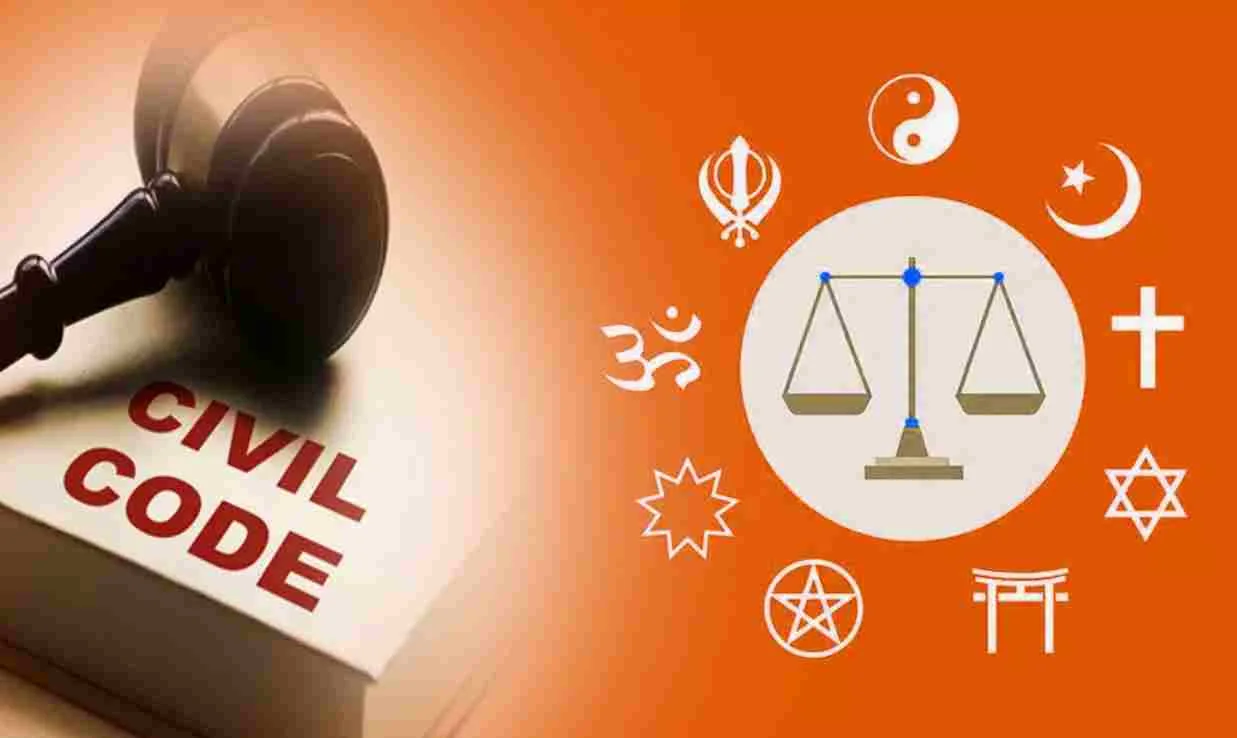
At present, different religious communities in India follow different personal laws. For example:
- Hindus, Sikhs, Jains, and Buddhists follow Hindu personal laws.
- Muslims follow Muslim personal laws based largely on Shariat.
- Christians have their own personal laws.
- Parsis are governed by separate laws.
Under a Uniform Civil Code, all citizens would follow the same rules regarding marriage, divorce, inheritance, adoption, guardianship, and maintenance.
The objective is to ensure equal treatment under the law and promote justice for all citizens.
Constitutional Background of Uniform Civil Code
The concept of UCC originates from the Indian Constitution.
Article 44
Article 44 is part of the Directive Principles of State Policy (DPSP). It states:
Directive Principles are guidelines for the government. Although they are not legally enforceable, they help in shaping policies and laws.
The framers of the Constitution believed that a common civil code would help strengthen national unity and ensure equality among citizens.
However, they also understood India’s cultural and religious diversity. Therefore, they placed the provision in DPSP rather than making it a Fundamental Right.
Personal Laws in India
India follows a system where different communities have different personal laws.
Hindu Personal Laws
The Hindu personal laws were codified and modernized in the 1950s through four important legislations:
1. Hindu Marriage Act, 1955
Regulates marriage, divorce, and related matters.
2. Hindu Succession Act, 1956
Deals with inheritance and succession rights.
3. Hindu Minority and Guardianship Act, 1956
Covers guardianship of children.
4. Hindu Adoption and Maintenance Act, 1956
Provides rules regarding adoption and maintenance.
These laws apply not only to Hindus but also to Sikhs, Jains, and Buddhists.
Muslim Personal Laws
Muslim personal matters are governed mainly by the Shariat Act, 1937.
These laws deal with:
- Marriage
- Divorce
- Inheritance
- Maintenance
- Family matters
Religious principles and interpretations play an important role in these matters.
Christian Personal Laws
Christians are governed by separate laws concerning marriage, divorce, and succession.
Parsi Personal Laws
The Parsi community also follows its own legal provisions regarding family matters.
As a result, citizens belonging to different religions may be governed by different legal rules even in similar situations.
Why is Uniform Civil Code Needed?
Supporters of UCC believe that a common civil code is necessary for various reasons.
1. Equality Before Law
The Constitution guarantees equality before the law under Article 14.
When different communities follow different personal laws, people in similar situations may receive different legal treatment.
A Uniform Civil Code would ensure that all citizens are treated equally.
2. Gender Justice
Many personal laws have been criticized for discriminating against women.
In matters such as:
- Divorce
- Inheritance
- Maintenance
- Property rights
women may not always receive equal treatment.
A Uniform Civil Code could provide equal rights and opportunities to women regardless of religion.
3. National Integration
Different personal laws often create divisions based on religion.
A common civil code may help promote a stronger sense of national unity and shared citizenship.
4. Simplification of Laws
India currently has multiple personal laws.
This often creates:
- Legal confusion
- Complexity
- Contradictions
- Delays in justice
A single legal framework would simplify the legal system.
5. Strengthening Secularism
India is a secular country.
A Uniform Civil Code would separate civil laws from religion and ensure that legal rights are based on constitutional principles rather than religious customs.
Important Supreme Court Judgments Related to UCC
Shah Bano Case (1985)
The Shah Bano case became one of the most important cases in the debate over UCC.
Shah Bano, a Muslim woman, sought maintenance from her husband after divorce under Section 125 of the Code of Criminal Procedure.
The Supreme Court ruled in her favor and directed the government to work toward implementing a Uniform Civil Code.
However, the judgment led to controversy, and Parliament later passed the Muslim Women (Protection of Rights on Divorce) Act, 1986.
Shayara Bano Case (2017)
In this landmark case, the Supreme Court declared Triple Talaq (Talaq-e-Biddat) unconstitutional.
The judgment was viewed as a significant step toward gender justice and reform of personal laws.
The case also revived discussions about the Uniform Civil Code.
Goa: An Example of Uniform Civil Code
Goa is often cited as the only Indian state where a common civil code is largely in practice.
The state follows the Portuguese Civil Code of 1867.
Some important features include:
- Equal rights over marital property.
- Equal division of assets after divorce.
- Compulsory registration of marriages.
- Restrictions on polygamy.
Because these rules apply broadly across religious communities, the Supreme Court has described Goa as a shining example of a Uniform Civil Code.
Challenges in Implementing Uniform Civil Code
Despite its advantages, implementing UCC is not easy.
Constitutional Challenges
Several constitutional rights must be balanced.
Article 25
Provides freedom of religion.
Article 26
Allows religious groups to manage their own religious affairs.
Article 29
Protects cultural and educational rights.
Some argue that a Uniform Civil Code could interfere with these rights.
Therefore, balancing equality and religious freedom remains a major challenge.
Cultural Diversity
India is home to numerous religions, cultures, traditions, and customs.
Each community has developed its own family practices over centuries.
Implementing one common code for everyone may be difficult because of this diversity.
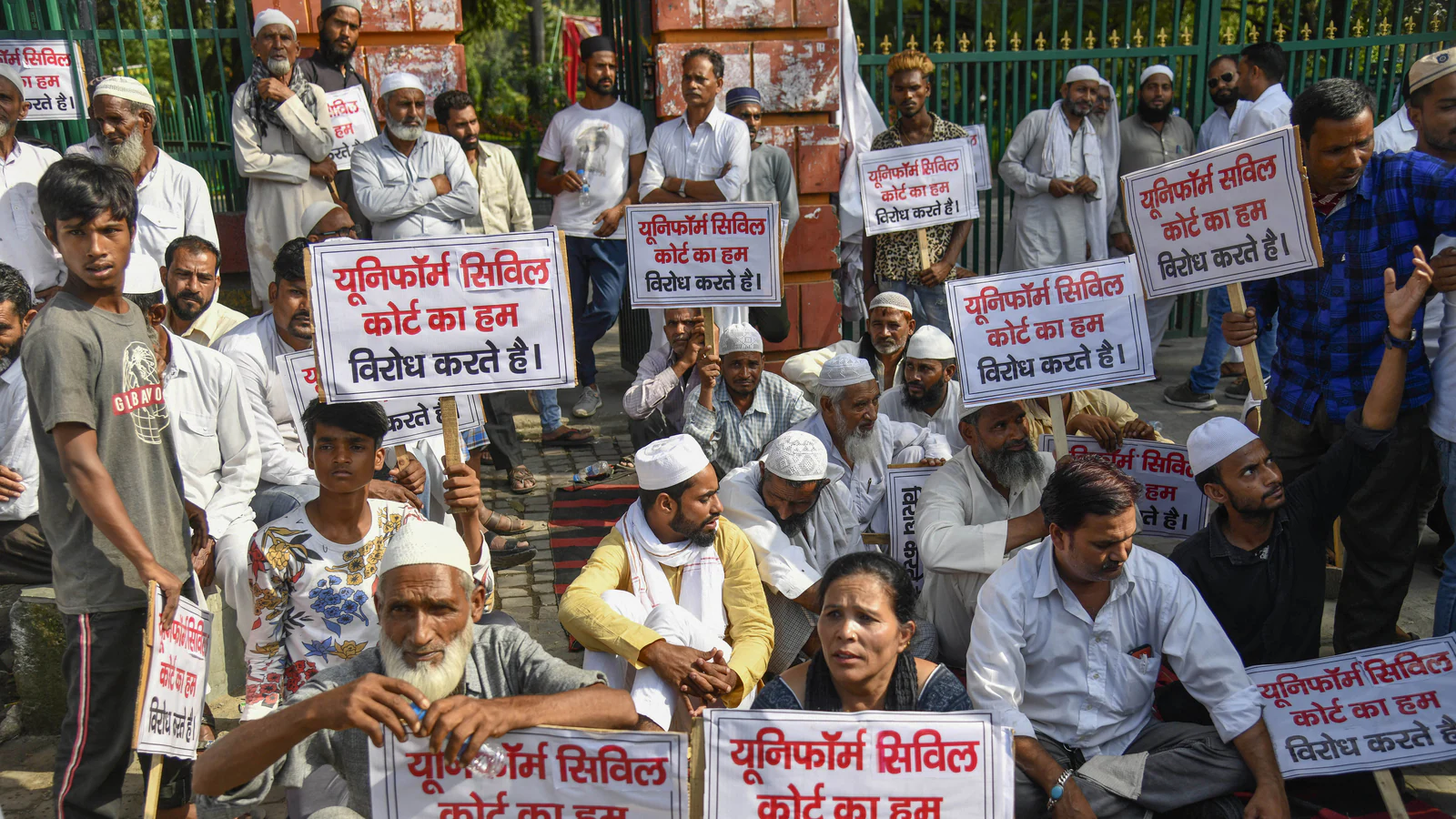
Fear Among Minorities
Some minority groups fear that UCC may reflect the traditions and values of the majority community.
As a result, they worry about losing their unique cultural identity.
Building trust and confidence among all communities is therefore essential.
Patriarchal Social Structure
Even when progressive laws exist, social attitudes often limit their effectiveness.
For example, although Hindu women have inheritance rights under the law, many still do not receive their rightful share of family property.
This shows that legal reforms alone may not be enough without social change.
Advantages of Uniform Civil Code
Promotes Gender Equality
Women across all communities would enjoy equal rights and legal protection.
Reduces Legal Complexity
A single law would make legal procedures easier to understand and implement.
Encourages Social Harmony
Equal laws for all citizens may strengthen feelings of unity and shared citizenship.
Strengthens Constitutional Values
The principles of equality, liberty, justice, and secularism would be reinforced.
Reduces Litigation
A common legal framework could reduce disputes arising from conflicting personal laws.
Criticisms of Uniform Civil Code
Not everyone supports the implementation of UCC.
Some common criticisms include:
Threat to Religious Freedom
Critics argue that personal laws are closely linked to religious beliefs and practices.
Loss of Cultural Diversity
India’s strength lies in its diversity. A common code may reduce cultural uniqueness.
Lack of Consensus
Different communities have different opinions about family laws.
Reaching agreement on a single code may be difficult.
Law Commission’s View
In 2018, the Law Commission of India stated that a Uniform Civil Code was “neither necessary nor desirable” at that stage.
Instead, it recommended reforms within personal laws to remove discrimination.
The Way Forward
The implementation of a Uniform Civil Code should be gradual and inclusive.
Step-by-Step Approach
Instead of introducing an entirely new code at once, reforms can be made in stages.
Areas such as:
- Marriage
- Adoption
- Guardianship
- Maintenance
- Succession
can be addressed one by one.
Learning from Goa
The Goan model can provide useful lessons for the rest of the country.
Public Awareness
People need to understand that UCC is intended to promote equality and justice rather than target any particular religion.
Consultation with Communities
The government should engage with religious leaders, legal experts, civil society organizations, and citizens before making changes.
Focus on Justice
The primary objective should be to ensure:
- Equality
- Human dignity
- Gender justice
- Constitutional values
Conclusion
Uniform Civil Code remains one of the most important constitutional and social issues in India. It seeks to create a common set of civil laws for all citizens, regardless of religion. Supporters believe it will promote equality, gender justice, national integration, and simplification of laws. Critics, however, fear that it may affect religious freedom and cultural diversity.
The challenge lies in balancing constitutional values with India’s rich pluralistic traditions. Any move toward a Uniform Civil Code should be gradual, transparent, and based on widespread consultation. The ultimate goal should not be to impose a common culture but to ensure that every citizen enjoys equal rights, dignity, justice, and protection under the law.
FAQs About Uniform Civil Code (UCC)
1. What is the Uniform Civil Code (UCC)?
The Uniform Civil Code is a proposal for a common set of personal laws that would apply equally to all Indian citizens, regardless of religion.
2. Which Article of the Constitution mentions the Uniform Civil Code?
Article 44 of the Indian Constitution encourages the State to strive for a Uniform Civil Code across India.
3. What areas would the Uniform Civil Code cover?
It would cover personal matters such as marriage, divorce, adoption, inheritance, succession, guardianship, and maintenance.
4. Why is the Uniform Civil Code important?
It aims to promote equality, gender justice, national integration, and a simpler legal system.
5. Does India currently have a Uniform Civil Code?
No, India currently follows different personal laws for different religious communities.
6. Which state is often cited as an example of Uniform Civil Code?
Goa is often cited as an example because it follows a common civil code based on the Portuguese Civil Code.
7. What was the Shah Bano case?
The Shah Bano case (1985) was a landmark Supreme Court judgment that supported maintenance rights for divorced Muslim women and highlighted the need for UCC.
8. How does the Uniform Civil Code support women’s rights?
It seeks to provide equal rights to women in matters of marriage, divorce, inheritance, maintenance, and property ownership.
9. What are the major challenges in implementing UCC?
Challenges include religious diversity, constitutional concerns, cultural differences, and opposition from some communities.
10. What is the government’s approach toward UCC?
The government has discussed implementing UCC gradually while balancing constitutional rights and cultural diversity.