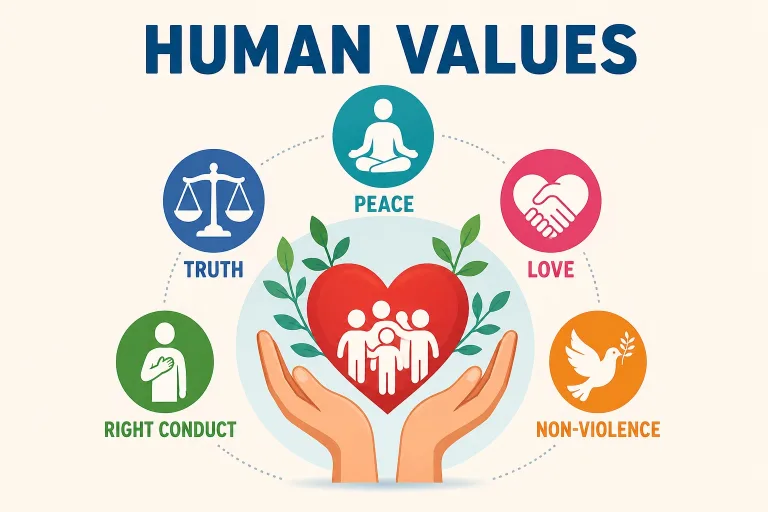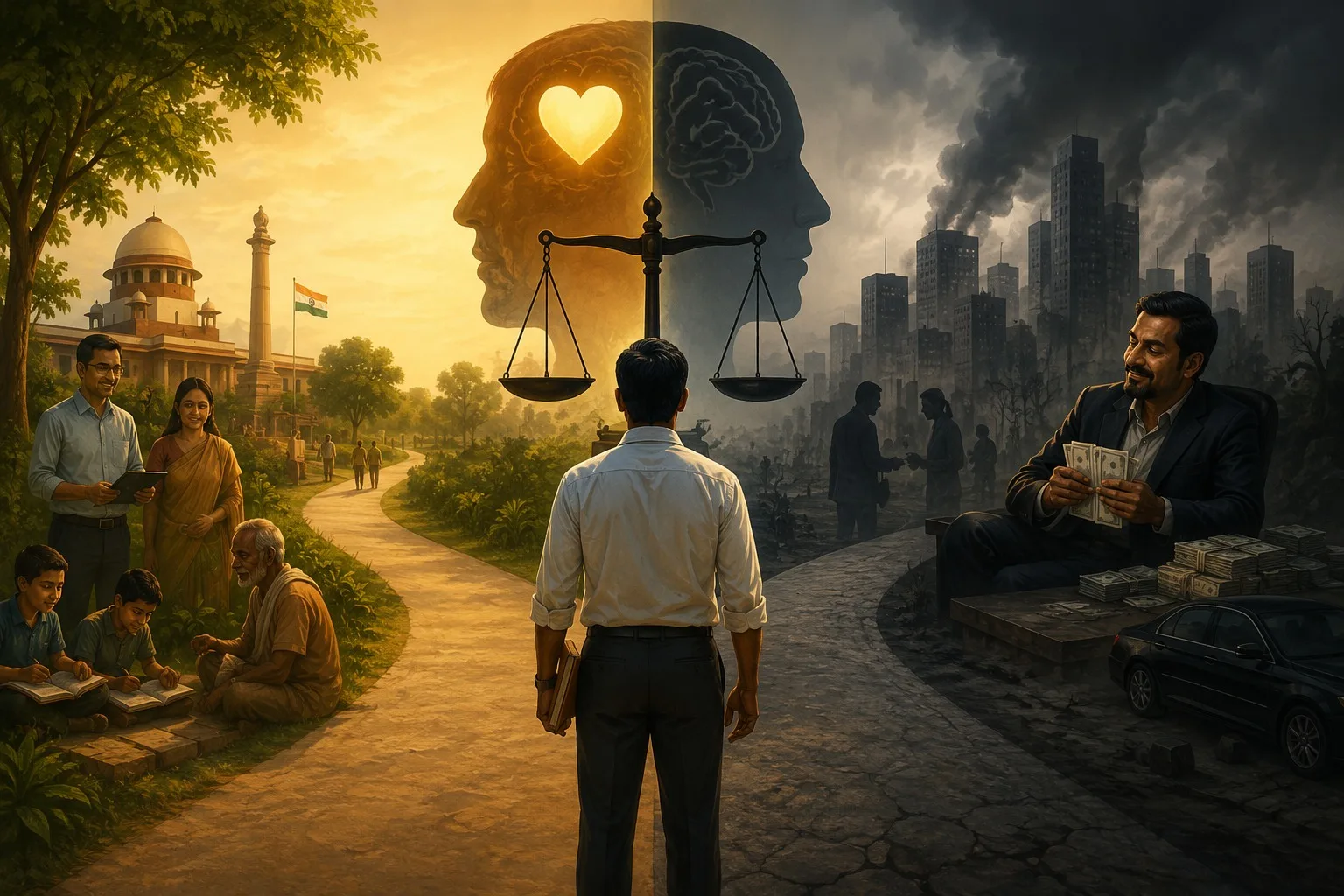
Values and Conscience: Importance in Ethics and Good Governance

Values and Conscience are two important parts of ethics. Ethics helps us understand what is right and wrong. In daily life and public service, ethics is not only about following laws and rules. It is also about personal beliefs, moral values, and the voice inside us that tells us what is right. This inner voice is called conscience.
Thank you for reading this post, don't forget to subscribe!In government and civil services, values and conscience help officers make fair, honest, and responsible decisions. They ensure that public servants work for the welfare of society instead of personal benefit.
What Are Values?
Values are beliefs or principles that guide our behavior and decisions. They help us understand what is good, desirable, and acceptable in life. Values influence how people think, act, and interact with others.
When a person clearly understands their values, decision-making becomes easier. Values act like a guide during difficult situations.
Types of Values
| Type | Meaning | Examples |
|---|---|---|
| Personal Values | Developed through life experiences and family upbringing | Honesty, kindness, integrity |
| Societal Values | Shared by society or community | Respect for elders, equality |
| Moral Values | Related to right and wrong | Truth, justice, empathy |
| Professional Values | Important in workplace | Neutrality, objectivity |
| Constitutional Values | Mentioned in the Constitution | Liberty, equality, secularism |
Why Are Values Important?
Values are important because they shape both individuals and society. They help build a peaceful and fair world.
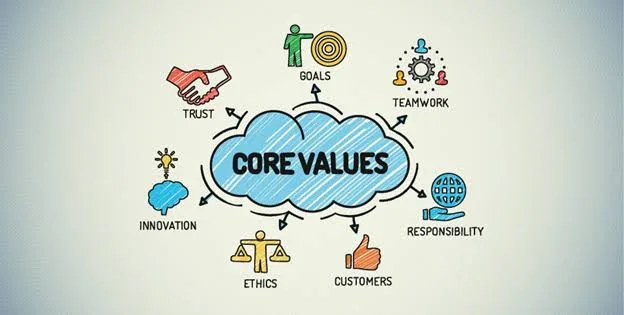
Promote Social Harmony
Values such as compassion, kindness, and respect reduce conflict and help people live together peacefully.
Guide Ethical Conduct
Honesty and integrity build trust in relationships, institutions, and government systems.
Shape Identity
Values create personal character and collective identity. They influence family culture, workplace ethics, and national values.
Help Resolve Conflicts
Strong human values help people solve disagreements peacefully, even when opinions differ.
A great example is Mahatma Gandhi, who practiced truth and non-violence. His values inspired India’s freedom struggle and influenced peace movements around the world.
Examples of Values in Public Service
Many Indian civil servants are remembered for their strong values.
| Officer | Values Shown | Example |
|---|---|---|
| Kiran Bedi | Accountability, efficiency | Reformed Tihar Jail |
| T. N. Seshan | Integrity, courage | Introduced major electoral reforms |
| E. Sreedharan | Dedication, excellence | Led Delhi Metro project successfully |
What Are Foundational Values?
Foundational values are core principles necessary for ethical and effective public service. These values form the base of good governance.
Major Foundational Values
Selflessness
Public servants should make decisions based only on public welfare, not personal gain.
Example: Providing government resources fairly to all citizens.
Integrity
Integrity means staying honest and resisting corruption or outside influence.
Example: Refusing bribes and reporting corruption.
Objectivity
Decisions should be based on facts, evidence, and merit instead of personal bias.
Example: Fair recruitment and transparent promotions.
Accountability
Public officials must answer for their actions and decisions.
Example: Government audits and public reporting.
Openness
Transparency increases trust between citizens and government.
Example: Sharing reasons behind policies and budget decisions.
Honesty
Public servants must be truthful and declare assets or conflicts of interest.
Example: Financial disclosures by officials.
Leadership
A good leader inspires others by setting high ethical standards.
Example: Senior officers encouraging honesty in administration.
How Foundational Values Improve Governance
Build Public Trust
When leaders follow ethical values, citizens trust government institutions more.
Ensure Rule of Law
Values support fair and lawful decision-making.
Improve Service Delivery
Objectivity and dedication help improve efficiency and reduce delays.
Promote Social Justice
Empathy ensures policies support poor and vulnerable groups.
Inspiring Global Examples
Many world leaders showed strong values through their actions.
Mahatma Gandhi
He dedicated his life to justice, equality, and peace through non-violent resistance.
Nelson Mandela
After spending 27 years in prison, Mandela promoted unity and forgiveness in South Africa.
Martin Luther King Jr.
He fought for racial equality through peaceful protests in the United States.
Leonardo DiCaprio
He supports environmental protection and climate awareness through charitable work.
What Is Conscience?
Conscience is the inner voice that helps us judge whether an action is right or wrong. It acts like a moral compass.
When we do something wrong, conscience may create guilt. When we do the right thing, it gives peace and satisfaction.
Conscience helps people make ethical choices even when nobody is watching.

Philosophical Views on Conscience
Immanuel Kant
Kant saw conscience as an internal court where a person judges their own actions. He believed it motivates duty-based action.
Sigmund Freud and Friedrich Nietzsche
Freud believed conscience develops through social conditioning. Nietzsche viewed it as something that can restrict personal freedom.
Mahatma Gandhi
Gandhi believed conscience is the inner voice that guides people toward truth and righteousness.
Main Functions of Conscience
| Function | Meaning |
|---|---|
| Moral Intuition | Quick sense of right or wrong |
| Moral Reasoning | Careful ethical thinking |
| Moral Awareness | Feeling responsibility toward others |
| Self-Assessment | Learning from guilt or pride |
| Motivation | Doing right without pressure |
| Empathy | Understanding others’ pain |
| Self-Awareness | Recognizing personal bias |
| Ethical Guidance | Helping in difficult situations |
How Conscience Affects Decision-Making
Promotes Integrity
Conscience helps maintain consistency between thoughts, words, and actions.
Solves Ethical Dilemmas
It helps when laws or rules do not provide clear answers.
Ensures Accountability
Conscience reminds public servants of moral responsibility.
Builds Compassion
It encourages humane decisions, especially for weaker sections of society.
Encourages Reflection
People think beyond legal rules and consider social impact.
Helps Resist Pressure
A strong conscience helps resist corruption, political pressure, and unethical demands.
One powerful example is Satyendra Dubey, an engineer of National Highways Authority of India. He exposed corruption in the Golden Quadrilateral Project despite serious risks. His courage made him a symbol of honesty and moral strength.
Relationship Between Values and Conscience
Values and conscience are closely connected.
| Values | Conscience |
|---|---|
| Provide moral direction | Applies values in real situations |
| Learned from society and family | Develops through reflection and experience |
| External and internal influences | Internal self-control mechanism |
For example, a civil servant may value transparency. Their conscience pushes them to expose wrongdoing even under political pressure.
Values give us principles, while conscience helps us apply those principles in real life. Together, they create ethical individuals and responsible public servants. Strong values and a clear conscience are essential for good governance, public trust, and a fair society.
FAQs
Q1. What are values in ethics?
Values are beliefs and principles that guide a person’s behavior and help them decide what is right or wrong.
Q2. Why are values important in society?
Values promote social harmony, build trust, improve relationships, and help people make ethical decisions.
Q3. What is conscience?
Conscience is the inner moral voice that helps a person judge whether an action is right or wrong.
Q4. How does conscience influence decision-making?
Conscience helps people choose ethical actions, avoid wrongdoing, and act responsibly even under pressure.
Q5. What is the difference between values and conscience?
Values provide moral principles, while conscience applies those principles in real-life situations.
Q6. Why are values important in civil services?
Values help civil servants maintain honesty, transparency, accountability, and fairness in public service.
Q7. What are foundational values in governance?
Foundational values include selflessness, integrity, objectivity, accountability, openness, honesty, and leadership.
Q8. How do values improve governance?
Values improve governance by increasing public trust, ensuring fairness, and promoting effective service delivery.