



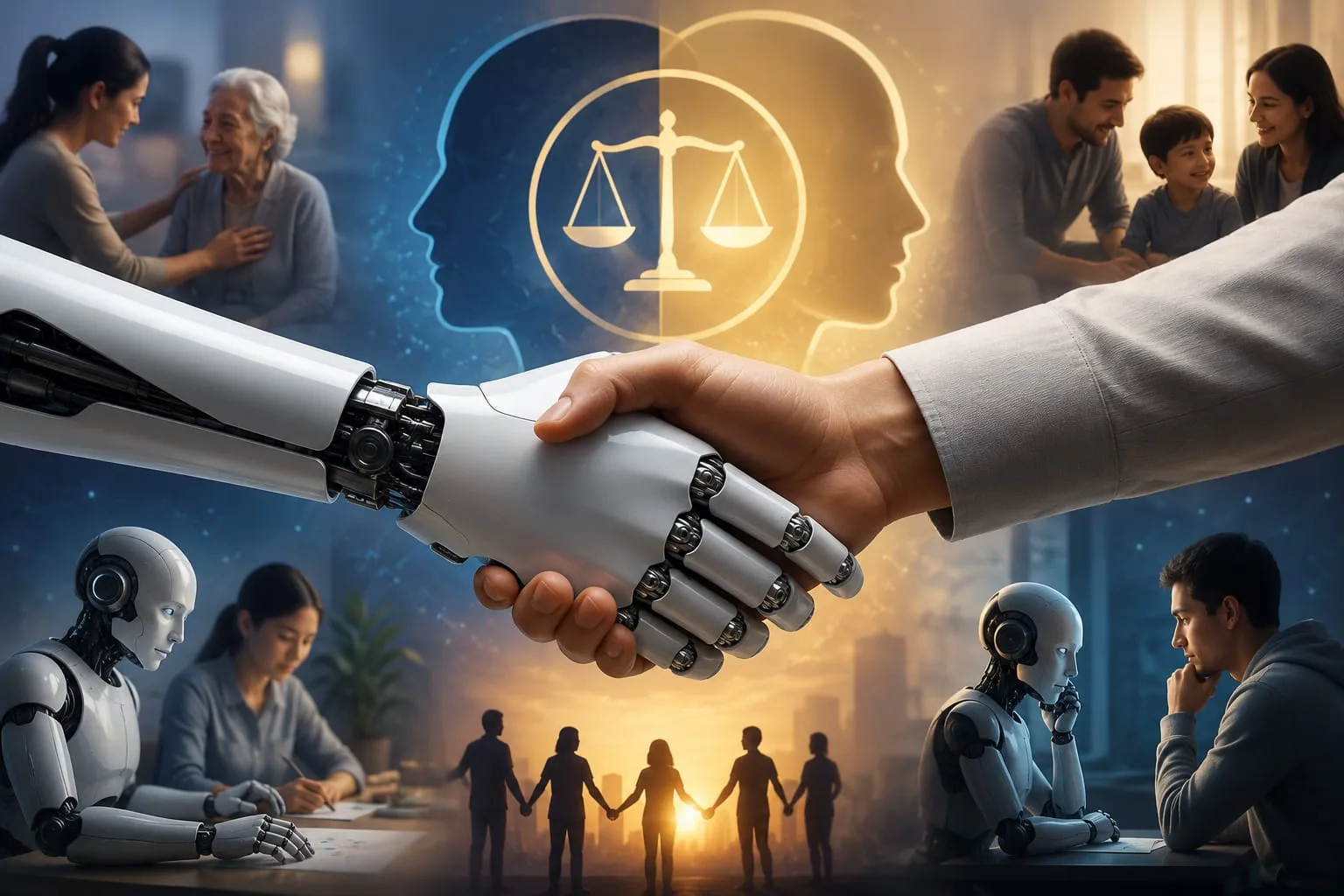
Ethics and Human Interface: Meaning, Dimensions and Role in Human Actions

Ethics and Human Interface is an important topic that helps us understand how human beings make right or wrong decisions in daily life. Ethics acts like a moral guide that shapes our behavior, choices, and actions. It teaches us values such as honesty, fairness, justice, respect, and responsibility. Whether in family life, workplace, government, or society, ethics plays a major role in building trust and harmony.
Thank you for reading this post, don't forget to subscribe!What is Ethics?
Ethics is a set of moral principles that guides human behavior. It helps people decide what is right and what is wrong. Every society has its own ethical values that influence how people behave and interact with others.
Ethics is not only about following traditions or customs. It also involves thinking deeply about whether certain actions are fair, just, and beneficial for society. Ethics encourages people to act in ways that protect human dignity and social welfare.
For example, speaking the truth, helping someone in need, and respecting others are ethical actions. On the other hand, lying, cheating, and harming innocent people are unethical actions.
Dimensions of Ethics
Ethics has different dimensions that help us understand moral behavior from different viewpoints.
1. Descriptive Ethics
Descriptive ethics studies what people actually believe to be right or wrong. It observes human behavior and examines how people live in society.
This dimension helps us understand:
- Social traditions
- Cultural practices
- Moral beliefs of communities
- Historical customs
For example, some societies may consider certain practices acceptable, while others may reject them.
2. Normative Ethics
Normative ethics focuses on moral standards. It asks an important question: How should people behave?
It tries to set rules for good behavior and helps people choose the most ethical action.
Examples of moral standards:
- Be honest
- Respect others
- Do not harm innocent people
- Treat everyone fairly
Normative ethics helps in deciding what should be considered good or bad conduct.
3. Meta Ethics
Meta ethics studies the meaning of morality itself. It examines why something is called right or wrong.
Instead of judging actions directly, meta ethics asks deeper questions such as:
- What is goodness?
- What makes an action moral?
- Are moral values universal?
Meta ethics mainly includes two views:
Non-Cognitivism:
This view says moral judgments are based on emotions, beliefs, or attitudes.
Cognitivism:
This view says moral judgments can be based on facts, logic, and reasoning.
4. Applied Ethics
Applied ethics deals with real-life moral problems. It uses ethical principles to solve modern issues.
Examples include:
- Animal rights
- Abortion
- Euthanasia
- Environmental protection
- Medical ethics
Applied ethics helps society deal with difficult decisions in changing times.
Essence of Ethics
The true essence of ethics lies in caring about others and not thinking only about ourselves. Ethical thinking goes beyond personal benefit and considers the welfare of society.
Ethics focuses on:
- Justice
- Fairness
- Equality
- Responsibility
- Human dignity
Ethics mainly applies to voluntary human actions. These are actions performed consciously and with intention.
For an action to be ethical, a person should:
- Know what they are doing
- Act willingly
- Understand the consequences
Ethics also includes universal values such as:
- Equality of men and women
- Human rights
- Respect for law
- Safety and health
- Protection of nature
These values help create a better society.
Ethics in Human Action
Human action is the starting point of ethics. Ethics evaluates actions performed by humans with knowledge and free will.

Some bodily functions like:
- Digestion
- Blood circulation
- Growth
are not moral actions because they happen naturally without human control.
A human act becomes moral only when it is done:
- With knowledge
- With freedom
- By personal choice
If a person acts without understanding or under force, the moral responsibility becomes less.
Determinants of Ethics in Human Action
Three major factors determine whether a human action is morally good or bad.
1. Nature or Object of the Act
The nature of an action refers to what the action actually is.
Examples:
- Helping a blind person cross the road — Good act
- Stealing — Bad act
- Learning to shoot — Neutral act
Some actions are considered wrong by nature and are called intrinsically immoral acts.
Examples:
- Murder of innocent people
- Rape
- Torture
- Blasphemy
These actions are considered morally wrong regardless of circumstances.
However, moral judgments can differ across cultures and societies.
2. Intention or Purpose of Action
Intention means the reason behind doing something.
Two people may perform the same action but with different intentions.
Example:
A person donates money to help the poor — good intention.
Another donates only for publicity — selfish intention.
Intention affects the moral value of an action in several ways:
- Good actions should have good intentions
- Bad intentions can make a good action morally weak
- Good intention cannot make an immoral act moral
This means both action and purpose matter.
3. Circumstances of Action
Every action happens in a specific situation. Circumstances include:
- Time
- Place
- Method
- Situation
- People involved
Circumstances can increase or reduce moral responsibility.
Example:
Stealing is wrong.
But stealing medicine to save a dying child may reduce moral blame.
Examples of circumstances affecting morality:
When:
During war, revealing secret military information becomes more serious.
Where:
A crime committed in a place of worship adds extra moral wrong because it disrespects a sacred place.
Thus, to judge an action properly, we must examine:
- Object
- Intention
- Circumstances
If any one of these is morally wrong, the whole act may become unethical.
Factors That Influence Human Ethics
Ethical decisions are influenced by many factors such as:
Individual Personality
A person’s character, habits, and mindset affect ethical behavior.
Culture and Society
Different societies teach different moral values.
Organization or Workplace
Work culture and leadership influence ethical choices.
Family and Education
Parents and teachers play a big role in developing moral values.
Consequences of Ethics in Human Action
Consequences are the results of actions. People often judge actions based on outcomes.
If an action causes suffering, it may be considered wrong.
If it benefits people, it may be seen as right.
Human beings usually think about consequences before acting.
A person is morally responsible for consequences when:
1. They Know the Possible Result
If someone knows an action may cause harm but still does it, they are responsible.
Example:
A hunter sees movement but is unsure whether it is a deer or a person. If he shoots anyway, he is responsible for the result.
2. They Encourage Others to Do Wrong
A person may be responsible even without directly doing the act.
Example:
A leader gives a hateful speech that causes violence. The leader is morally responsible.
3. They Ignore Their Duty
Sometimes doing nothing is also unethical.
Example:
A person sees a road accident but refuses to help. This is called error of omission.
Thus, responsibility depends on:
- Freedom
- Knowledge
- Choice
- Awareness of consequences
Ethics in Private and Public Relationships
Ethics is important in both personal and public life.
Ethics in Private Relationships
Private relationships are personal and emotional.
Examples:
- Marriage
- Family
- Friendship
- Kinship
These relationships are based on trust, care, and emotional connection.
Characteristics of private relationships:
- Loyalty and faithfulness
- Love and affection
- More tolerance for mistakes
- Long-lasting bonds
Ethics in private life is guided by:
- Personal values
- Family values
- Religion
- Social traditions
- Law
For example, honesty and trust are essential in marriage and friendship.
Ethics in Public Relationships
Public relationships involve interactions in professional or social roles.
Examples:
- Politician and citizens
- Doctor and patients
- Teacher and students
- Officer and public
These relationships are less personal and more role-based.
Characteristics of public relationships:
- Respect and professionalism
- Accountability
- Responsibility
- Duty toward society
- Clear communication
In public life, ethical behavior builds trust and credibility.
For example:
- A government officer should work fairly
- A doctor should treat patients honestly
- A teacher should guide students sincerely
Public ethics ensures transparency and justice.
Importance of Ethics and Human Interface
Ethics and human interface is essential because it helps people build strong relationships and make responsible decisions. Ethics creates trust, promotes justice, and reduces conflict in society.
A society without ethics may face:
- Corruption
- Crime
- Dishonesty
- Injustice
- Loss of trust
Ethical behavior strengthens both personal character and social harmony. It helps individuals become responsible citizens and contributes to a fair and peaceful society.
FAQs
Q1. What is Ethics and Human Interface?
Ethics and Human Interface refers to the study of moral values and how these values guide human behavior, decisions, and relationships in personal and public life.
Q2. Why is ethics important in human life?
Ethics is important because it helps people distinguish between right and wrong, build trust, maintain fairness, and create a peaceful society.
Q3. What are the main dimensions of ethics?
The main dimensions of ethics are Descriptive Ethics, Normative Ethics, Meta Ethics, and Applied Ethics.
Q4. What are the determinants of ethics in human action?
The major determinants are the nature of the act, the intention behind the action, and the circumstances in which the action takes place.
Q5. How do consequences affect ethical decisions?
Consequences help determine whether an action causes benefit or harm. Ethical decisions often consider the possible outcomes of actions.
Q6. What is the difference between private and public relationships in ethics?
Private relationships involve personal connections like family and friendship, while public relationships involve professional roles such as teachers, doctors, and government officials.
Q7. How does ethics improve society?
Ethics promotes honesty, justice, accountability, and respect, which help reduce corruption and improve social harmony.
Q8. Can ethical values differ across cultures?
Yes, some ethical values may differ across cultures, but universal values like honesty, fairness, and respect are widely accepted.