


Sectors of Indian Economy: Understanding India’s Economic Structure

Sectors of Indian Economy are the different parts of the economy that help produce goods and services. These sectors play a major role in the growth and development of India. Every economic activity, whether farming, manufacturing, banking, education, or transportation, belongs to a particular sector of the economy.
India is one of the fastest-growing major economies in the world. With a large population, skilled workforce, expanding industries, and a growing service sector, India has become an important economic power. Understanding the sectors of the Indian economy helps us learn how different activities contribute to employment, income generation, and national development.

What Are Economic Sectors?
Economic activities are actions that help in producing goods and services. To understand the economy better, these activities are divided into different sectors based on their nature, ownership, and working conditions.
In ancient times, most people were involved in farming and related activities. As societies developed, industries emerged, followed by services such as transport, banking, and communication. Today, all these sectors work together to support economic growth.
Classification of Sectors of Indian Economy
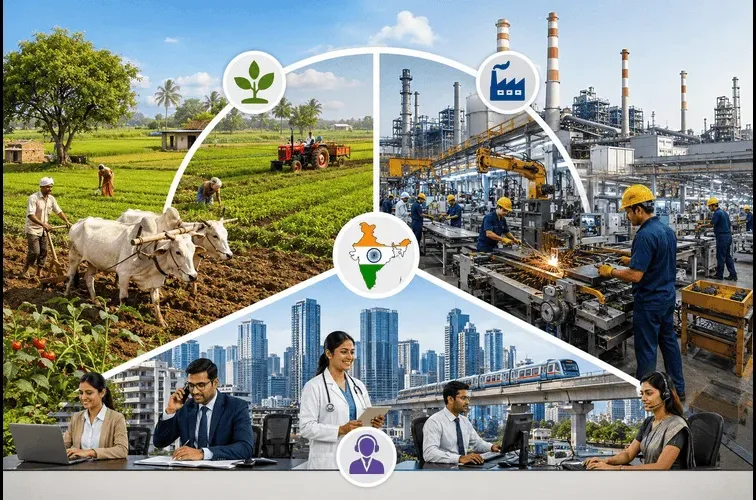
The Indian economy is mainly divided into:
- Primary Sector
- Secondary Sector
- Tertiary Sector
- Quaternary Sector
- Quinary Sector
It can also be classified into:
- Organized Sector and Unorganized Sector
- Public Sector and Private Sector
Primary Sector
The Primary Sector includes activities that directly use natural resources. It is the foundation of the economy because it provides raw materials for other sectors.
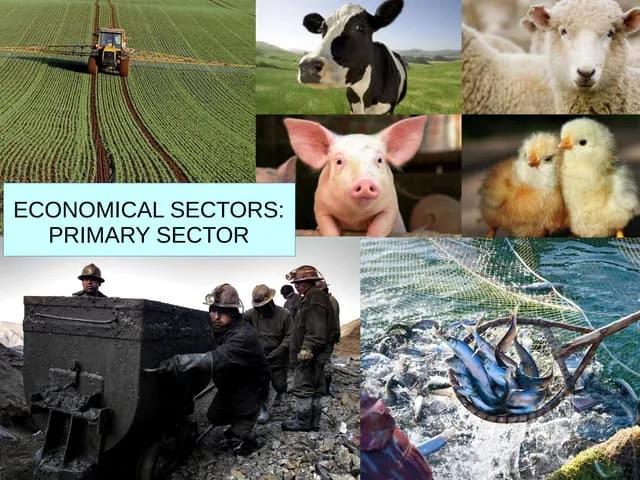
Examples of Primary Sector
- Agriculture
- Fishing
- Forestry
- Dairy Farming
- Mining
- Animal Husbandry
Most of the products obtained from nature come from this sector. Farmers grow crops, fishermen catch fish, and miners extract minerals from the earth.
Importance of Primary Sector
- Provides food for the population.
- Supplies raw materials to industries.
- Creates employment in rural areas.
- Supports exports and income generation.
Workers in Primary Sector
People working in this sector are often called Red Collar Workers because their jobs are usually performed outdoors.
Major Features of Primary Sector
| Feature | Description |
|---|---|
| Resource Base | Natural resources |
| Main Activities | Farming, fishing, mining |
| Location | Mostly rural areas |
| Output | Raw materials |
Secondary Sector
The Secondary Sector involves manufacturing and industrial activities. It converts raw materials from the primary sector into finished goods.
For example, cotton produced by farmers is converted into cloth in textile factories. Sugarcane is processed into sugar in sugar mills.
Examples of Secondary Sector
- Textile Industry
- Automobile Industry
- Steel Industry
- Cement Industry
- Chemical Industry
- Food Processing Industry
- Oil Refineries
Importance of Secondary Sector
- Increases value of raw materials.
- Generates employment opportunities.
- Promotes industrial growth.
- Encourages exports.
Workers in Secondary Sector
People employed in factories and industries are known as Blue Collar Workers.
Manufacturing Activities
- Pottery and handicrafts
- Textile mills
- Steel plants
- Chemical factories
- Automobile production
- Food processing units
Features of Secondary Sector
| Feature | Description |
|---|---|
| Resource Base | Raw materials from primary sector |
| Main Activities | Manufacturing and processing |
| Employment | Industrial workers |
| Output | Finished goods |
Core Industries in India
Core industries form the backbone of industrial development. These industries have a significant impact on the economy and industrial production.
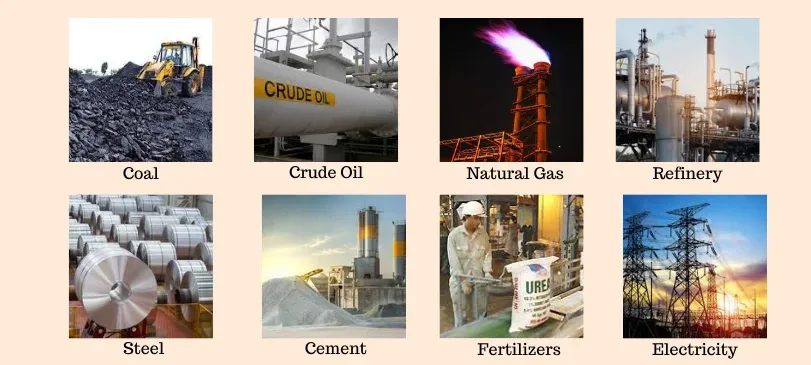
Eight Core Industries
- Electricity
- Steel
- Refinery Products
- Crude Oil
- Coal
- Cement
- Natural Gas
- Fertilizers
The performance of these industries is measured through the Index of Eight Core Industries, which is considered an important indicator of industrial growth.
Tertiary Sector (Service Sector)
The Tertiary Sector provides services rather than producing goods. It supports both the primary and secondary sectors.
For example, farmers need transportation to move crops, and factories need banking services for financial transactions.
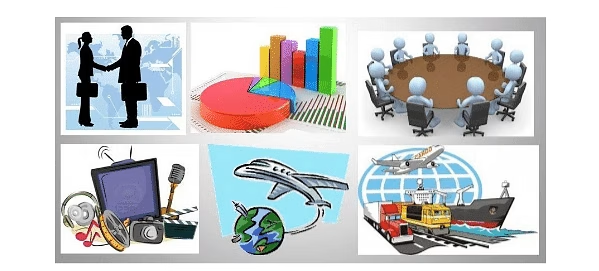
Examples of Tertiary Sector
- Banking
- Insurance
- Transport
- Tourism
- Education
- Healthcare
- Communication
- Information Technology
- Trade and Commerce
Importance of Service Sector
- Supports production and distribution.
- Creates employment.
- Improves living standards.
- Contributes significantly to GDP.
Workers in Tertiary Sector
Workers in this sector are known as White Collar Workers.
Features of Tertiary Sector
| Feature | Description |
|---|---|
| Nature | Service-oriented |
| Main Activities | Banking, transport, education |
| Output | Services |
| Employment | Professionals and service providers |
Pink Collar Workers
Pink Collar Workers are employees who traditionally worked in occupations associated with women.
Examples
- Nurses
- Childcare Workers
- Florists
- Receptionists
- Caregivers
Today, both men and women work in these professions. These jobs often require training and specialized skills.
Sunrise Industries
A Sunrise Industry is a new and rapidly growing industry with high future potential.
These industries attract investment because they are expected to expand significantly in the coming years.
Characteristics of Sunrise Industries
- High growth rate
- Innovation-driven
- Strong future demand
- Attractive investment opportunities
Major Sunrise Industries in India
| Industry | Growth Potential |
|---|---|
| Information Technology | Very High |
| Telecommunications | High |
| Healthcare | High |
| Infrastructure | High |
| Retail | High |
| Food Processing | High |
| Fisheries | Growing |
Sunset Industries
Industries that are declining due to low demand and outdated technology are called Sunset Industries.
Why Did India Move Directly Towards Services?
Normally, countries develop from:
Agriculture → Industry → Services
However, India experienced a different path:
Agriculture → Services
The service sector grew rapidly without a similar growth in manufacturing.
Reasons for Growth of Service Sector
- Large educated workforce
- Strong IT industry
- English-speaking professionals
- Global outsourcing opportunities
- Growth in telecommunications
- Expansion of banking and finance
Reasons for Slower Industrial Growth
- License Raj restrictions in the past
- Limited foreign investment
- Power shortages
- Strict labour laws
- Skill shortages
- Delays in land acquisition
- Cheap imports from other countries
Need for Manufacturing Growth
The manufacturing sector can create large-scale employment. Initiatives such as Make in India aim to strengthen industrial production and increase job opportunities.
Quaternary Sector
The Quaternary Sector is also known as the Knowledge Sector. It involves activities related to information, research, and intellectual services.

Examples of Quaternary Activities
- Scientific Research
- Information Technology
- Data Analysis
- Education
- Consulting Services
- Software Development
Importance
- Promotes innovation.
- Supports technological advancement.
- Improves productivity.
- Helps businesses make better decisions.
Professionals in this sector include scientists, researchers, software engineers, teachers, and consultants.
Quinary Sector
The Quinary Sector includes top-level decision-making and policy formulation.
People working in this sector are responsible for making important decisions that affect society and the economy.
Examples
- Government Leaders
- Senior Bureaucrats
- University Heads
- Corporate Executives
- Judges
- Policy Advisors
These professionals are sometimes referred to as Gold Collar Workers because of their highly specialized skills and leadership roles.
Importance of Quinary Sector
- Creates policies and laws.
- Guides economic development.
- Leads organizations and institutions.
- Supports innovation and strategic planning.
Organized Sector
The Organized Sector includes businesses and institutions registered with the government.
These organizations follow labor laws and provide job security to employees.
Examples
- Government Offices
- Public Sector Companies
- Banks
- Registered Factories
- Schools and Colleges
- Hospitals
Features
- Fixed working hours
- Regular salaries
- Social security benefits
- Paid leave
- Pension and insurance facilities
Advantages
- Job security
- Better working conditions
- Legal protection
- Employee benefits
Unorganized Sector
The Unorganized Sector consists of small businesses and workers who are not covered by many government regulations.
Examples
- Street Vendors
- Small Shopkeepers
- Domestic Workers
- Agricultural Labourers
- Construction Workers
- Rickshaw Pullers
Features
- Low wages
- Irregular employment
- Limited job security
- Lack of social protection
Importance
Despite challenges, the unorganized sector contributes significantly to employment and economic activity in India. A large portion of India’s workforce depends on this sector for livelihood.
Challenges
| Challenge | Impact |
|---|---|
| Low wages | Reduced income |
| Job insecurity | Unstable employment |
| No social security | Lack of protection |
| Seasonal work | Irregular earnings |
Public Sector
The Public Sector consists of organizations owned and managed by the government.
The main aim is public welfare rather than profit.

Examples
- Government Railways
- Public Banks
- Government Hospitals
- Public Sector Enterprises
Functions
- Provide essential services.
- Develop infrastructure.
- Generate employment.
- Support economic growth.
Categories of Public Sector Enterprises
Central Public Sector Enterprises (CPSEs) are classified into three groups:
| Category | Meaning |
|---|---|
| Maharatna | Largest and most powerful CPSEs |
| Navratna | High-performing enterprises |
| Miniratna | Profit-making enterprises |
Benefits of These Categories
- Greater financial autonomy
- Faster decision-making
- Expansion opportunities
- Improved global competitiveness
Private Sector
The Private Sector includes businesses owned by individuals or companies.
Their primary objective is earning profits while providing goods and services.
Examples
- Private Banks
- IT Companies
- Manufacturing Firms
- Retail Chains
- Hospitals
- Educational Institutions
Features
- Private ownership
- Profit motive
- Competitive environment
- Innovation-driven growth
Importance
- Generates employment
- Encourages entrepreneurship
- Attracts investment
- Promotes technological development
Public-Private Partnership (PPP)
A Public-Private Partnership (PPP) is a collaboration between the government and private companies for developing public infrastructure and services.

Examples of PPP Projects
- Highways
- Airports
- Metro Rail Systems
- Smart Cities
- Water Supply Projects
Advantages of PPP
- Reduces government financial burden.
- Brings private sector expertise.
- Improves efficiency.
- Speeds up project completion.
Features of PPP
| Feature | Description |
|---|---|
| Partnership | Government and private company |
| Ownership | Public purpose remains |
| Risk Sharing | Shared between partners |
| Objective | Better public services |
Contribution of Different Sectors to India’s Economy
The contribution of sectors to India’s Gross Domestic Product (GDP) shows the changing structure of the economy.
Sector-wise Contribution
| Sector | Contribution to GDP |
|---|---|
| Services Sector | Highest |
| Industry Sector | Second Highest |
| Agriculture Sector | Third Highest |
Employment Distribution
Although agriculture contributes a smaller share to GDP compared to services, it still employs a large part of India’s workforce. This shows the need for greater industrial and service-sector employment opportunities.
The service sector remains the biggest contributor to India’s economy, while manufacturing and industrial growth continue to be important for creating jobs and boosting economic development.
FAQs on Sectors of Indian Economy
1. What are the main sectors of the Indian economy?
The main sectors are Primary, Secondary, and Tertiary sectors. Quaternary and Quinary sectors are advanced forms of service activities.
2. Why is agriculture called the primary sector?
Agriculture directly uses natural resources and provides raw materials for other sectors, making it the foundation of the economy.
3. What is the secondary sector?
The secondary sector includes manufacturing and industrial activities that convert raw materials into finished products.
4. Why is the service sector important?
The service sector supports agriculture and industry while contributing the largest share to India’s GDP.
5. What is the difference between organized and unorganized sectors?
The organized sector provides regular employment and social security, while the unorganized sector often lacks job security and employee benefits.
6. What is a sunrise industry?
A sunrise industry is a rapidly growing industry with strong future growth potential and high investment opportunities.
7. What is the role of PPP in economic development?
PPP helps develop infrastructure and public services through cooperation between the government and private companies.
8. Which sector contributes the most to India’s GDP?
The service sector contributes the largest share to India’s GDP.