
Pressure Groups in India: Types, Functions, Role and Importance

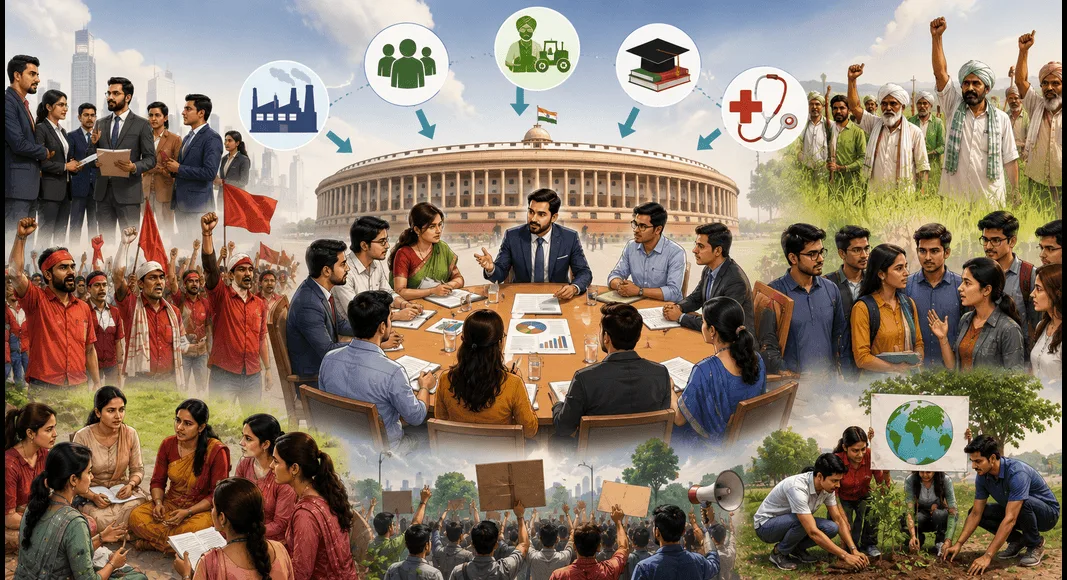
Pressure Groups in India play an important role in a democratic system. They act as a bridge between the government and the people. A pressure group is an organized group of individuals who come together to protect and promote their common interests. These groups try to influence government policies, laws, and decisions without directly participating in elections or trying to form a government.
Thank you for reading this post, don't forget to subscribe!Pressure groups are also known as interest groups or advocacy groups. They work to ensure that the concerns and demands of specific sections of society are heard by policymakers. Their activities are generally focused on a particular issue, profession, community, or cause.
In a large and diverse country like India, pressure groups help different sections of society communicate their needs and expectations to the government. They have become an important part of the democratic process and contribute to policy-making, governance, and public awareness.
Meaning of Pressure Groups
A pressure group is a group of people who share common interests and try to influence government decisions in favor of those interests. Unlike political parties, pressure groups do not contest elections or seek political power. Their main goal is to influence public policy and government actions.
They use legal and peaceful methods such as discussions, lobbying, petitions, public campaigns, demonstrations, media outreach, and awareness programs to achieve their objectives.
Characteristics of Pressure Groups
1. Based on Common Interests
Every pressure group is formed around a specific interest or objective. Members join together because they share similar concerns or goals.
2. Do Not Contest Elections
Pressure groups do not participate directly in elections. They focus on influencing those who hold political power.
3. Use Peaceful and Legal Methods
Most pressure groups use democratic methods such as lobbying, public meetings, petitions, and awareness campaigns.
4. Act as a Link Between Government and People
They communicate the demands of citizens to policymakers and inform citizens about government decisions.
5. Flexible Structure
Many pressure groups have flexible organizational structures and can adapt according to changing circumstances.
6. Issue-Oriented
Unlike political parties, pressure groups generally focus on specific issues rather than a wide range of national concerns.
Techniques Used by Pressure Groups
Pressure groups use various methods to influence government policies.
Electioneering
Pressure groups support candidates who are sympathetic to their interests. They may campaign for such candidates during elections.
Lobbying
Lobbying involves meeting ministers, legislators, and government officials to persuade them to support certain policies.
Public Campaigns
Pressure groups conduct awareness campaigns to educate people and gain public support.
Petitions
They collect signatures and submit petitions to authorities demanding action on specific issues.
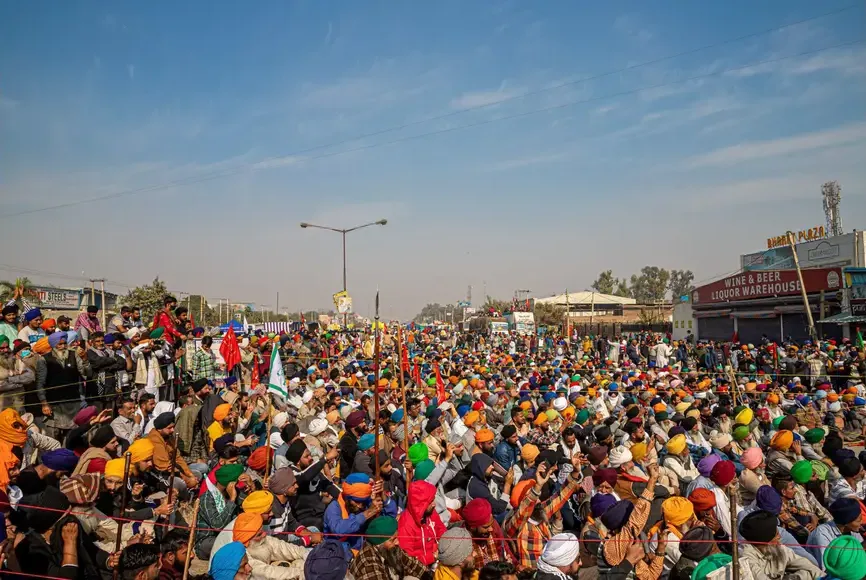
Demonstrations and Protests
Peaceful protests, rallies, and demonstrations are often used to draw attention to important concerns.
Media Outreach
Pressure groups use newspapers, television, social media, and other platforms to influence public opinion.
Public Debates
They organize seminars, conferences, and discussions to highlight important issues.
Why Pressure Groups Emerge
Several factors contribute to the formation of pressure groups in India.
Growing Awareness
As people become more educated and aware of their rights, they organize themselves to protect their interests.
Economic Development
Economic growth creates new opportunities and challenges, leading to the formation of groups representing various sectors.
Inadequacies of Political Parties
Political parties may not always address the concerns of every section of society. Pressure groups fill this gap.
Scarcity of Resources
Competition for resources often leads groups to organize and demand fair distribution.
Social Changes
Changes in society, technology, education, and economy create new interests and concerns that require representation.
Types of Pressure Groups
Institutional Pressure Groups
These groups are part of formal institutions and government structures.
Examples:
- IAS Associations
- IPS Associations
- Civil Services Associations
These groups generally use constitutional and official methods to influence decisions.
Associational Pressure Groups
These are formally organized groups created to promote specific interests.
Examples:
- Trade unions
- Business organizations
- Professional associations
- Student organizations
Non-Associational Pressure Groups
These groups are based on caste, religion, ethnicity, language, or social status.
Examples:
- Caste associations
- Religious organizations
- Community groups
Anomic Pressure Groups
These groups emerge suddenly due to social unrest, dissatisfaction, or grievances.
Examples include:
- Demonstrations
- Riots
- Protest movements
They are usually temporary and spontaneous.
Major Pressure Groups in India
Business Groups
Business organizations influence economic and industrial policies.
Examples:
- Federation of Indian Chambers of Commerce and Industry (FICCI)
- Associated Chambers of Commerce and Industry of India (ASSOCHAM)
These groups advocate policies favorable to business growth and investment.
Trade Unions
Trade unions work for the welfare of workers and laborers.
Examples:
- All India Trade Union Congress (AITUC)
- Indian National Trade Union Congress (INTUC)
- Bharatiya Mazdoor Sangh (BMS)
Professional Groups
These organizations represent professionals from different fields.
Examples:
- Indian Medical Association (IMA)
- Bar Council of India (BCI)
- Teachers’ Associations
Farmers’ Groups
These groups work for the welfare of farmers.
Examples:
- Bharatiya Kisan Union (BKU)
- All India Kisan Sabha
Student Organizations
Student groups raise issues related to education and youth welfare.
Examples:
- Akhil Bharatiya Vidyarthi Parishad (ABVP)
- National Students’ Union of India (NSUI)
- All India Students Federation (AISF)
Religious Groups
Religious organizations often influence social and cultural issues.
Examples:
- Rashtriya Swayamsevak Sangh (RSS)
- Vishwa Hindu Parishad (VHP)
Environmental and Social Movements
These groups focus on environmental protection and social justice.
Examples:
- Chipko Movement
- Narmada Bachao Andolan
- India Against Corruption Movement
Functions of Pressure Groups
Interest Articulation
Pressure groups express the needs and demands of various sections of society.
Political Education
They educate citizens about public issues and government policies.
Policy Influence
Pressure groups provide suggestions and recommendations to policymakers.
Public Opinion Formation
They help shape public opinion through campaigns and awareness programs.
Government Accountability
Pressure groups monitor government actions and expose shortcomings.
Representation of Marginalized Groups
They help weaker sections of society raise their voices.
Judicial Action
Many pressure groups approach courts to protect public interests and constitutional rights.
Importance of Pressure Groups in Democracy
Strengthening Democracy
Pressure groups encourage citizen participation in governance.
Improving Decision-Making
Governments receive valuable information and feedback from pressure groups.
Protecting Rights
Pressure groups safeguard the rights and interests of different communities.
Promoting Social Change
Many social reforms have been supported by pressure groups.
Balancing Political Power
They act as a check on excessive concentration of power.
Encouraging Transparency
Pressure groups expose corruption and demand accountability.
Providing Specialized Knowledge
They often possess expert knowledge about specific sectors and issues.
Positive Impact of Pressure Groups in India
Several important changes in India have been influenced by pressure groups.
- Environmental protection movements helped conserve forests and natural resources.
- Women’s organizations contributed to laws protecting women’s rights.
- Farmers’ groups have influenced agricultural policies.
- Consumer groups have strengthened consumer protection laws.
- Anti-corruption movements increased public awareness about transparency and accountability.
Challenges and Criticisms of Pressure Groups
Narrow Interests
Some pressure groups focus only on their own interests rather than the broader public good.
Misuse of Influence
Certain groups may use money or political connections to gain unfair advantages.
Lack of Accountability
Unlike elected representatives, pressure groups are not directly accountable to the public.
Political Manipulation
Some groups may become tools of political parties.
Use of Unconstitutional Methods
Occasionally, some groups resort to violence, strikes, or disruptive activities.
Extremism
Certain pressure groups may promote extreme views that can create social tensions.
Unequal Influence
Wealthy and powerful groups often have greater influence than weaker groups.
Pressure Groups and Public Policy
Pressure groups play an important role in shaping public policy. Governments often consult business associations, farmers’ organizations, labor unions, and professional bodies before making major decisions.
For example:
- Trade unions influence labor laws.
- Business groups influence industrial policies.
- Farmers’ organizations influence agricultural reforms.
- Environmental groups influence conservation policies.
Their participation helps ensure that policies consider the interests of various stakeholders.
Difference Between Pressure Groups and Political Parties
| Pressure Groups | Political Parties |
|---|---|
| Focus on specific interests | Focus on overall governance |
| Do not contest elections | Contest elections |
| Do not seek political power | Aim to form government |
| Influence policies indirectly | Make policies directly when in power |
| Issue-based activities | Broad political agenda |
Conclusion
Pressure Groups in India are an essential part of the democratic system. They provide a platform for citizens to express their concerns and influence government policies. These groups help strengthen democracy by promoting participation, accountability, transparency, and public awareness.
Over the years, pressure groups have played a significant role in shaping policies related to labor rights, environmental protection, education, agriculture, and social justice. They serve as a bridge between the government and society and help ensure that diverse voices are heard.
However, pressure groups must operate responsibly and within constitutional limits. They should focus on public welfare and avoid narrow or extremist interests. When used constructively, pressure groups contribute greatly to democratic governance, social progress, and the protection of citizens’ rights in India.
FAQs on Pressure Groups in India
1. What is a pressure group?
A pressure group is an organized group of people that tries to influence government policies and decisions to protect or promote specific interests without contesting elections.
2. How are pressure groups different from political parties?
Political parties seek political power by contesting elections, while pressure groups influence policies and decisions without seeking direct political power.
3. What are the main techniques used by pressure groups?
Pressure groups mainly use lobbying, electioneering, public campaigns, petitions, media outreach, and awareness programs to influence decision-makers.
4. What are the major types of pressure groups in India?
The major types are institutional groups, associational groups, non-associational groups, and anomic groups.
5. What are some examples of business pressure groups in India?
Examples include FICCI (Federation of Indian Chambers of Commerce and Industry) and ASSOCHAM (Associated Chambers of Commerce and Industry of India).
6. What role do pressure groups play in a democracy?
They represent public interests, influence policy-making, promote awareness, and strengthen democratic participation.
7. How do pressure groups influence legislation?
They provide information to lawmakers, suggest policy changes, lobby legislators, and advocate for laws that support their interests.
8. Can pressure groups approach courts?
Yes, pressure groups can seek legal remedies through courts to protect their interests or challenge government decisions.
9. What are the advantages of pressure groups?
They improve public participation, increase government accountability, provide expert knowledge, and help address social issues.
10. What are the drawbacks of pressure groups?
Some pressure groups may promote narrow interests, use undue influence, encourage extremism, or create political instability.