




India Israel Audit MoU Signed

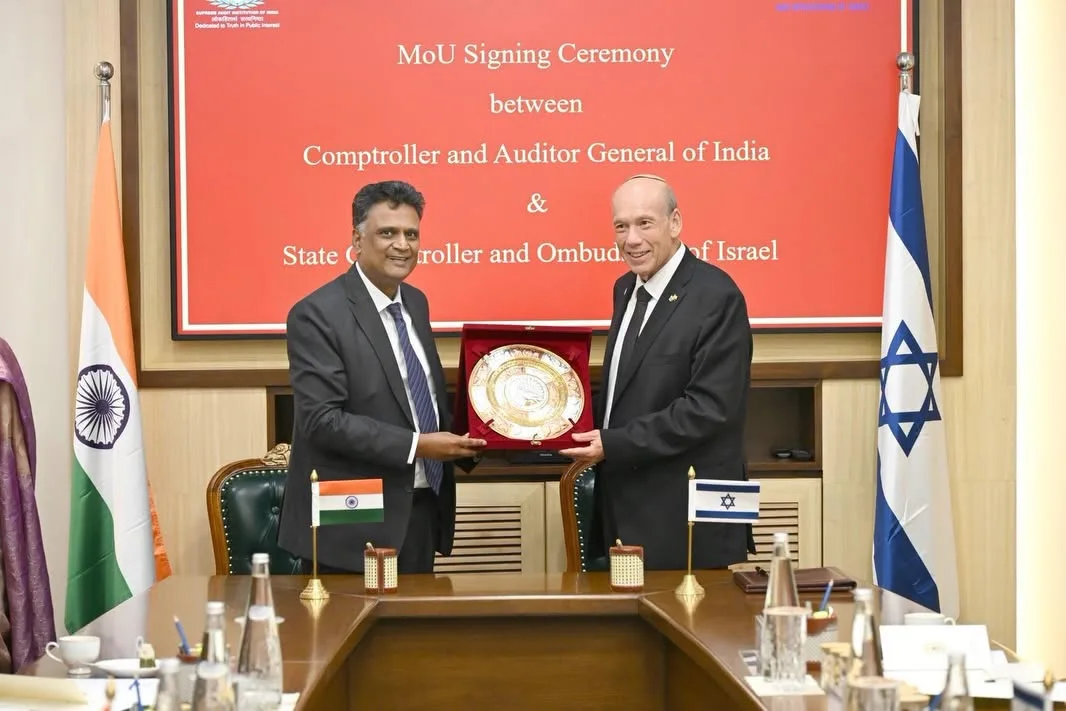
India Israel Audit MoU marks a new step in global cooperation as India and Israel signed an agreement on 23 June 2026 to work together in public sector auditing. The agreement connects two important institutions—the Comptroller and Auditor General of India and the Supreme Audit Institution of Israel.
Thank you for reading this post, don't forget to subscribe!This move reflects a growing focus on transparency, accountability, and better use of technology in government systems. It also shows how countries are sharing knowledge to improve governance in today’s fast-changing world.
What the MoU Means for Public Auditing
A Memorandum of Understanding, often called an MoU, is a formal agreement that outlines areas where institutions plan to work together. In this case, the India Israel Audit MoU focuses on sharing audit practices, technical knowledge, and professional expertise.
The agreement covers training programmes, exchange of audit methods, and discussions on modern tools used in auditing. This kind of cooperation helps both sides learn from each other and improve their systems.
Public sector auditing is important because it checks how government money is used and ensures that funds are spent properly.
Role of Key Institutions
In India, the Comptroller and Auditor General plays a central role in auditing government accounts. This office is established under the Constitution and is responsible for reviewing financial records of both central and state governments.
On the Israeli side, the agreement involves leadership from Matanyahu Englman, who serves as the State Comptroller and Ombudsman. He is also associated with the European Organisation of Supreme Audit Institutions, which connects audit bodies across Europe.
These institutions are known for promoting transparency and ensuring that public resources are managed effectively.
Exchange of Knowledge and Skills
One of the main highlights of the India Israel Audit MoU is the exchange of professional knowledge. Both countries plan to organise seminars and workshops where experts can share their experiences.
These events may take place in both India and Israel, allowing professionals to learn about different auditing systems and practices. Topics may include performance audits, financial audits, and the use of new technologies.
Such exchanges help build stronger institutions and improve the quality of public administration.
Growing Role of Technology in Auditing
A major topic discussed during the cooperation is the use of technology in auditing. Matanyahu Englman delivered a lecture on how artificial intelligence is being used in modern audit systems.
AI tools can analyse large amounts of data, identify patterns, and detect irregularities. This makes auditing faster and more accurate. Governments are increasingly using digital tools to monitor spending and improve efficiency.
The inclusion of AI in auditing reflects a global trend where technology is transforming public services.
Importance of Transparency and Accountability
Public sector auditing plays a key role in maintaining trust between governments and citizens. It ensures that public funds are used responsibly and that rules are followed.
The India Israel Audit MoU supports these goals by encouraging better practices and stronger systems. Transparency and accountability are essential for good governance, especially in a time when citizens expect more openness from public institutions.
By working together, both countries aim to strengthen these values in their systems.
Global Trends in Public Sector Auditing
The agreement between India and Israel is part of a broader global trend where countries are collaborating to improve governance. Audit institutions around the world are sharing knowledge and adopting new tools.
Organizations like the European Organisation of Supreme Audit Institutions play a role in connecting these efforts. They provide platforms for cooperation and help spread best practices.
This global approach helps countries deal with common challenges and improve their public systems.
Relevance in Today’s Governance Systems
The India Israel Audit MoU comes at a time when governments are focusing more on efficiency and digital transformation. With increasing public spending and complex projects, strong auditing systems are more important than ever.
The use of AI and data-driven tools is becoming common in many countries. This helps governments track spending, reduce waste, and improve decision-making.
The agreement highlights how cooperation and innovation can work together to create better governance systems.
Future Scope of Cooperation
The partnership between India and Israel is expected to grow over time. More joint programmes, training sessions, and knowledge exchanges may be organised.
This will help both countries stay updated with global trends and improve their auditing practices. It also opens the door for further collaboration in related areas such as digital governance and public administration.
The focus on innovation and cooperation shows a forward-looking approach to managing public resources.