



Microdroplet Chemistry Breakthrough

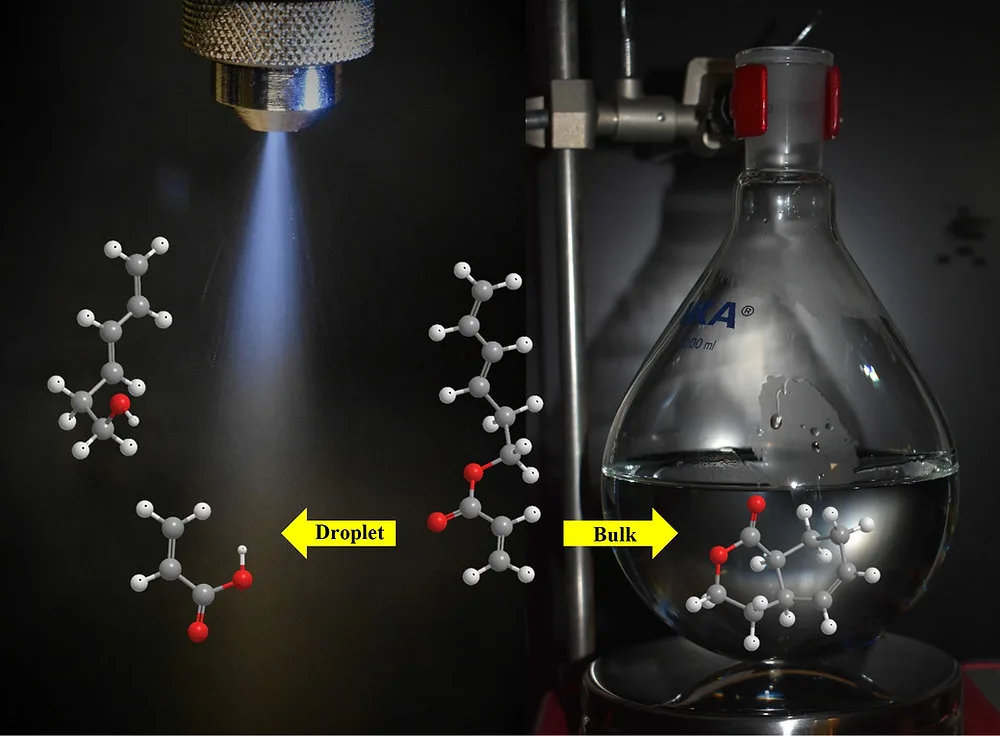
Microdroplet Chemistry is gaining attention in the scientific world as researchers discover new ways to perform chemical reactions faster and more efficiently. In June 2026, scientists showed that this method can enable skeletal editing of molecules without using catalysts, marking a major step in green chemistry.
Thank you for reading this post, don't forget to subscribe!A research team led by Shibdas Banerjee at the Indian Institute of Science Education and Research Tirupati demonstrated how tiny droplets of water can drive chemical reactions. This approach is simple, energy-efficient, and opens new possibilities in modern chemistry.
What is Microdroplet Chemistry
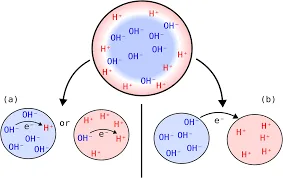
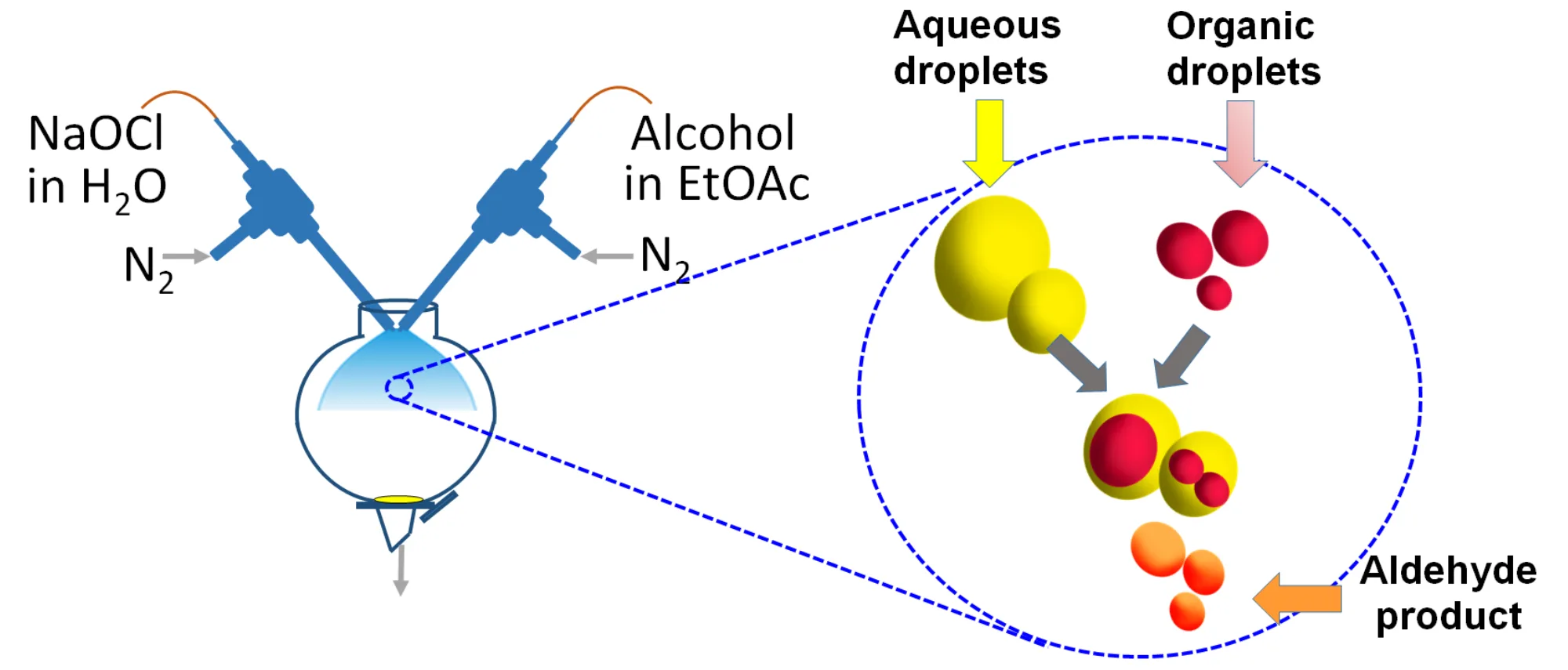
Microdroplet chemistry involves using extremely small liquid droplets, often at micrometre or nanometre scale, to carry out reactions. These droplets create unique conditions that allow reactions to happen faster than in regular liquid solutions.
Scientists have observed that reactions inside these droplets can occur rapidly without the need for high temperatures or additional chemicals. This makes the process more efficient and environmentally friendly.
The method is becoming popular in research because it reduces the need for heavy equipment and complex reaction setups.
Understanding Skeletal Editing
Skeletal editing is a technique in Organic Chemistry that changes the core structure of a molecule. Instead of just modifying side groups, it reshapes the main framework by adding, removing, or replacing atoms.
This process is important in creating new chemical compounds and improving existing ones. It allows scientists to design molecules with specific properties for different applications.
Skeletal editing is widely used in drug discovery, materials science, and advanced chemical research.
Catalyst-Free Transformation
One of the most exciting aspects of this research is that it does not require a catalyst. Traditionally, catalysts are used to speed up reactions, but they can be expensive and sometimes harmful to the environment.
In this case, researchers used water microdroplets to convert Aniline into Pyridine without any added catalyst.
This shows that microdroplet chemistry can simplify complex reactions while reducing chemical waste and energy use.
Microdroplet Chemistry is emerging as a powerful technique in modern science, enabling faster and cleaner chemical reactions through tiny liquid droplets. This innovative approach allows complex processes like skeletal editing without the need for catalysts, reducing energy use and chemical waste while supporting advancements in green chemistry, drug development, and sustainable industrial practices.
Global Research and Collaboration
Similar work has been reported by scientists at Purdue University, where Graham Cooks and his team explored microdroplet reactions. Researchers at Aston Labs have also studied how these droplets can speed up chemical processes.
These studies highlight a growing global interest in finding cleaner and faster ways to perform chemical reactions. The collaboration between different research groups is helping advance this field quickly.
Importance in Green Chemistry
Microdroplet chemistry is closely linked to green chemistry, which focuses on reducing environmental impact. By eliminating the need for catalysts and lowering energy requirements, this method supports sustainable practices.
Traditional chemical processes often involve high temperatures, pressure, and large amounts of reagents. Microdroplet techniques offer a simpler alternative that uses fewer resources.
This makes the approach attractive for industries looking to reduce costs and environmental footprint.
Role in Drug Development
Skeletal editing plays a key role in the development of medicines. Many drugs contain nitrogen-based structures, which are important for their effectiveness.
Compounds like Quinoline and pyridine are commonly used in pharmaceuticals. Microdroplet chemistry can help create these structures more efficiently.
With faster reaction times and fewer steps, this method could speed up the process of developing new drugs and treatments.
Recent Advances in the Field
The field of skeletal editing has seen rapid progress in recent years. Scientists like Richmond Sarpong have explored its use in modifying complex molecules.
Other research has shown that these techniques can even work at the single-molecule level, opening new possibilities in precision chemistry.
Innovations such as atom swapping and ring modification are helping scientists design molecules in ways that were not possible before.
Technology and Innovation in Chemistry
The rise of microdroplet chemistry reflects a broader trend of innovation in science. Researchers are combining new techniques with advanced tools to improve efficiency and accuracy.
This approach is not only useful in laboratories but also has potential applications in industries such as pharmaceuticals, agriculture, and materials science.
As technology continues to evolve, methods like microdroplet chemistry are expected to become more widely used.
Growing Impact on Modern Science
Microdroplet Chemistry is changing how scientists think about chemical reactions. By offering a faster, cleaner, and more flexible approach, it is helping reshape modern chemistry.
The ability to perform complex transformations without catalysts or high energy input is a major advantage. It shows how simple ideas can lead to powerful innovations.
As research continues, this method is likely to play an important role in future scientific discoveries.