


CSIR-NIScPR Launches Five Magazines

CSIR-NIScPR launched five popular science magazines in Indian languages on 26 September 2026. The new magazines are available in Assamese, Bengali, Marathi, Tamil and Telugu, with the aim of making scientific information easier to understand for readers across different parts of India. The launch took place on the 85th Foundation Day of the Council of Scientific and Industrial Research (CSIR).
Thank you for reading this post, don't forget to subscribe!The initiative gives greater space to regional languages in science communication. Through these magazines, scientific developments, research, discoveries and technology-related information can reach readers in familiar languages and simple forms.
Five New Science Magazines Launched
The five magazines have been given separate names based on the languages in which they are published. The Assamese magazine is called Bigyan Lahar, while the Bengali edition is Bigyan Brittanto. The Marathi magazine is named Vidnyan Kshitij.
The Tamil magazine is called Ariviyal Arikkaiyalar, and the Telugu edition is Vigyan Velugu. Together, these publications expand the regional-language science communication network of CSIR-NIScPR.
The magazines are designed for general readers and are not limited to people working in scientific fields. Their content can cover scientific discoveries, research developments, new technologies, health-related science information, environmental issues and other topics connected with everyday life.
Focus on Regional Language Science Communication
Science communication is important for helping people understand developments in research and technology. Scientific information is often written using technical terms, which can make it difficult for general readers to understand. Regional-language magazines can help explain these subjects in a simpler way.
The launch of the five magazines increases the availability of science content in Indian languages. Assamese, Bengali, Marathi, Tamil and Telugu are widely used languages with large reader communities across different regions of the country.
For readers who are more comfortable using their local language, access to science content in that language can make scientific ideas easier to follow. It can also help develop commonly used scientific vocabulary in regional languages.
CSIR-NIScPR and Its Role
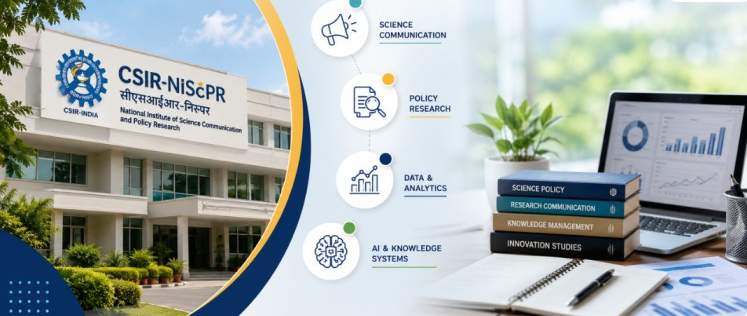
CSIR-NIScPR is a constituent institute of the Council of Scientific and Industrial Research. It works in areas related to science communication and science policy research.
The institute has been involved in publishing and communicating scientific information for different groups of readers. Its publications aim to connect scientific developments with society by presenting information in an accessible form.
The launch of the five new magazines adds another layer to this work. Instead of depending only on English or Hindi science publications, readers can now access selected science communication content through regional-language editions.
AI Used for Translation
An important part of the new publishing effort is the use of Artificial Intelligence for translation. CSIR-NIScPR uses AI-assisted translation for selected content from its existing magazines, including Vigyan Pragati, Science Reporter and Science Ki Duniya.
AI can help speed up the translation process, especially when content needs to be made available in several languages. However, the translated material is not published without further checking.
After AI-assisted translation, human experts review the content. The material goes through proofreading, fact-checking and editing before it is published. This process is intended to maintain the accuracy and clarity of scientific information.
Human Review Remains Important
Scientific articles often contain technical terms, measurements, names of discoveries and specialised concepts. A direct translation may not always explain such terms correctly in another language.
Human review therefore remains an important part of the publishing process. Editors and subject experts can check whether the translated content carries the correct scientific meaning and whether the language is easy for readers to understand.
The combination of AI tools and human editorial work allows CSIR-NIScPR to make the translation process more efficient while continuing to check the quality of the final material.
Five Languages Expand the Reach of Science
The new magazines cover five major Indian languages: Assamese, Bengali, Marathi, Tamil and Telugu. This allows science communication content to reach readers in different parts of India.
For Assamese-speaking readers, Bigyan Lahar provides a dedicated platform for popular science content in Assamese. Similarly, the Bengali, Marathi, Tamil and Telugu magazines provide science information in their respective languages.
Regional-language publishing can also help younger readers become more familiar with scientific ideas. When complex subjects are explained in a language they regularly use, it can make the information more accessible and easier to connect with daily life.
CSIR Foundation Day Launch
The five magazines were launched on 26 September 2026, during the 85th Foundation Day celebrations of CSIR. The occasion highlighted the organisation’s work in scientific research as well as science communication.
CSIR has played a major role in India’s scientific research system, with laboratories and institutions working across different areas of science and technology. Science communication is an important part of connecting this research with society.
The new magazines add to this effort by making selected scientific information available in more Indian languages.
Growing Role of Digital and AI Tools
The launch also reflects the changing way scientific content is produced and distributed. Artificial Intelligence is increasingly being used for translation and other publishing tasks. For organisations working with multiple languages, such tools can help reduce the time needed to prepare content.
At the same time, scientific publishing requires accuracy because incorrect translations can change the meaning of technical information. The CSIR-NIScPR approach of combining AI-assisted translation with human proofreading, fact-checking and editing provides an editorial layer before the content reaches readers.
The five new magazines therefore combine regional-language publishing with modern translation technology. The initiative is expected to strengthen the availability of popular science content for readers across different language communities in India.