


India-Netherlands Hydrogen Fellowship Boosts Global Green Energy Collaboration

India and the Netherlands have taken a major step forward in their clean energy partnership with the launch of the India-Netherlands Hydrogen Fellowship and the signing of a wide-ranging academic cooperation agreement in green hydrogen research. This development reflects the growing importance of international collaboration as India accelerates its transition towards low-carbon energy systems. By focusing on research, skills, and knowledge exchange, the initiative aims to prepare India for large-scale adoption of hydrogen technologies while deepening long-term cooperation with a key European partner.
Thank you for reading this post, don't forget to subscribe!Launch of the India-Netherlands Hydrogen Fellowship
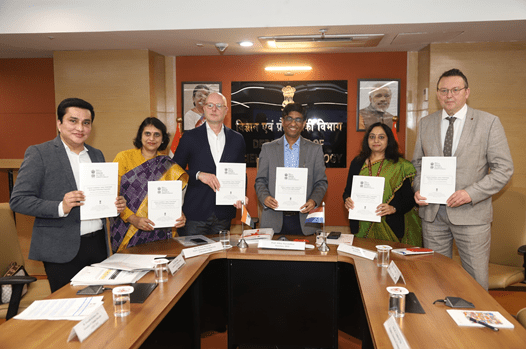
The India-Netherlands Hydrogen Fellowship was officially launched by Abhay Karandikar, Secretary of the Department of Science and Technology. The programme is designed as a national capacity-building effort and is open to Indian doctoral candidates, postdoctoral researchers, and faculty members from recognised institutions across the country.
The fellowship offers structured exposure to advanced hydrogen ecosystems in the Netherlands, a country known for its strong research base, port-led energy systems, and growing hydrogen infrastructure. Selected fellows will gain access to cutting-edge laboratories, pilot projects, and policy frameworks that are shaping hydrogen development in Europe. This exposure is expected to help Indian researchers better understand how hydrogen solutions can be scaled up safely and efficiently.
Building Skills for a Hydrogen-Driven Future
A key objective of the India-Netherlands Hydrogen Fellowship is to strengthen India’s human resource base in emerging hydrogen technologies. The programme focuses on areas such as system integration, hydrogen safety standards, techno-economic analysis, life-cycle assessment, and pathways for indigenisation. These areas are critical for moving hydrogen from experimental stages to real-world applications.
According to the Department of Science and Technology, the fellowship is structured to ensure that research outcomes are closely aligned with India’s clean energy needs. Special attention is given to sectors that are difficult to decarbonise, such as steel, cement, fertilisers, and long-distance transport. By building expertise in these fields, the fellowship aims to support India’s ambition to use green hydrogen as a tool for reducing emissions while supporting economic growth.
Academic Cooperation Between the Netherlands and Indian IITs
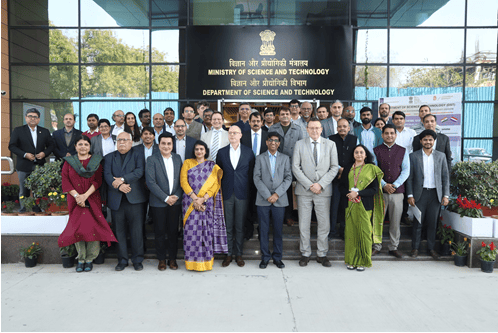
Alongside the fellowship launch, the Department of Science and Technology also hosted the signing of a significant academic agreement. A Memorandum of Understanding was signed between the University of Groningen and 19 Indian Institutes of Technology. This agreement creates a formal framework for long-term cooperation in hydrogen and green energy research.
The MoU enables faculty and student exchanges, joint research projects, and regular knowledge-sharing activities. While it does not automatically include financial commitments, it lays the foundation for collaborative proposals and future funding opportunities. Such institutional agreements are important because they allow researchers to work together across borders with shared goals and mutual trust.
Why the Netherlands Is a Key Partner
The Netherlands has emerged as an important hub for hydrogen development in Europe. Its ports, industrial clusters, and renewable energy resources make it well suited for hydrogen production, storage, and transport. Dutch institutions have been actively working on integrating hydrogen into existing energy systems, including pipelines and industrial processes.
For India, partnering with the Netherlands offers valuable insights into building hydrogen infrastructure at scale. Indian researchers can learn from Dutch experiences in policy design, safety regulation, and public-private collaboration. At the same time, Dutch institutions benefit from India’s large talent pool and growing market for clean energy solutions, creating a mutually beneficial relationship.
Supporting India’s National Hydrogen Ambitions
The India-Netherlands Hydrogen Fellowship is closely aligned with India’s broader energy and climate goals. It supports the National Green Hydrogen Mission, which aims to position India as a global hub for green hydrogen production and export. The fellowship also contributes to long-term national targets such as energy independence by 2047 and net-zero emissions by 2070.
By focusing on research and human capital, the programme addresses one of the biggest challenges in the clean energy transition: the need for skilled professionals who can design, operate, and maintain new technologies. The fellowship helps bridge the gap between academic research and practical deployment, ensuring that innovations can move from laboratories to industrial applications.
Voices From the Partnership
The launch event highlighted the shared vision behind the initiative. Huib Mijnarends, Dutch Deputy Ambassador, spoke about the common priorities of India and the Netherlands in the global energy transition. He emphasised that hydrogen cooperation can play a major role in addressing climate change while creating new economic opportunities.
Jouke de Vries, representing the University of Groningen, underlined the importance of sustained academic partnerships. He noted that long-term collaboration between universities helps build trust, share knowledge, and develop solutions that are relevant across different national contexts.
A Step Towards Global Hydrogen Cooperation
The combined launch of the fellowship and the academic MoU marks an important moment in Indo-Dutch relations. It shows how international cooperation can support national priorities while contributing to global climate goals. By investing in people, research, and institutions, the India-Netherlands Hydrogen Fellowship creates a strong foundation for future innovation in clean energy.
As hydrogen continues to gain attention worldwide as a clean fuel of the future, initiatives like this fellowship help ensure that India is not just a consumer of technology but also a leader in research and development. The partnership with the Netherlands adds international depth to India’s hydrogen journey and highlights the role of education and collaboration in shaping a sustainable energy future.