


Industrial Policy in India: Evolution, Reforms and Impact on Economic Growth

Industrial Policy in India refers to the actions, rules, and strategies adopted by the government to guide the growth and development of industries in the country. It determines how industries are established, managed, financed, regulated, and expanded. Through industrial policies, the government influences investment, employment generation, production, and economic growth.
Industrial policy includes government regulations, licensing systems, taxation policies, labour laws, tariff structures, incentives, subsidies, foreign investment rules, and support for industrial development. Since Independence, India has adopted different industrial policies according to the changing needs of the economy.

Meaning of Industrial Policy
Industrial policy is a set of measures introduced by the government to influence industrial development. These measures help decide:
- Which industries should receive government support.
- The role of public and private sectors.
- Rules for foreign investment.
- Industrial licensing and regulations.
- Promotion of small-scale and large-scale industries.
- Regional industrial development.
Industrial policy plays an important role in shaping the economic structure of a nation and improving industrial productivity.
Objectives of Industrial Policy in India
The Government of India has introduced industrial policies with several important objectives:
| Objective | Purpose |
|---|---|
| Increase Productivity | Improve industrial output and efficiency |
| Generate Employment | Create more job opportunities |
| Optimum Use of Resources | Utilize human and natural resources effectively |
| Global Competitiveness | Make Indian industries competitive internationally |
| Balanced Regional Development | Reduce regional economic disparities |
| Economic Growth | Promote long-term economic development |
| Export Promotion | Increase exports and foreign exchange earnings |
These objectives aim to strengthen India’s position in the global economy while ensuring inclusive development.
Industrial Policy Resolution of 1948
The Industrial Policy Resolution (IPR) of 1948 was India’s first industrial policy after Independence. It laid down the framework for industrial development and clarified the role of the government and private sector.
The policy established India as a Mixed Economy, where both public and private sectors would contribute to economic growth.
Classification of Industries under IPR 1948
| Category | Features |
| Strategic Industries | Fully controlled by the Central Government |
| Basic Industries | Developed mainly by the government with limited private participation |
| Important Industries | Operated by the private sector under government supervision |
| Other Industries | Open to private and cooperative sectors |
Strategic Industries
The government had complete control over:
- Arms and ammunition
- Atomic energy
- Rail transport
Basic Industries
These included:
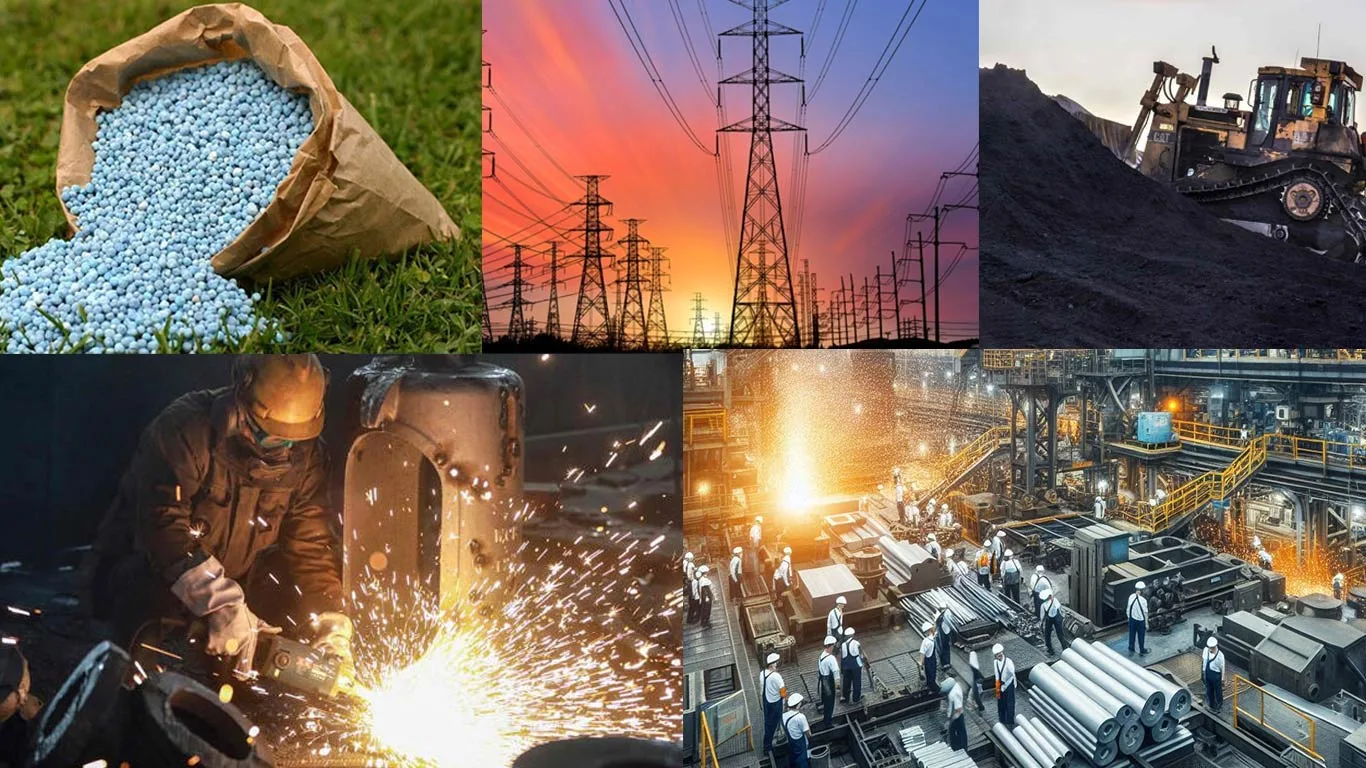
- Coal
- Iron and steel
- Aircraft manufacturing
- Shipbuilding
- Mineral oil
- Communication equipment
The government established these industries while allowing existing private units to continue operations.
Importance of the 1948 Policy
The policy provided a foundation for industrial development and balanced participation between the public and private sectors.
To implement this policy effectively, the government enacted the Industries (Development and Regulation) Act, 1951.
Industrial Policy Resolution of 1956
The Industrial Policy Resolution of 1956 became one of the most important economic policies in independent India. It is often called the Economic Constitution of India.
The policy aimed to establish a socialistic pattern of society and expand the role of the public sector.
Main Features of IPR 1956
- Expansion of the public sector.
- Prevention of private monopolies.
- Promotion of cooperative enterprises.
- Balanced regional development.
- Support for small and cottage industries.
Classification of Industries under IPR 1956
Industries were divided into three schedules.
Schedule A
This category included 17 industries exclusively owned and managed by the government.
Examples:
- Arms and ammunition
- Atomic energy
- Railways
- Air transport
Schedule B
This category contained 12 industries where both public and private sectors could participate. However, the government gradually expanded its role in these industries.
Schedule C
All remaining industries were left open to the private sector. Even then, the government reserved the right to enter any industrial field whenever necessary.
Support for Small Industries
The policy strongly encouraged:
- Cottage industries
- Village industries
- Small-scale industries
These industries were viewed as important sources of employment and decentralized economic growth.
Criticism of IPR 1956
Despite its achievements, the policy faced criticism because:
- Private sector expansion was restricted.
- Excessive government control increased bureaucracy.
- Industrial licensing created delays.
- Competition remained limited.
Industrial Licensing System
One of the major features of India’s industrial policy before 1991 was the licensing system.
Industrial licenses were mandatory for:
- Establishing new industries.
- Expanding production capacity.
- Diversifying industrial activities.
Purpose of Licensing
The government used licensing to:
- Control industrial growth.
- Prevent concentration of wealth.
- Promote industries in backward regions.
- Ensure balanced development.
Industries located in less-developed regions often received:
- Easier licensing approvals.
- Subsidies on electricity.
- Financial support.
- Infrastructure assistance.
Although licensing helped regional development, it also created excessive paperwork and delays.
Industrial Policy Statement of 1977
The Janata Government introduced a new industrial policy in 1977.
The policy focused mainly on rural industrialization and small-scale industries.
Key Features
- Promotion of cottage industries.
- Support for rural employment.
- Development of small-scale industries.
- Reduction of monopoly power of large business groups.
- Worker participation in management.
Classification of Small Industries
The policy divided the small-scale sector into:
| Sector | Description |
| Cottage and Household Sector | Family-based production units |
| Tiny Sector | Very small industrial units |
| Small-Scale Industries | Organized small manufacturing units |
Large-Scale Industries
Large industries were allowed mainly in:
- Basic industries
- Capital goods industries
- High-technology industries
Criticism
The policy was criticized because:
- It lacked effective measures against monopolies.
- It failed to bring major structural changes.
- It did not significantly reduce the dominance of large business houses.
Industrial Policy of 1980
The Industrial Policy of 1980 aimed to improve industrial efficiency and revive industrial growth.
Major Objectives
- Increase industrial production.
- Improve public sector performance.
- Promote modernization.
- Encourage technological advancement.
The policy continued support for laws such as:
- Monopolies and Restrictive Trade Practices (MRTP) Act
- Foreign Exchange Regulation Act (FERA)
The government attempted to improve industrial productivity while maintaining regulatory control.
New Industrial Policy of 1991
The most significant change in India’s industrial history came in 1991.
India was facing a severe economic crisis characterized by:
- Low foreign exchange reserves.
- High fiscal deficits.
- Slow economic growth.
To address these challenges, the government introduced the New Industrial Policy in July 1991.
The policy marked the beginning of economic liberalization, privatization, and globalization.

Major Features of the New Industrial Policy 1991
1. De-Reservation of Public Sector
Many industries reserved for the public sector were opened to private participation.
Today, only a few strategic sectors remain under exclusive government control.
2. Abolition of Industrial Licensing
Industrial licensing was removed for most industries.
At present, licenses are required only for a few sensitive sectors such as:
- Defence equipment
- Hazardous chemicals
- Industrial explosives
- Tobacco products
This greatly reduced bureaucratic barriers.
3. Disinvestment of Public Sector Enterprises
The government reduced its ownership in many public sector companies.
The objectives were:
- Improve efficiency.
- Increase competitiveness.
- Reduce financial burden on the government.
4. Liberalization of Foreign Direct Investment (FDI)
For the first time, foreign companies were allowed significant ownership in Indian businesses.
Initially, up to 51% FDI was permitted in many industries.
Today, several sectors allow 100% FDI.
5. Foreign Technology Agreements
Companies could obtain foreign technology with fewer restrictions.
This improved productivity and modernization.
6. Reform of MRTP Act
The government removed asset limits imposed under the MRTP Act.
Later, the MRTP Act was replaced by the Competition Act, 2002 to promote fair competition.
Impact of the 1991 Industrial Policy
The reforms transformed India’s industrial landscape.
Positive Outcomes
End of License Raj
The complicated system of licenses and permits was largely removed.
Increased Competition
Domestic and foreign companies competed more freely.
This encouraged:
- Better quality products.
- Lower prices.
- Innovation.
Rise in Foreign Investment
Large inflows of foreign investment helped industrial expansion.
Growth of Private Sector
Private enterprises became major contributors to economic development.
Export Promotion
Several export-focused initiatives were introduced:
- Export Oriented Units (EOUs)
- Export Processing Zones (EPZs)
- Special Economic Zones (SEZs)
- National Investment and Manufacturing Zones (NIMZs)
These initiatives boosted exports and industrial production.
Limitations of Industrial Policies in India
Despite progress, several challenges remain.
Manufacturing Sector Growth Remains Limited
The manufacturing sector contributes around 16–17% of GDP, which is lower than many industrialized economies.
Uneven Investment Distribution
Most investments are concentrated in selected sectors, while industries such as:
- Engineering
- Power equipment
- Machine tools
often receive less attention.
Labour Displacement
Modernization and automation have reduced employment opportunities in some industries.
Workers often require retraining to adapt to new technologies.
Limited Efficiency Incentives
Some industries still face productivity issues due to structural constraints.
Environmental Concerns
Industrial growth has increased concerns related to:
- Air pollution
- Water pollution
- Waste management
A clear industrial location policy is still needed to ensure sustainable development.
Recent Initiatives for Industrial Growth
The government has introduced several programs to strengthen industrial development.
Make in India
Launched in 2014, this initiative aims to:
- Increase manufacturing.
- Attract investment.
- Create jobs.
- Promote exports.
Startup India
The program supports entrepreneurs through:
- Funding support.
- Easier regulations.
- Innovation promotion.
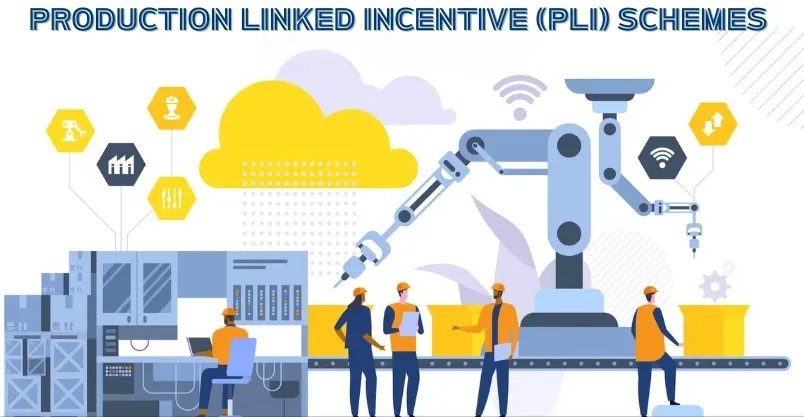
Production Linked Incentive (PLI) Scheme
The PLI scheme encourages domestic manufacturing by offering incentives based on production levels.
GST Reforms
The Goods and Services Tax simplified India’s indirect tax structure and improved ease of doing business.
Insolvency and Bankruptcy Code
The insolvency framework has improved the resolution of stressed businesses and strengthened investor confidence.
Challenges Facing India’s Industrial Sector
Several issues continue to affect industrial growth:
- High electricity costs.
- Infrastructure gaps.
- Credit constraints.
- Complex labour regulations.
- Environmental compliance costs.
- Global competition.
- Technological disruptions.
Addressing these challenges is essential for sustainable industrial expansion.
Future of Industrial Policy in India
India’s industrial policy has evolved from a state-controlled model to a market-oriented framework. The focus today is on attracting investment, increasing manufacturing, promoting exports, and creating employment opportunities.
A modern industrial policy should focus on:
- Advanced manufacturing.
- Green industries.
- Digital technologies.
- Skill development.
- Innovation and research.
- Sustainable industrial growth.
With initiatives such as Make in India, Startup India, Digital India, and Production Linked Incentive schemes, India aims to become a global manufacturing hub and strengthen its position in the world economy.
FAQs
What is Industrial Policy in India?
Industrial Policy in India refers to government measures and regulations designed to promote industrial development, economic growth, and employment generation.
Why was the Industrial Policy Resolution of 1956 important?
It expanded the role of the public sector, promoted socialistic development, and provided the framework for industrial growth until 1991.
What was the main objective of the New Industrial Policy 1991?
The main objective was to liberalize the economy, increase efficiency, attract foreign investment, and accelerate economic growth.
What is the License Raj?
License Raj refers to the system where businesses required government approval for setting up industries, expanding production, or undertaking new projects.
What is the significance of Make in India?
Make in India aims to boost manufacturing, attract investments, create jobs, and make India a global manufacturing center.
What are the major challenges facing Indian industries today?
Major challenges include infrastructure shortages, high energy costs, labour issues, environmental concerns, and global competition.