


P4M Summit Co-Sponsored by India

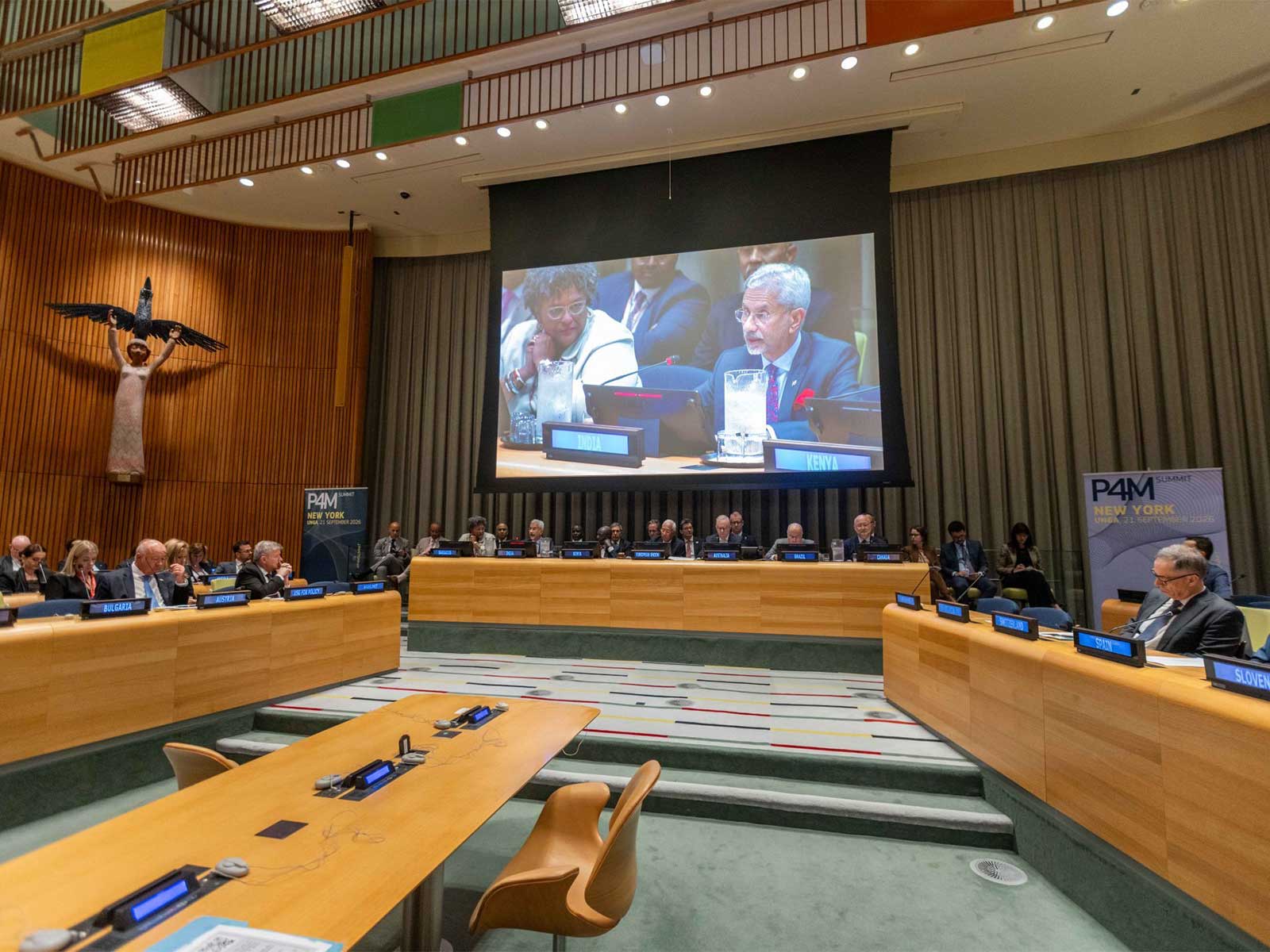
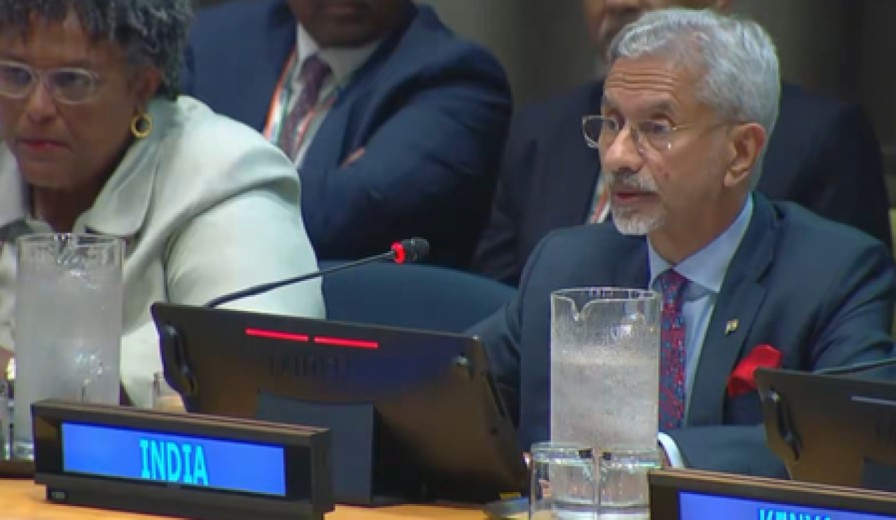
P4M Summit was held for the first time at the United Nations in New York on September 22, 2026, with India joining as a co-sponsor. External Affairs Minister S. Jaishankar co-chaired the inaugural Partners for Multilateralism Summit, which took place on the sidelines of the 81st session of the United Nations General Assembly (UNGA).
Thank you for reading this post, don't forget to subscribe!The summit brought together countries and international partners that support cooperation through the United Nations system. Discussions focused on strengthening multilateralism, improving international institutions and responding to major global challenges.
What Is the P4M Summit?
The Partners for Multilateralism (P4M) is a flexible and open framework for countries that support a rules-based international system and cooperation through the United Nations.
The initiative was founded by the European Union, Brazil, Kenya and Canada. It provides a platform for countries to work together on issues that require international cooperation.
Unlike a formal organisation with a fixed membership structure, the P4M framework is designed to bring together countries with shared interests in strengthening multilateral cooperation.
The inaugural P4M Summit therefore provided an opportunity for participating countries to discuss how international cooperation can be strengthened at a time when many global challenges cross national borders.
India’s Role in the Summit
India was among the countries that co-sponsored the first P4M Summit. The other co-sponsors were Australia, Barbados, Brazil, Canada, Kenya and the European Union.
External Affairs Minister S. Jaishankar co-chaired the meeting, placing India directly among the participants discussing the future of multilateral cooperation.
India has regularly used international platforms to call for reforms in global institutions and greater participation for developing countries. The P4M meeting provided another forum for these discussions alongside the annual UN General Assembly session.
Summit Held During UN General Assembly
The P4M Summit was organised on the margins of the 81st session of the United Nations General Assembly in New York.
The UN General Assembly is the main deliberative body of the United Nations and brings together representatives of UN member states. Its annual session provides a major platform for discussions on international peace, development, security, economic issues and global cooperation.
Holding the P4M Summit during the UNGA session allowed participating countries to connect the discussion on multilateralism with wider debates taking place at the United Nations.
Strengthening Multilateralism
One of the main themes of the summit was the need to strengthen multilateralism.
Multilateralism means cooperation among three or more countries through shared institutions, rules and procedures. The United Nations is the most important global platform for this type of cooperation.
Supporters of stronger multilateral systems argue that issues such as climate change, conflicts, food security, energy security, financial instability and new technologies cannot be handled effectively by individual countries alone.
The summit therefore focused on ways to make international cooperation more effective and responsive to current global challenges.
Reforming Global Decision-Making
Another major topic discussed at the P4M Summit was reform of global decision-making institutions.
International institutions were created at different points in history, while the global balance of population, economic power and political influence has changed over time. Many countries have called for reforms that would give broader representation to different regions and developing economies.
The P4M framework provides a space for participating countries to exchange views on these reform-oriented issues and discuss how international institutions can better respond to present-day challenges.
The 4F Crisis
The summit also discussed the 4F crisis, which refers to four closely connected areas: fuel, food, fertiliser and finance.
Disruptions in one of these areas can affect the others. For example, higher fuel prices can increase transportation and production costs, while shortages or higher prices of fertiliser can affect agricultural production.
Food and energy disruptions can also create financial pressure for governments, businesses and households.
The 4F framework therefore highlights the need for countries to cooperate when dealing with interconnected global economic and supply challenges.
Emerging Technologies and Global Cooperation
Emerging technologies were another area discussed during the summit. New technologies are changing economies, communication systems and international trade, but they can also create new risks.
Countries are increasingly discussing how technologies such as artificial intelligence, advanced digital systems and other emerging tools should be developed and used responsibly.
The P4M Summit included discussions on safeguards for emerging technologies, highlighting the importance of international cooperation in areas where technological developments can have effects beyond national borders.
Diversifying Global Supply Chains
Global supply chains were also part of the discussions. Recent disruptions have shown how dependence on a limited number of suppliers or transport routes can affect the availability of essential goods.
Diversifying supply chains means creating alternative sources, suppliers and routes so that disruptions in one location do not completely stop the flow of important products.
The issue is particularly relevant to energy, food, critical minerals, manufacturing components and other strategic goods.
India and Multilateral Cooperation
India’s participation in the P4M Summit adds another platform to its engagement with international institutions. The country has consistently participated in multilateral forums dealing with economic development, international security, technology, climate change and global governance.
The summit also reflects wider discussions about how international cooperation can adapt to new global conditions.
With countries facing interconnected challenges involving energy, food, finance, technology and supply chains, multilateral platforms continue to provide opportunities for governments to coordinate policies and exchange views.