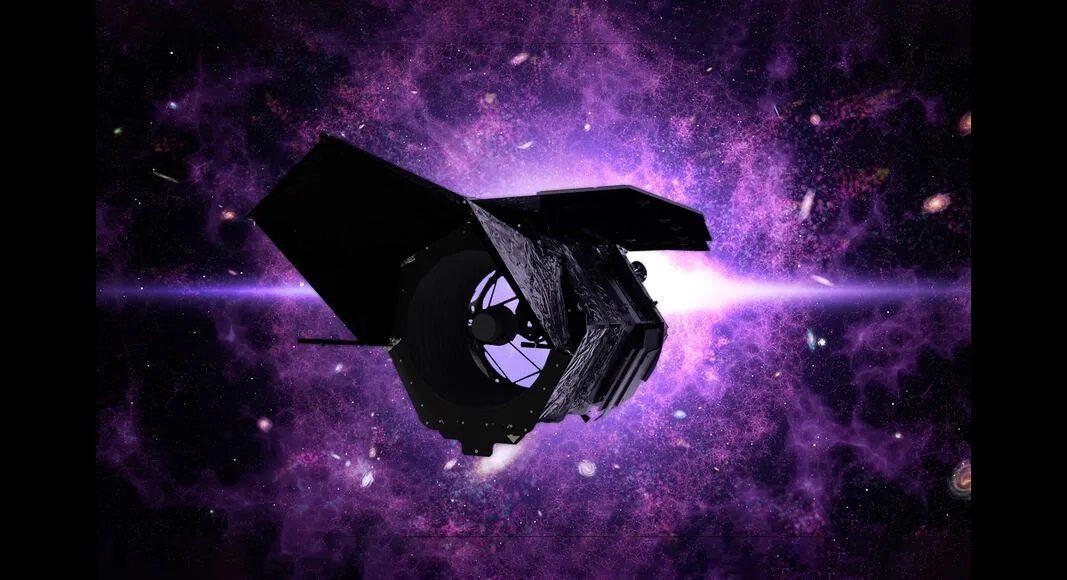
Roman Telescope Maps Space Faster: NASA Completes Powerful New Observatory

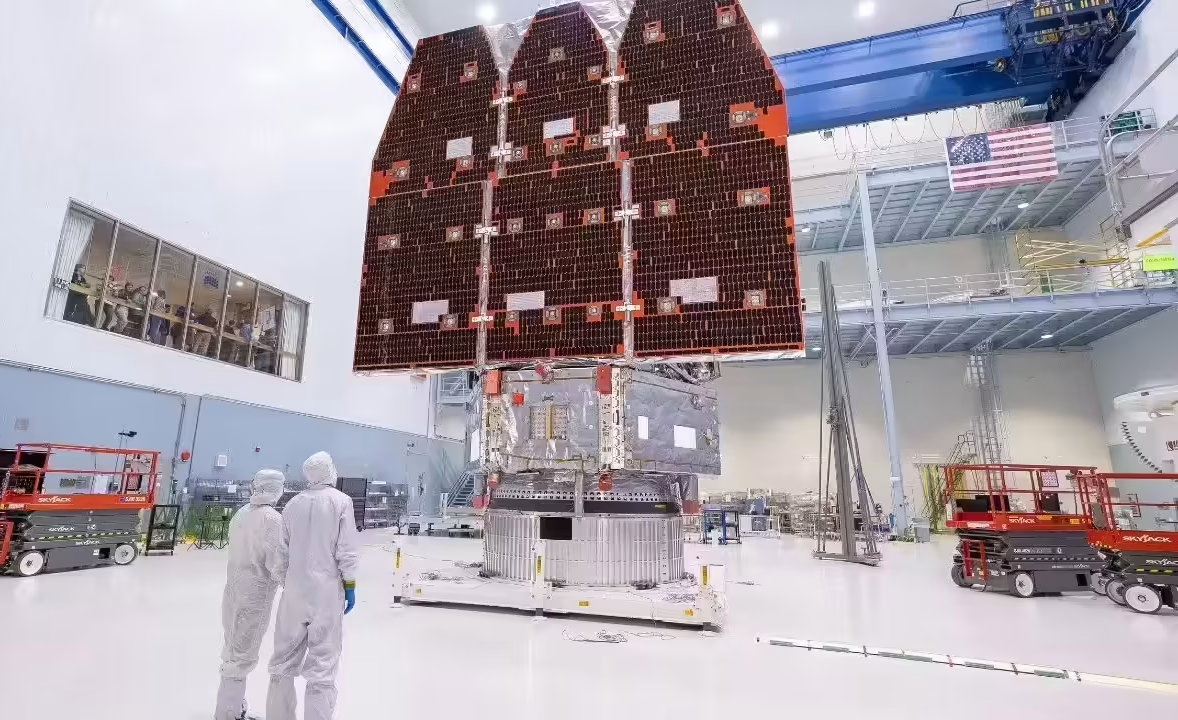
Roman Telescope Maps Space Faster as NASA completes the final assembly of the Nancy Grace Roman Space Telescope. This marks a big step before its planned 2026 launch. Built at Goddard Space Flight Center, the telescope is expected to become one of the most advanced survey tools in space. It follows the legacy of Hubble Space Telescope and James Webb Space Telescope.
Thank you for reading this post, don't forget to subscribe!Roman Telescope Maps Space Faster with Wide View
The Roman Telescope Maps Space Faster because of its powerful design. It has a 2.4-metre mirror, similar to Hubble, but its field of view is about 100 times larger. This means it can capture huge parts of the sky in a single shot. NASA says it can collect survey data nearly 1,000 times faster than Hubble, making it perfect for large-scale space mapping.
Studying Dark Energy and Dark Matter
One major goal of Roman is to study dark energy and dark matter. These unseen forces make up most of the universe. Dark matter affects how galaxies move, while dark energy drives the expansion of space. Roman will build detailed 3D maps of galaxies to help scientists better understand how the universe has evolved over time.
Repeated Sky Scans and Supernova Tracking
Roman will scan the same areas of the sky again and again. This helps scientists spot sudden cosmic events like supernova explosions. By comparing images over time, astronomers can detect changes that happen quickly. The telescope is expected to discover thousands of supernovae, offering valuable data on cosmic expansion.
Exoplanet Search with Advanced Technology
Roman also includes a special coronagraph instrument. It blocks bright light from stars, making it easier to see faint planets nearby. This will help in directly imaging large exoplanets, especially gas giants like Jupiter. The technology can detect planets that are up to 100 million times dimmer than their stars, improving future space missions.
Mission Details and Launch Plan
The telescope will operate from the Lagrange Point 2, about one million miles from Earth. This is the same region where the James Webb Space Telescope works. Roman is expected to launch aboard a SpaceX Falcon Heavy rocket, making it a key mission for space research in the coming years.