5th Marine Fisheries Census 2025: A Digital Leap Toward Sustainable Blue Economy

India is embarking on one of its most comprehensive data-gathering initiatives in the marine sector with the launch of the 5th Marine Fisheries Census 2025. Beginning on 31 October 2025, this nationwide exercise will document the socio-economic, occupational, and demographic profile of the country’s vast marine fishing community. Led by the Department of Fisheries under the Ministry of Fisheries, Animal Husbandry and Dairying, the census aims to provide a robust data foundation for policy-making, sustainable resource management, and livelihood planning.
Thank you for reading this post, don't forget to subscribe!Launch at CMFRI Kochi
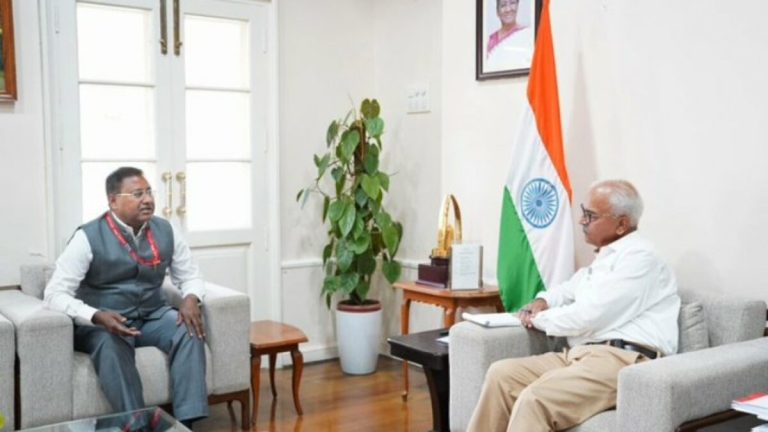
The official inauguration of the 5th Marine Fisheries Census 2025 took place at the ICAR–Central Marine Fisheries Research Institute (CMFRI) in Kochi. Union Minister of State for Fisheries, George Kurian, launched the nationwide enumeration and inaugurated a national workshop to deliberate on marine resource data management.
A major highlight of the event was the unveiling of the National Marine Fisheries Data Centre (NMFDC) a centralised digital repository that will consolidate and analyse fisheries data from across India’s coastal regions. This platform is designed to empower policymakers, researchers, and coastal development authorities with real-time data insights to support evidence-based decision-making and resource conservation.
Comprehensive Coverage and Local Participation
The MFC 2025 is one of India’s largest socio-economic surveys in the fisheries sector. It will cover over 1.2 million fisher households across the country’s nine coastal states and two Union Territories.
The enumeration process, expected to last 45 days, will be conducted by trained enumerators drawn from local fishing communities to ensure familiarity, trust, and accuracy in data collection. The census will gather information on:
- Demographics of fisher families
- Fishing and non-fishing occupations
- Types of fishing crafts and gears used
- Household income sources and assets
- Access to fisheries infrastructure and welfare schemes
This comprehensive database will serve as the backbone of India’s marine fisheries statistics, guiding both central and state-level initiatives under the Pradhan Mantri Matsya Sampada Yojana (PMMSY).
First Fully Digital and Geo-Referenced Marine Census
A defining feature of the 5th Marine Fisheries Census 2025 is its transition to a fully digital and geo-referenced format. For the first time, data will be collected through mobile and tablet-based applications developed by CMFRI, eliminating the need for paper-based surveys.
This digital transformation ensures faster data compilation, higher accuracy, and real-time monitoring of field activities. Enumerators will capture not only textual information but also geo-coordinates of fishing villages, landing centres, and households, allowing for spatial mapping of fisheries resources.
Two dedicated digital tools developed by CMFRI VYAS-BHARAT and VYAS-SUTRA will power this process.
- VYAS-BHARAT will facilitate digital data collection and cloud-based storage.
- VYAS-SUTRA will enable advanced analytics, visualisation, and integration of datasets for decision support.
This marks a significant technological advancement in India’s fisheries governance, aligning with the government’s broader Digital India and Blue Economy missions.
Importance of Data for Sustainable Fisheries and Policy Planning
Reliable, up-to-date data is the cornerstone of sustainable fisheries management. The MFC 2025 will help bridge data gaps in multiple areas from fishing fleet size and fish stock status to coastal employment patterns and gender participation in marine sectors.
By linking scientific data with socio-economic indicators, the census will inform policy frameworks on:
- Sustainable fishing practices to prevent overexploitation of marine resources.
- Infrastructure development, including harbours, cold chains, and processing units.
- Livelihood diversification for fisher families, encouraging eco-tourism and aquaculture.
- Welfare and safety schemes to improve living standards and resilience of coastal populations.
- Marine spatial planning to balance conservation and economic activity along India’s 7,500-km coastline.
The data will also contribute to India’s reporting obligations under international frameworks such as the FAO’s Code of Conduct for Responsible Fisheries and the UN Sustainable Development Goal 14 (Life Below Water).
Exam-Oriented Key Facts
- Name: 5th Marine Fisheries Census 2025
- Launched by: Department of Fisheries, Government of India
- Inaugurated at: ICAR–Central Marine Fisheries Research Institute, Kochi
- Union Minister present: George Kurian, MoS for Fisheries
- Coverage: Over 1.2 million fisher households across coastal states and Union Territories
- Duration: 45 days (from 31 October 2025)
- Implemented under: Pradhan Mantri Matsya Sampada Yojana (PMMSY)
- Technological Features: First fully digital and geo-referenced fisheries census
- Digital Tools: VYAS-BHARAT and VYAS-SUTRA for data collection and analysis
- Key Outcome: Comprehensive national database for sustainable fisheries management
Strengthening India’s Blue Economy
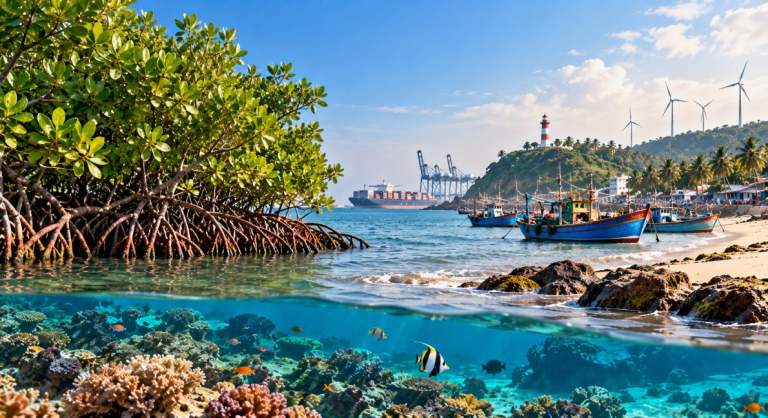
India’s marine fisheries sector contributes significantly to food security, exports, and coastal livelihoods, employing millions directly and indirectly. The 5th Marine Fisheries Census 2025 will provide a reliable statistical foundation for advancing the Blue Economy Vision integrating conservation, innovation, and economic growth.
By using advanced digital tools, India is setting a precedent for data-driven marine governance. The findings will not only guide immediate fisheries policies but also aid in climate resilience planning, helping coastal communities adapt to changing sea conditions, resource depletion, and habitat degradation.
As India prepares for the UN Ocean Decade (2021–2030) commitments, the MFC 2025 stands as a milestone blending traditional knowledge of fishing communities with modern data systems to chart a sustainable and inclusive path forward.
Conclusion
The 5th Marine Fisheries Census 2025 marks a transformative step in India’s journey toward data-driven fisheries governance. With digital tools, geo-referenced mapping, and inclusive participation, it promises to reshape the understanding of marine livelihoods, resource patterns, and sustainability challenges.
Just as the earlier censuses laid the groundwork for fisheries development, this edition is poised to power India’s Blue Revolution 2.0 one that balances productivity with protection, ensuring that the oceans remain both a source of livelihood and life for generations to come.