Aadhaar Citizenship Ruling Clarified by Supreme Court

Aadhaar Citizenship Ruling has brought fresh clarity to the legal status of Aadhaar in India’s documentation system. The Supreme Court of India has clearly stated that Aadhaar cannot be treated as proof of Indian citizenship. The court made this observation while hearing matters related to the Special Intensive Revision (SIR) of electoral rolls in West Bengal, where nearly 50 lakh voter records are currently under verification.
Thank you for reading this post, don't forget to subscribe!The ruling comes at a time when electoral roll revisions are under public attention. Questions about documentation, citizenship status, and voter eligibility have become important topics in public discussion. By clarifying the limited role of Aadhaar, the court has reinforced the difference between identity proof and proof of nationality.
Background of the West Bengal Voter Verification Drive
The Special Intensive Revision process in West Bengal aims to clean up and update the voter list. This includes verifying existing names, removing duplicates, and checking documents submitted by voters. According to officials, around 50 lakh voter documents are being examined as part of this drive.
Because of the large number of records involved, concerns were raised about how the verification would be conducted and whether it could be completed on time. The Supreme Court stepped in to provide guidance and ensure that the process moves forward smoothly without compromising fairness.

Electoral roll revisions are carried out by the Election Commission of India, which is responsible for managing elections across the country. Periodic updates are necessary to maintain accurate voter lists, especially in states with high population movement and urban growth.
Deployment of Judicial Officers for Scrutiny
To handle the scale of the exercise, the Supreme Court directed that experienced judicial officers should supervise the verification process. The Chief Justice of the Calcutta High Court informed the apex court that 294 serving and retired district judges and additional district judges had already been assigned for the task.
Considering the heavy workload, the Supreme Court allowed judicial officers with at least three years of experience to assist in the process. This decision aims to maintain both speed and reliability in checking documents.
If necessary, judicial officers may also be brought from neighbouring states such as Jharkhand and Odisha. The Election Commission has been directed to bear the costs related to accommodation and honorarium for officers deputed from other states. This step ensures that the verification work does not face delays due to manpower shortages.
Aadhaar Citizenship Ruling: Publication of Final and Supplementary Lists
The court stated that the final voter list would be published on February 28. This list will include names of voters whose documents have been successfully verified within the given deadline.
However, since examining all 50 lakh records may take additional time, the court permitted the release of supplementary voter lists later. Using its powers under Article 142 of the Constitution, the Supreme Court clarified that these supplementary lists will legally form part of the final electoral roll.
Only those voters who submitted their documents by February 14 will be considered in the current round of scrutiny. The court approved 11 documents notified by the Election Commission for verification purposes. It also accepted Class X admit cards and mark sheets as valid supporting documents.
This structured approach is intended to prevent confusion and ensure that eligible voters are not left out due to technical delays.
Clear Stand: Aadhaar Is Only Identity Proof
A key aspect of the Aadhaar Citizenship Ruling is the court’s firm statement that Aadhaar is not proof of citizenship. Aadhaar is issued to residents of India and is governed by the Aadhaar Act, 2016. It serves as a unique identification number to confirm identity for various services such as banking, welfare schemes, and digital transactions.
The Supreme Court stressed that citizenship is determined by separate legal provisions and cannot be established solely through Aadhaar. This clarification is important because Aadhaar is widely used in daily life, leading some people to assume that it also confirms nationality.
The bench also mentioned concerns raised about possible misuse of Aadhaar by individuals who are not Indian citizens. However, it chose not to issue specific directions on that matter at this stage, noting that such issues may require deeper examination in appropriate proceedings.
Broader Context and Public Debate
The Aadhaar Citizenship Ruling comes at a time when discussions around identity documents, digital governance, and migration are prominent in India. Over the past decade, Aadhaar has become one of the most widely used identity systems in the country. It is linked to bank accounts, mobile numbers, welfare schemes, and many public services.
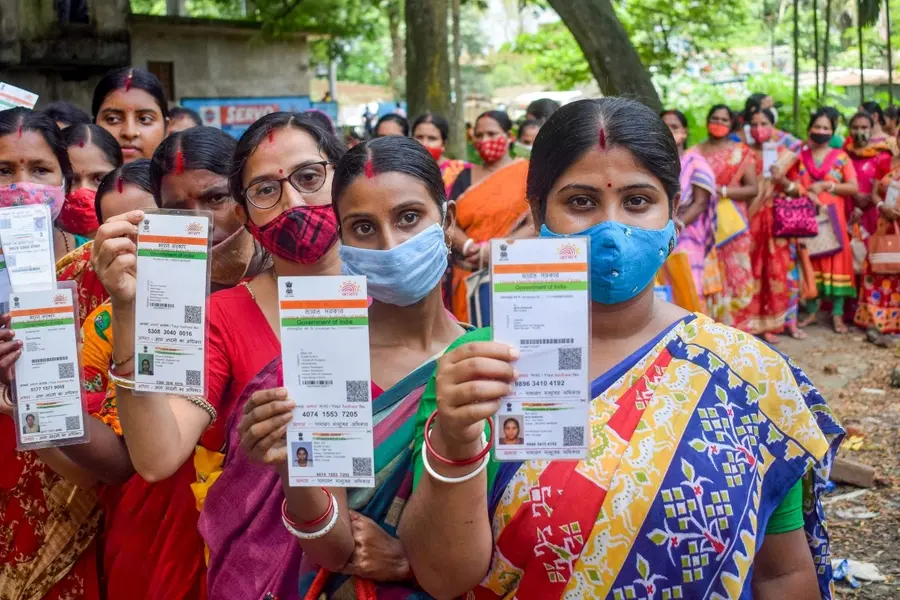
While Aadhaar has improved service delivery and reduced duplication in some areas, debates continue about privacy, data protection, and the scope of its use. The Supreme Court has earlier delivered important judgments outlining limits on mandatory Aadhaar usage.
In the present situation, the court’s clarification helps prevent confusion during voter verification. By clearly separating identity proof from citizenship proof, the ruling supports a more transparent documentation process.
Aadhaar Citizenship Ruling: Impact on Electoral Integrity
The verification drive in West Bengal highlights the importance of maintaining accurate voter lists in a large democracy. With millions of people moving between states for work and education, keeping electoral rolls updated is a complex task.
The Supreme Court’s involvement ensures oversight and structured management of the process. The use of judicial officers adds credibility and independence to the scrutiny exercise. The provision for supplementary lists ensures that the process remains inclusive while maintaining deadlines.
The Aadhaar Citizenship Ruling strengthens the legal understanding that identity and citizenship are separate concepts. As India continues to rely more on digital systems and large-scale databases, such judicial clarifications play an important role in maintaining clarity within the legal and administrative framework.