



AI Diabetic Retinopathy Screening India: Pioneering Early Detection of Diabetic Eye Disease

AI Diabetic Retinopathy Screening India has taken a major leap forward with the launch of the country’s first Artificial Intelligence-driven community screening programme. This initiative, officially inaugurated on December 16, 2025, in New Delhi, represents a significant step in early detection of diabetic eye disease and public health surveillance, aiming to prevent vision loss among millions of diabetics across India.
Thank you for reading this post, don't forget to subscribe!A Collaborative Health Initiative
The programme is a joint effort by the Armed Forces Medical Services (AFMS), the Dr. Rajendra Prasad Centre for Ophthalmic Sciences (RPC) at AIIMS, and the eHealth AI Unit under the Ministry of Health and Family Welfare. The launch ceremony at Army Hospital (Research and Referral), New Delhi, was graced by Director General Armed Forces Medical Services, Surgeon Vice Admiral Arti Sarin, and Prof Radhika Tandon, Chief of RPC, AIIMS. Their combined expertise and vision mark a milestone in integrating technology with community healthcare.
Brig S K Mishra, HOD and Consultant Ophthalmology at Army Hospital (R&R), played a key role in establishing this collaboration, ensuring that the programme can efficiently link community screening with specialized ophthalmic care.
MadhuNetrAI Platform: The Technology Behind Screening
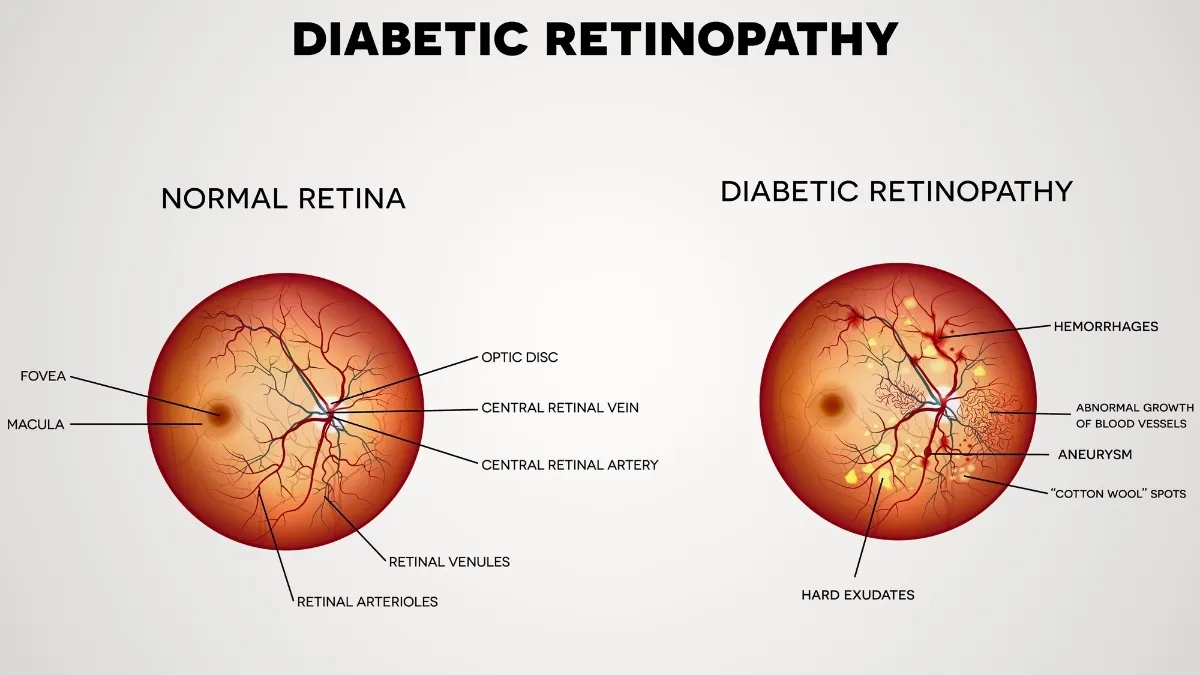
At the core of this initiative is MadhuNetrAI, a web-based AI platform developed by RPC, AIIMS. This advanced system allows automated screening, grading, and triaging of retinal images captured through handheld fundus cameras. The platform is designed to be user-friendly, enabling trained medical officers, nursing staff, and healthcare assistants to carry out screenings at community levels.
The AI platform not only assesses retinal health in real time but also generates immediate data on disease prevalence and geographical distribution. This dual capability ensures that local healthcare providers can act promptly while contributing to a broader understanding of diabetic retinopathy patterns in India.

Pilot Implementation Across Diverse Regions
During the initial phase, the programme will be piloted in seven strategically chosen locations: Pune, Mumbai, Bengaluru, Dharamshala, Gaya, Jorhat, and Kochi. These sites were selected to represent India’s diverse demographic and geographic landscape, including metropolitan, rural, hilly, coastal, and remote areas.
Healthcare personnel from these centres will receive intensive training at RPC, AIIMS, ensuring they are well-prepared to operate the AI platform and manage patients effectively. Screening results will guide referral pathways: patients with diabetic retinopathy will receive appropriate diabetic care, while those with vision-threatening conditions will be referred to vitreo-retina specialists at designated district hospitals. Coordination with District Health Administrations will streamline these referrals, ensuring timely intervention.
Improving Public Health Surveillance with AI Diabetic Retinopathy Screening India
The programme is not just about screening; it is a model for integrating AI into national public health systems. By generating real-time data on retinal health, it provides insights into disease prevalence, risk factors, and regional trends. Such information is crucial for policymakers and health authorities to develop targeted interventions and optimize resource allocation.
Moreover, the operational guidelines and methodology compendium released during the launch provide a structured framework for future scaling. The AI-driven approach can potentially be replicated in other non-communicable disease management initiatives, setting a precedent for technology-led community health programs.
Empowering Community Healthcare with AI Diabetic Retinopathy Screening India
One of the key strengths of the programme lies in its focus on community-level engagement. By enabling trained healthcare personnel to conduct screenings using portable fundus cameras, it brings early detection to the doorstep of patients, especially in rural and remote areas. This proactive approach helps identify complications before they progress, ultimately reducing the burden on tertiary care hospitals.
The integration of AI also alleviates the dependency on specialists for initial screening, making the programme cost-effective and scalable. Patients benefit from early diagnosis and timely referral, while healthcare systems can better manage the increasing incidence of diabetes-related complications.
Future Prospects and Expansion of AI Diabetic Retinopathy Screening India
The successful pilot in the seven diverse locations will serve as a blueprint for expanding the programme nationwide. The scalability of MadhuNetrAI and its compatibility with community healthcare workflows make it possible to extend screenings to additional districts and states over time.
This initiative demonstrates the potential of AI-enabled solutions in improving public health outcomes. By providing accurate, real-time retinal assessments, it ensures that no patient with early signs of diabetic retinopathy is left undiagnosed, paving the way for more effective management of diabetes and its complications across India.
India’s first AI-driven diabetic retinopathy screening programme is not just a technological achievement; it is a transformative step in enhancing community health, preventing blindness, and strengthening national disease surveillance systems. Through collaborative efforts, innovative technology, and community-centric strategies, the programme aims to create a healthier future for millions of diabetics across the country.