Antarctic Ice Growth Study Reveals Link Between Polar Ice Formation and Indian Monsoon Evolution

Recent research under the Antarctic ice growth study has revealed a remarkable connection between the formation of Antarctic ice about 34 million years ago and the early evolution of the Indian monsoon system. Fossilized leaves discovered in Nagaland’s Laisong Formation provide compelling evidence that this northeastern region once experienced a warm and wet tropical climate. The findings illuminate how global climatic shifts, particularly the glaciation of Antarctica, played a crucial role in shaping the monsoon patterns that sustain India’s environment and agriculture today.
Thank you for reading this post, don't forget to subscribe!Antarctic Ice Growth Study and Fossil Evidence from Nagaland
The Antarctic ice growth study is based on fossil evidence unearthed in the Laisong Formation of Nagaland, where scientists found well-preserved fossil leaves dating back approximately 34 million years. These fossils reveal that the area once enjoyed a humid and tropical environment, vastly different from its current climate. Using the advanced Climate Leaf Analysis Multivariate Program (CLAMP), researchers analyzed the leaf morphology to reconstruct ancient climate conditions.
The results indicated significantly high rainfall and temperatures during that epoch, suggesting that Nagaland and the surrounding regions were once lush and densely forested. The fossilized flora recorded the environmental fingerprints of a time when global temperatures were higher and precipitation more abundant.
This evidence serves as a crucial clue in understanding how shifts in polar ice formation influenced tropical climates, creating a deep-time linkage between distant continents and shaping Earth’s climatic evolution.
Antarctic Ice Growth Study and Link to Antarctic Ice Formation
The fossil age corresponds precisely with a critical climatic event the onset of large-scale glaciation in Antarctica around 34 million years ago. According to the Antarctic ice growth study, this period marked the establishment of massive ice sheets on the Antarctic continent, which dramatically altered the planet’s atmospheric and oceanic circulation patterns.
The formation of Antarctic ice sheets led to a global cooling phase, reducing atmospheric carbon dioxide levels and changing wind systems. This glaciation also caused the Intertropical Convergence Zone (ITCZ) a significant equatorial rain belt to shift northward from its former position closer to the South Pole.
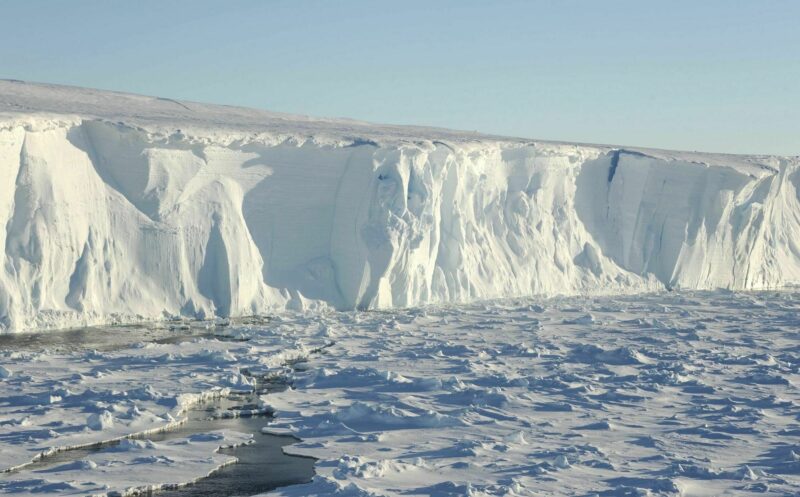
As the ITCZ moved towards the tropics, it brought enhanced rainfall to regions such as present-day Northeast India. This atmospheric adjustment likely intensified the seasonal rains, setting the foundation for what would eventually evolve into the modern Indian monsoon system.
The Antarctic ice growth study thus provides a direct link between polar glaciation and tropical precipitation patterns, illustrating how events in the distant south shaped life and climate thousands of kilometers away in Asia.
Antarctic Ice Growth Study and Its Impact on Global Climate Systems
The Antarctic ice growth study reveals that the initiation of Antarctic glaciation not only transformed the southern hemisphere but also redefined the planet’s hydrological cycles. The movement of the ITCZ increased tropical rainfall and elevated temperatures across the Indian subcontinent. This transformation fostered dense tropical forests and laid the groundwork for one of the world’s most vital climate systems the Indian monsoon.
Such climatic transformations underline the interconnectedness of global systems. As Antarctic ice expanded, it triggered a chain reaction across continents, showing that even remote regions like Antarctica could profoundly influence tropical ecosystems. This finding underscores how sensitive the Earth’s climate system is to seemingly distant geological processes.
Antarctic Ice Growth Study and Modern Climate Change Implications
In the context of modern global warming, the Antarctic ice growth study offers valuable insights. Today, as Antarctic ice melts due to rising global temperatures, the Earth faces a reversal of the ancient climatic processes that once strengthened the monsoon. The melting of polar ice can once again alter the position of the ITCZ, leading to unpredictable changes in monsoon behavior.
Such disruptions could have serious consequences for South Asia, where billions depend on monsoon rains for agriculture, drinking water, and ecosystem balance. A weakened or erratic monsoon could affect crop yields, trigger droughts or floods, and threaten food security across India and neighboring countries.
The study therefore serves as a scientific warning reminding humanity that actions taken in one part of the planet can have cascading effects elsewhere. The history recorded in ancient fossils of Nagaland speaks directly to the urgency of modern climate action and sustainable global policies.
Antarctic Ice Growth Study and Global Climate Interconnections
The Antarctic ice growth study highlights that climate events are never isolated. What happens in Antarctica can ripple across the globe, influencing rainfall in the tropics, shaping vegetation patterns, and driving evolutionary adaptations. Millions of years ago, Antarctic ice growth indirectly helped create the climatic conditions that sustained rich biodiversity and the emergence of the Indian monsoon.
Understanding these long-distance connections is vital for predicting how ongoing environmental changes will shape future climates. The study’s findings show that even small shifts in polar regions can trigger large-scale adjustments in tropical weather systems.
By studying Earth’s past, scientists gain the perspective needed to anticipate the impacts of future climate shifts. This knowledge helps policymakers and environmental planners prepare for upcoming challenges ensuring that nations remain resilient in the face of global warming.
Antarctic Ice Growth Study as a Key to Earth’s Climate History
Ultimately, the Antarctic ice growth study stands as a milestone in paleoclimate research. By connecting fossil evidence from Nagaland to Antarctic glaciation events, it provides a vivid narrative of how Earth’s systems are intricately linked. It demonstrates that the origins of Asia’s monsoon lie deep in the planet’s geological and climatic history shaped by forces acting thousands of kilometers away.
As global temperatures rise and polar ice continues to melt, these insights become increasingly relevant. The ancient climate story told through fossil leaves and Antarctic ice serves as both a scientific revelation and a cautionary message urging global cooperation to protect the delicate balance of Earth’s interconnected climate systems.