Aadhaar Voter Verification: Supreme Court Allows Aadhaar for Electoral Identity in Bihar

The Aadhaar Voter Verification has taken a significant step forward as the Supreme Court of India recently directed the Election Commission (EC) to accept Aadhaar as a 12th document for identity verification during the Special Intensive Revision (SIR) of electoral rolls in Bihar. This decision aims to ensure that genuine voters are not excluded due to the lack of traditional identity or residence documents ahead of the Assembly elections. Importantly, the court clarified that Aadhaar is not proof of citizenship but can serve as a valid document for verifying a voter’s identity. The EC retains the authority to verify the authenticity of Aadhaar cards, just as it does for other documents.
Thank you for reading this post, don't forget to subscribe!Aadhaar Voter Verification Context: Preventing Voter Disenfranchisement
The Supreme Court’s order comes amid growing concerns over potential voter disenfranchisement due to stringent document requirements. Traditionally, the EC has accepted 11 documents to confirm identity and residence for inclusion in the electoral roll. However, petitions filed in the courts highlighted irregularities where Booth Level Officers (BLOs) refused to accept Aadhaar as a valid document. By including Aadhaar, the court has ensured that eligible voters are not excluded simply because they lack conventional documents. This step underscores the importance of inclusivity in the electoral process.
Legal Status of Aadhaar Voter Verification
Under the Aadhaar Act, 2016, Aadhaar serves as a unique identification number but is not recognized as proof of citizenship. Meanwhile, the Representation of the People Act, 1950, allows certain documents to verify identity without confirming citizenship. The Supreme Court emphasized that determining citizenship lies outside the purview of BLOs and must follow constitutional procedures involving the President and the Election Commission. Consequently, Aadhaar’s inclusion is strictly for verifying voter identity and does not affect the legal determination of citizenship.
Role of the Election Commission in Aadhaar Voter Verification
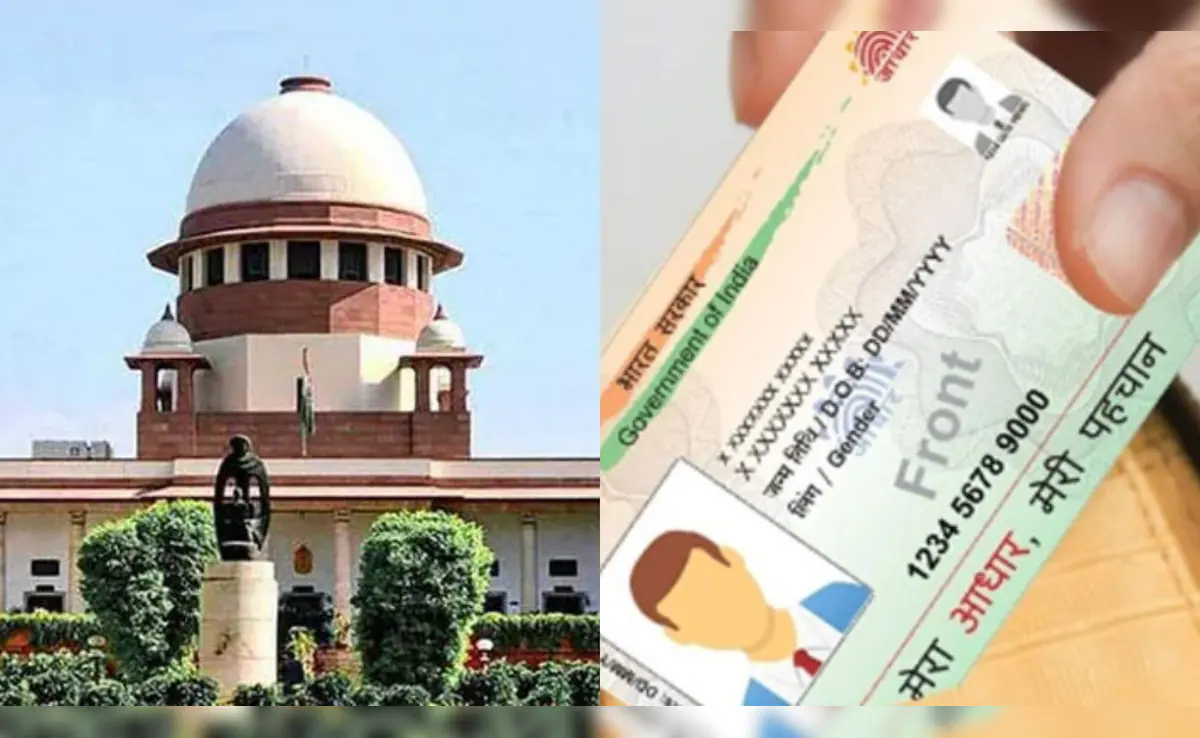
The EC plays a crucial role in finalizing electoral rolls and issuing guidelines on acceptable identity documents. With the Supreme Court’s directive, the EC must update its instructions to explicitly include Aadhaar as a valid document during the Bihar SIR. The commission can verify the genuineness of Aadhaar cards by seeking additional proof when required. Moreover, the EC is responsible for clarifying any ambiguities about acceptance of Aadhaar and addressing notices against officials who accept the document, ensuring that the SIR process remains transparent and inclusive.
Aadhaar Voter Verification and Voter Inclusion
The inclusion of Aadhaar aims to prevent voter exclusion, particularly among those who may not possess traditional forms of identity. In Bihar, nearly 99.6% of voters have submitted documents, but the addition of Aadhaar provides an alternative for the remaining population. While concerns over forged Aadhaar cards persist, robust verification procedures are essential to ensure only eligible voters are enrolled. This step is expected to strengthen electoral participation and uphold the democratic right to vote.
Documents Accepted for Aadhaar Voter Verification
Before the court’s intervention, the EC accepted 11 documents for identity verification, including birth certificates, passports, matriculation certificates, permanent residence certificates, forest rights certificates, caste certificates, and the National Register of Citizens. Additional accepted documents include family registers, land allotment certificates, government-issued identity cards, and older government documents issued before 1987. With the Supreme Court’s order, Aadhaar is now officially recognized as a valid document for voter identity verification in Bihar.
Ongoing Challenges in Aadhaar Voter Verification
Despite the Supreme Court’s directive, some BLOs have reportedly continued to reject Aadhaar, triggering legal disputes and the issuance of show-cause notices. The court has scheduled further hearings to monitor compliance and consider petitions seeking nationwide Special Intensive Revisions. Balancing the prevention of electoral fraud with the need for inclusive voter registration remains a significant challenge. Effective training of BLOs and strict adherence to verification guidelines are essential to make Aadhaar Voter Verification truly effective.
Impact of Aadhaar Voter Verification on Electoral Transparency
The Supreme Court’s intervention strengthens electoral transparency by providing a clear framework for identity verification. Aadhaar Voter Verification ensures that citizens lacking traditional documents can still participate in the democratic process. The move also reduces administrative confusion, as all BLOs now have a uniform directive on accepting Aadhaar. Furthermore, this approach emphasizes the principle that no eligible voter should be denied the right to vote due to procedural technicalities.
Future Prospects
The integration of Aadhaar into the electoral roll verification process signals a potential shift towards more technologically enabled elections. Aadhaar Voter Verification can pave the way for future reforms in other states, improving voter registration efficiency and accuracy. As the EC strengthens its verification mechanisms, the balance between accessibility and security will become a model for other democratic processes in India. The Supreme Court’s proactive stance ensures that inclusivity remains a cornerstone of electoral policy.