



Giant African Snail Invasion: Chennai Faces Growing Ecological and Health Threat

The Giant African Snail Invasion has once again raised alarm bells across India, with Chennai emerging as one of the latest hotspots for this destructive species. The Giant African Snail (Lissachatina fulica), known as one of the world’s most invasive species, has been detected in multiple areas of the city and its outskirts. This invasion poses grave risks to human health, agriculture, and biodiversity, prompting urgent calls for containment and public awareness measures.
Thank you for reading this post, don't forget to subscribe!Giant African Snail Invasion in Chennai
Field reports and environmental surveys between September and November 2024 confirmed widespread populations of the Giant African Snail at St. Thomas Mount, Tirusulam, and Perungalathur Hills. The species thrives in moist, shaded environments, which makes Chennai’s monsoon season a perfect breeding period. Floodwaters during heavy rains have significantly contributed to their dispersal, allowing the snails to infiltrate both urban and semi-urban areas.
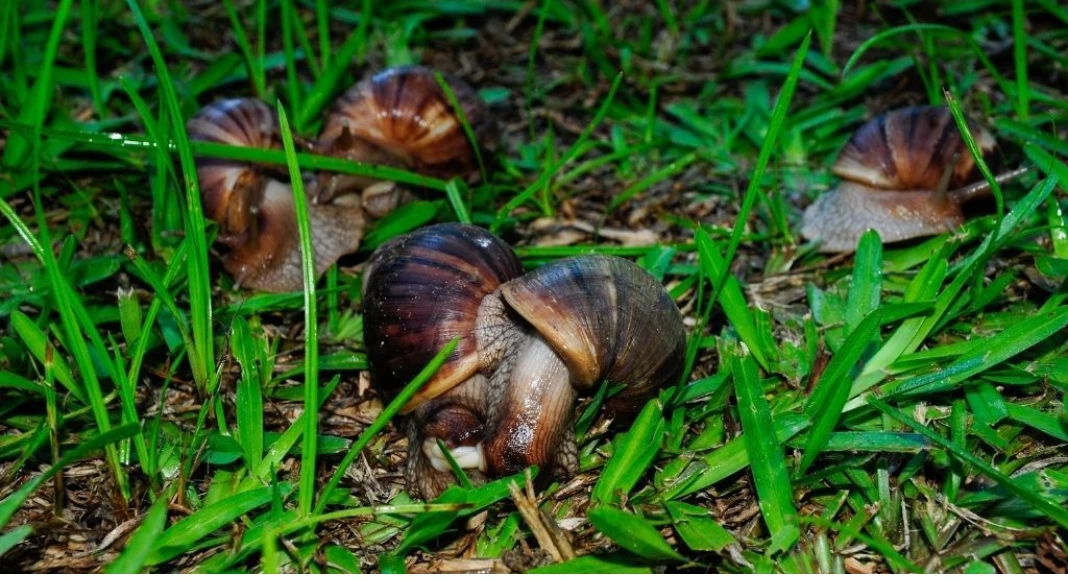
Environmentalists have noted that these snails reproduce rapidly and can survive extreme weather conditions, which makes eradication difficult. The invasion has prompted authorities to deploy monitoring teams and encourage citizens to report sightings. Experts warn that without strict management, the snails could spread further into agricultural zones and neighboring districts.
Health Risks Associated With the Giant African Snail Invasion
One of the most serious concerns linked to the Giant African Snail Invasion is its potential to spread disease. The snails act as carriers for parasitic nematodes such as Angiostrongylus cantonensis and Angiostrongylus costaricensis. These parasites can cause eosinophilic meningoencephalitis a type of brain inflammation and abdominal angiostrongyliasis in humans.
Infection occurs when humans accidentally ingest contaminated snails or vegetables carrying snail mucus. According to medical experts, symptoms may include severe headaches, nausea, fever, and neurological complications. Public health departments are urging residents to wash vegetables thoroughly, avoid contact with snails, and maintain clean surroundings to prevent contamination.
Giant African Snail Invasion and Its Impact on Agriculture and Ecology
The Giant African Snail Invasion threatens not only human health but also agriculture and local ecosystems. The snail feeds on over 500 species of plants, including vegetables, ornamental plants, and major crops. Farmers have reported visible damage to seedlings and fruit-bearing plants in affected areas.
Moreover, the snail competes with native snail species, disrupting ecological balance. Its feeding habits cause soil degradation and contribute to the spread of plant pathogens. The result is a chain reaction that can lead to reduced crop yields and long-term agricultural losses. Environmental experts emphasize that this invasion mirrors global patterns where Lissachatina fulica has devastated farmlands and forests.
Historical Background of the Giant African Snail Invasion
The Giant African Snail Invasion has a long and complex history. Originally native to East Africa, Lissachatina fulica was introduced to India as early as 1847, possibly through trade or accidental transport. Over time, it spread across states such as Tamil Nadu, Kerala, Karnataka, and Odisha.
Globally, this species has invaded several continents, including Asia, Africa, the Americas, and the Pacific Islands. It has been listed among the world’s 100 worst invasive species due to its adaptability and economic damage. Once established, it becomes extremely difficult to eradicate, as it can survive on a wide range of vegetation and lay hundreds of eggs annually.
Challenges in Controlling the Giant African Snail Invasion
Managing the Giant African Snail Invasion presents multiple challenges. The snail’s resilience, fast reproductive cycle, and nocturnal feeding behavior make traditional pest control methods less effective. Manual collection, biological control using predators, and chemical treatments have been tried with limited success.
Flooding during the monsoon further accelerates their spread, helping snails to travel through waterlogged areas and reproduce in new habitats. Experts highlight the need for integrated pest management (IPM) strategies involving surveillance, habitat modification, and public participation. Awareness programs are being promoted in Chennai to educate people about identifying and safely disposing of snails.
Public Health Measures and Awareness Amid the Giant African Snail Invasion
The Tamil Nadu health department has issued advisories to reduce health risks associated with the Giant African Snail Invasion. Residents are urged to wear gloves while gardening, wash vegetables thoroughly, and avoid handling snails directly. Schools and community centers are conducting awareness campaigns emphasizing the dangers of these snails as disease vectors.
Local authorities are also coordinating with environmental organizations to survey affected zones and prevent the snails from spreading into food storage and residential areas. The public’s participation is seen as key to controlling the invasion’s impact.
Ecological Significance of the Giant African Snail Invasion in Urban Environments
The ongoing Giant African Snail Invasion in Chennai underscores the broader threat that invasive species pose to urban biodiversity. Rapid urbanization, unregulated plant trade, and climate change have created favorable conditions for the establishment of non-native species.

Experts suggest that this situation should serve as a wake-up call for policymakers and urban planners. Strengthening biosecurity measures, monitoring ports of entry, and conducting regular pest surveys can help prevent similar invasions in the future.
A Wake-Up Call for Environmental Management
The Giant African Snail Invasion in Chennai is more than an isolated ecological incident; it represents a growing global challenge. Invasive species continue to test the resilience of cities, farmlands, and natural ecosystems. Chennai’s experience shows that proactive management, public awareness, and interdepartmental coordination are crucial for mitigating the effects of such biological threats.
This event serves as a reminder of the delicate balance between human activity and environmental stability. The invasion of the Giant African Snail is not only a biological concern but also an urgent call to strengthen urban environmental policies and protect public health for the future.