



Assam’s King Prithu: Honouring a Forgotten Defender of Indian Civilisation

Assam’s King Prithu is once again in the spotlight as recent developments in the state aim to revive the memory of this 13th-century ruler. The Assam Cabinet has recently decided to name a key flyover in Guwahati after Prithu, recognising him as a symbol of Assam’s historic resistance against foreign invasions. This move not only honours a forgotten chapter of regional history but also places Prithu’s legacy alongside celebrated Assamese heroes such as Lachit Borphukan.
Renewed Recognition in Assam
The decision to dedicate a Guwahati flyover to Assam’s King Prithu has ignited public interest in the early medieval history of the region. For centuries, Prithu remained an obscure figure, mentioned only in scattered records and local traditions. Now, with state-level recognition and growing academic focus, his story is being revisited as part of Assam’s cultural and historical heritage.


Prithu is remembered for his confrontation with the Turko-Afghan invader Bakhtiyar Khilji, infamous for his devastating attack on Nalanda University. Around 1206 CE, Khilji attempted to expand his control into the Brahmaputra valley but reportedly suffered defeat at the hands of Prithu’s forces. This clash positioned Assam as a frontier of defence against external incursions at a critical juncture in Indian history.
Historical Context of Assam’s King Prithu
Prithu is believed to have ruled the Kamrup region during the early 13th century, a time when Assam was politically fragmented into several small principalities. The invasion of Bakhtiyar Khilji, documented in Persian chronicles, extended into these territories but failed to achieve lasting dominance.
The Persian chronicle Tabaqat-i-Nasiri provides an account of Khilji’s campaign and refers to a ruler named “Bartu” or “Prithu,” who resisted his advance. Inscriptions found in North Guwahati further support the existence of a local ruler who confronted Khilji. These sources, though limited, form the foundation of Prithu’s historical identity.
Despite the scarcity of detailed indigenous records, the story of Assam’s King Prithu continues to resonate because it demonstrates the region’s resilience against powerful adversaries during a period of turmoil in the Indian subcontinent.
Evidence and Sources
The primary evidence for Prithu’s existence remains fragmentary. A rock inscription near Guwahati and Persian texts are the most cited references. Local oral traditions also preserve his memory, with mentions of forts, battlefields, and sites linked to his reign.
However, historians caution that the lack of contemporary Assamese texts or court chronicles makes it difficult to establish Prithu’s precise status. Some scholars argue that he may not have been a monarch in the traditional sense but rather a local chieftain who mobilised resistance during a time of crisis.
This gap in evidence reflects the broader challenges of reconstructing medieval Assamese history, where political transitions and the absence of systematic record-keeping leave many questions unresolved.
Scholarly Interest and Growing Debate
The resurgence of interest in Assam’s King Prithu owes much to the efforts of scholars like Raktim Patar, whose 2021 book emphasised Prithu’s role as a defender of Assamese and Indian civilisation. Patar and other researchers argue that Prithu’s successful defence against Khilji deserves recognition comparable to that of Lachit Borphukan, the 17th-century general who defeated the Mughals at the Battle of Saraighat.
Organisations and academic forums have also contributed to this revival by hosting seminars and publishing works that highlight Prithu’s significance. This narrative aligns with broader cultural efforts to celebrate regional heroes and reclaim neglected aspects of history.
At the same time, the academic debate continues. Many historians remain cautious about assigning Prithu the title of “king” or attributing a decisive military victory to him without stronger evidence. The Persian use of the term “rae” suggests a lesser ruler, and the fragmented political landscape of 12th- and 13th-century Assam complicates the picture further.
Assam’s Role in Resisting Early Invasions
The story of Assam’s King Prithu underscores the role of the region as a frontier in resisting early Turko-Afghan incursions. While Khilji succeeded in devastating centres like Nalanda and parts of Bengal, his campaign collapsed in Assam. The inhospitable terrain, resilient local resistance, and lack of support likely contributed to this failure.
By halting Khilji’s advance, Prithu and his people helped preserve Assam’s cultural continuity and shielded the region from the fate that befell other parts of eastern India. This historical episode adds depth to the understanding of Assam’s role in the larger defence of Indian civilisation during the medieval period.
Cultural and Political Significance Today
The state’s decision to honour Assam’s King Prithu reflects a wider movement to reclaim forgotten heroes and integrate them into the cultural memory of the nation. Naming the Guwahati flyover after him is not merely symbolic—it represents an assertion of identity and pride in Assam’s distinct historical legacy.
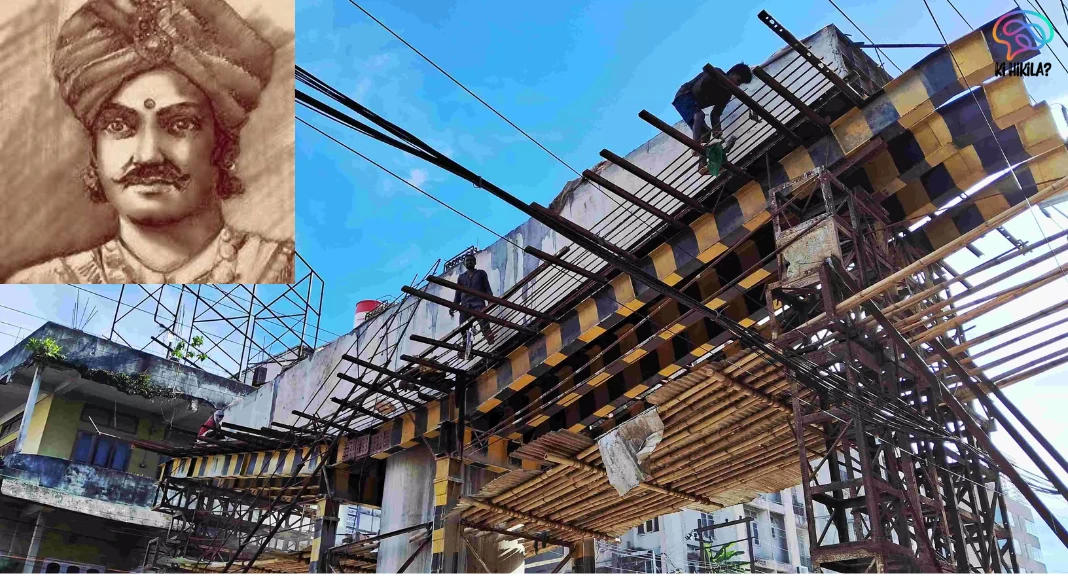
For the people of Assam, recognising Prithu alongside icons like Lachit Borphukan enriches the regional narrative of resistance and resilience. Nationally, it broadens the understanding of India’s medieval history by highlighting figures from beyond the dominant centres of power.
Ongoing Challenges in Historical Reconstruction
Despite the renewed focus, historians stress the need for more archaeological and textual research to build a fuller picture of Prithu’s reign and achievements. Excavations at potential battle sites, comparative analysis of inscriptions, and exploration of local oral traditions could shed further light on his legacy.
Until then, Assam’s King Prithu remains both a historical figure and a symbol—a reminder of the state’s resistance against one of the most feared invaders of medieval India, and a touchstone in the ongoing dialogue about heritage, identity, and memory.