
Atomic Clock by IISER Pune Startup

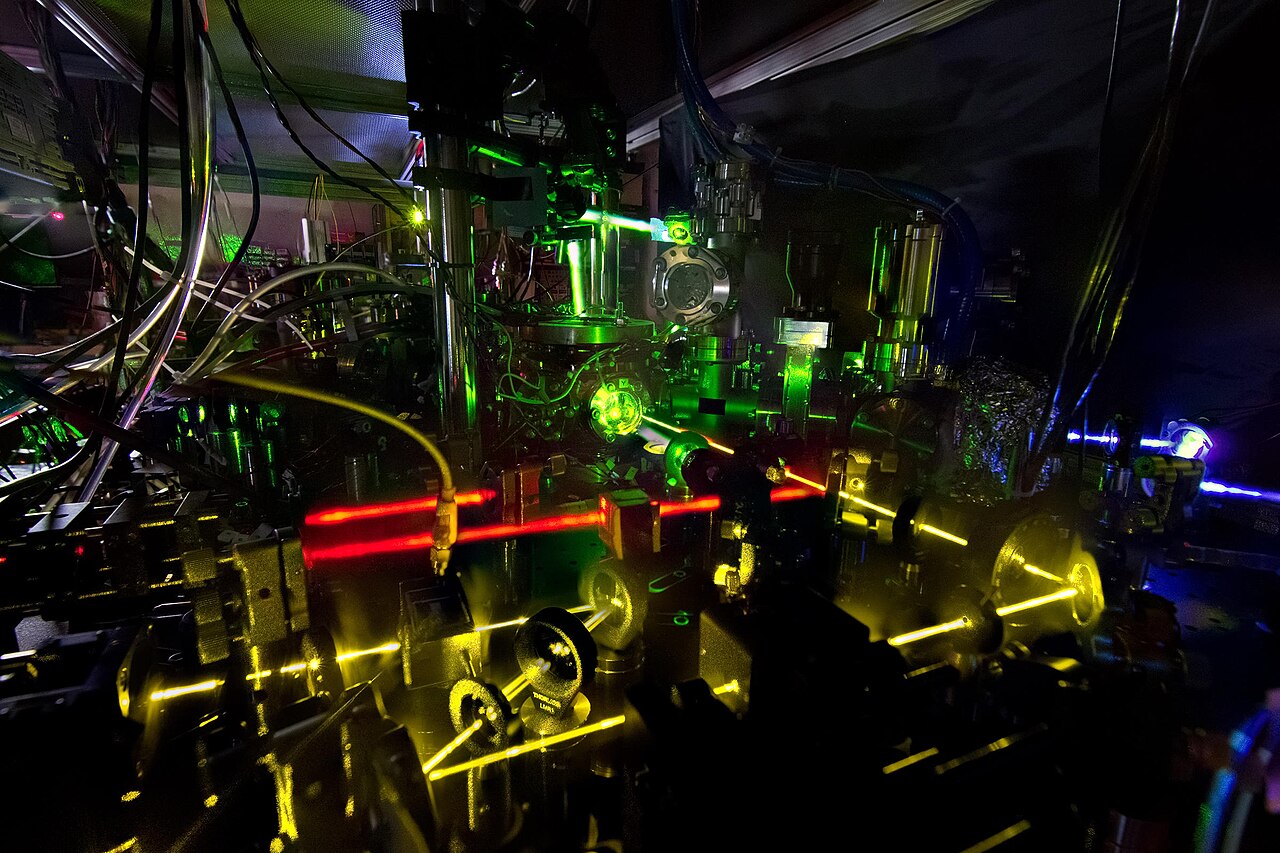
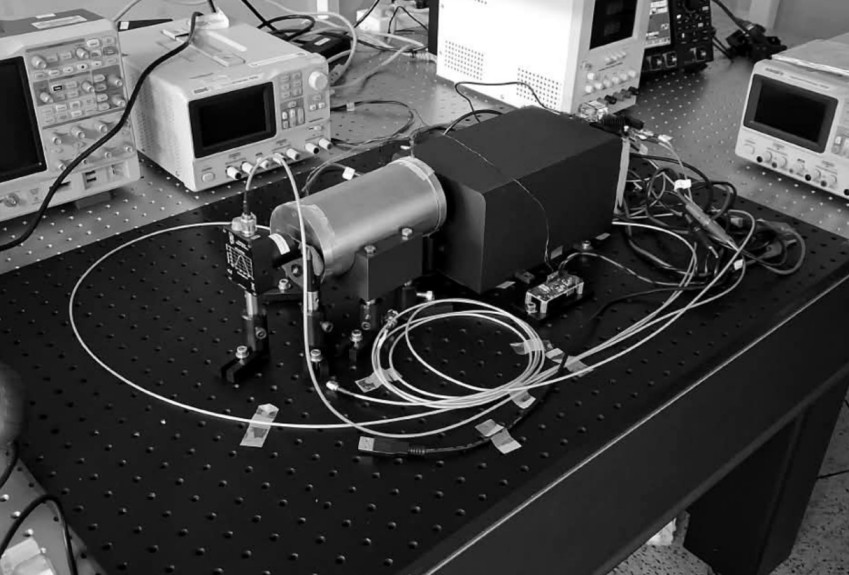
Atomic Clock technology is gaining attention in India as a deep-tech startup incubated at the Indian Institute of Science Education and Research (IISER) Pune has developed a laboratory-scale atomic clock prototype. The startup, QuPrayog, completed the development in seven months using rubidium-87 atoms. The technology could support more accurate navigation systems, telecommunications and scientific instruments.
The development is an important step for India’s growing quantum technology sector. Accurate time measurement is essential for modern communication networks, satellite navigation and several advanced scientific applications.

QuPrayog Develops Rubidium-87 Atomic Clock
QuPrayog is a deep-tech startup incubated at the I-HUB Quantum Technology Foundation at IISER Pune. Its newly developed prototype uses rubidium-87 atoms to measure time with high precision.
According to the reported laboratory results, the prototype achieved a frequency stability of approximately 3 × 10⁻¹⁰ over one second. Its stability improved to around 2 × 10⁻¹¹ over periods of 100 to 1,000 seconds.
The testing also showed that the prototype improved frequency stability by around 50 times compared with an ordinary crystal oscillator over 1,000 seconds.
This performance is important because even small timing errors can affect systems that depend on accurate signals. Atomic clocks use the natural properties of atoms to provide a more stable time reference than conventional electronic clocks.
What Is an Atomic Clock?
An atomic clock is a highly accurate timekeeping device that uses the natural frequency of atoms to measure time.
Atoms have specific energy levels. When they move between these energy levels, they interact with electromagnetic radiation at particular frequencies. Atomic clocks use these stable frequencies as a reference for measuring time.
Unlike ordinary clocks, which generally depend on mechanical movements or electronic oscillations, atomic clocks use atomic properties to maintain accurate timing.
They are important for satellite navigation, scientific research, telecommunications and international timekeeping systems.
Founders and Development of QuPrayog
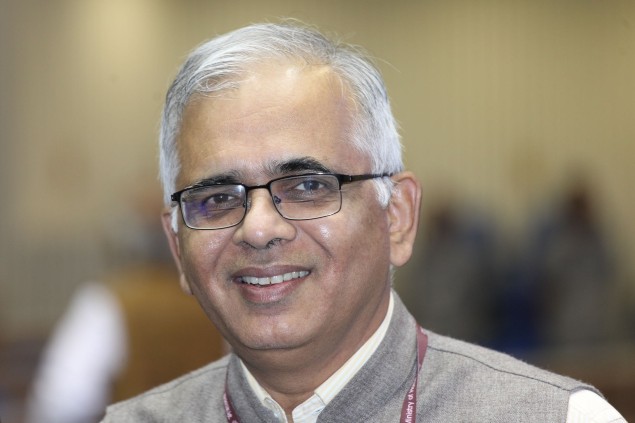
QuPrayog was founded in 2024 by Dr Jay Mangaonkar and Dr Rahul Sawant. The startup is also incubated at the IIT Madras Incubation Cell.
The company is working to develop advanced timing and quantum technologies in India. Its latest prototype represents an early step towards building compact atomic clocks that can be used outside laboratory environments.
Developing a laboratory prototype in seven months highlights the progress of the startup’s engineering and research efforts.
Plans for a Miniature Atomic Clock by 2027
QuPrayog aims to develop a miniature version of its atomic clock by August 2027. The company is also working towards creating compact and rugged devices that can operate in different environments.
Potential applications include satellite navigation, telecommunications and scientific instruments.
In satellite navigation, accurate timing helps determine the position of objects on Earth. Even tiny errors in satellite timing can lead to positioning inaccuracies.
In telecommunications, precise clocks help synchronise communication networks and maintain reliable data transmission. Compact atomic clocks could also be useful in scientific equipment that requires highly accurate measurements.
The startup is also exploring optical atomic clock technology, which uses optical-frequency transitions in atoms or ions to achieve extremely high levels of precision.
Support from India’s National Quantum Mission
India’s National Quantum Mission is an important part of the country’s efforts to develop indigenous quantum technologies. Approved in 2023, the mission has a total allocation of ₹6,003.65 crore for eight years.
It focuses on developing quantum computing, quantum communication, quantum sensing and quantum materials.
The development of atomic clocks is connected to quantum sensing and precision measurement. Support for research institutions and deep-tech startups can help India build its own advanced technology systems and reduce dependence on imported equipment.
The work by QuPrayog reflects the growing role of Indian startups in developing technologies that could support future navigation, communication and scientific research.