Azista Space In-Orbit Snooping: India’s Private Firm Images ISS in Historic First

India’s growing private space industry has achieved a major milestone with Azista Space In-Orbit Snooping capability successfully demonstrated in Earth’s orbit. Domestic aerospace company Azista Space has captured images of the International Space Station (ISS) using its indigenously developed satellite. This marks the first time an Indian private space company has carried out such an operation, significantly strengthening the country’s space monitoring and imaging capabilities.
Thank you for reading this post, don't forget to subscribe!The achievement highlights the rapid progress of India’s private space ecosystem and its ability to deliver advanced space-based technologies once limited to major space agencies.
Breakthrough Imaging Mission in Earth Orbit
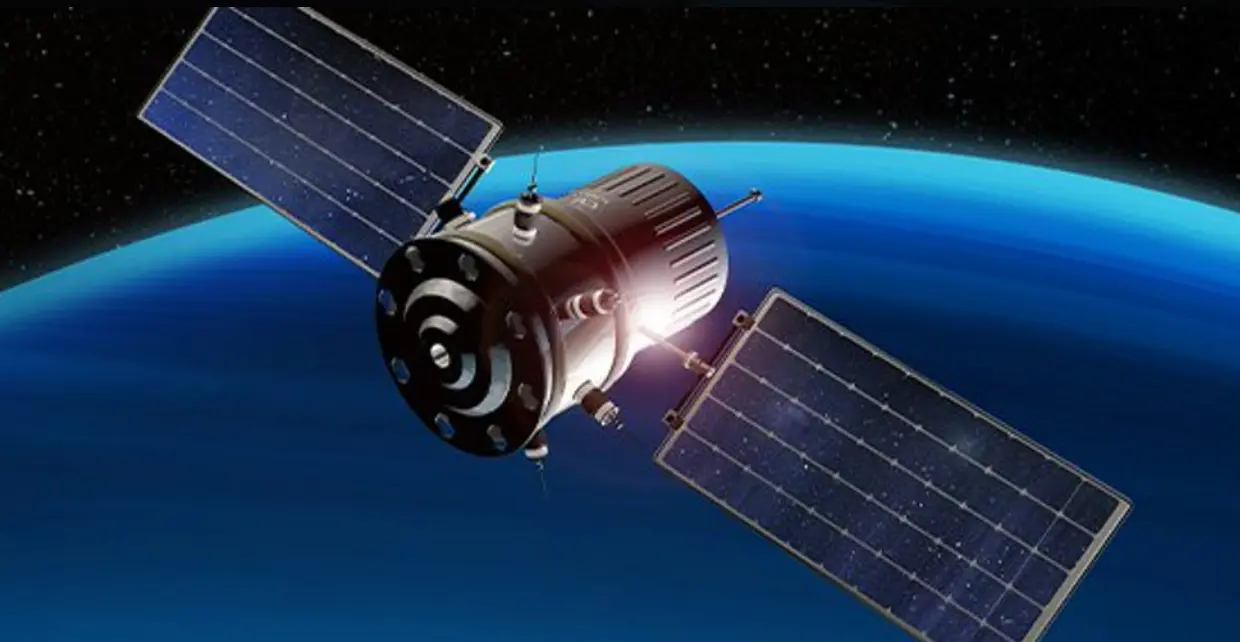
The successful demonstration was conducted using Azista Space’s 80-kg Earth observation satellite named ABA First Runner (AFR). The satellite managed to image the ISS while operating at a distance of around 250–300 kilometres. This type of mission is often referred to as “in-orbit snooping” or space watch. It involves tracking and imaging another fast-moving object in space under complex conditions.
Imaging the ISS was not an easy task. The station travels at a speed of nearly 28,000 kilometres per hour and orbits at an altitude of about 400 kilometres above Earth. Capturing clear images of such a rapidly moving object requires highly accurate tracking systems, advanced onboard sensors and precise timing.
The AFR satellite successfully tracked the ISS in near-horizon and sunlit conditions. These conditions are challenging because of lighting contrast and the speed difference between the two objects. The mission validated the satellite’s tracking algorithms and sensor performance, proving that Azista Space can handle complex space surveillance tasks.
Satellite Launch and Technical Background
The ABA First Runner satellite was launched in June 2023 aboard a Falcon 9 rocket operated by SpaceX. The launch took place under the Transporter-8 rideshare mission, which carried multiple satellites into orbit.
After spending nearly two and a half years in orbit, AFR conducted two independent attempts to image the ISS. During these attempts, the satellite captured 15 distinct image frames with a ground sampling resolution of about 2.2 metres. According to Azista Space, both imaging attempts achieved 100 percent success.
This level of precision reflects the satellite’s strong electro-optical imaging system and advanced onboard data processing capabilities. The mission also demonstrated the company’s expertise in satellite bus design, guidance systems and mission planning.
Strengthening India’s Space Situational Awareness
The Azista Space In-Orbit Snooping achievement plays an important role in improving India’s space situational awareness. Space situational awareness refers to the ability to track satellites, space debris and other objects in Earth’s orbit. It helps countries predict possible collisions and ensure the safety of operational satellites.
India currently operates more than 50 satellites for communication, navigation, Earth observation and strategic surveillance. Monitoring the movement of other satellites and debris is essential to protect these valuable assets. During times of geopolitical tension, space monitoring becomes even more critical.
Low Earth Orbit (LEO), which extends up to around 2,000 kilometres above Earth, is becoming increasingly crowded. Thousands of satellites from different countries and private companies are operating in this region. The ISS itself orbits at roughly 400 kilometres altitude within this zone. As the number of objects in orbit increases, the risk of accidental collisions also rises.
By successfully imaging the ISS, Azista Space has shown that Indian private firms can actively contribute to monitoring activities in LEO. This capability enhances national preparedness and supports long-term orbital safety.
Boost to India’s Private Space Sector
The success of Azista Space In-Orbit Snooping also reflects the transformation of India’s private space sector. In recent years, the government has opened up the space industry to private players, allowing companies to build satellites, launch vehicles and advanced payload systems.
Azista Space operates Asia’s first private satellite manufacturing facility in Sanand, Gujarat. The company has been involved in building satellite systems and electro-optical payloads for multiple missions. It has also collaborated on missions associated with ISRO, India’s national space agency.
The ISS imaging mission demonstrates that private Indian firms are capable of delivering sophisticated space solutions that meet global standards. The achievement is not just technical but also symbolic. It shows that India’s private companies can design, launch and operate satellites with advanced imaging and tracking capabilities.
As more private firms enter the space industry, India is expected to become a major global hub for satellite manufacturing and space technology development. Capabilities such as in-orbit snooping and high-resolution imaging will play a key role in future defence, security and commercial applications.

Expanding Technological Capabilities
Beyond national security, in-orbit imaging technology has several commercial uses. It can help monitor satellite health, inspect spacecraft components and support debris tracking services. Companies offering such services may find growing demand as the global satellite market expands.
Azista Space’s demonstration proves that Indian private players are ready to compete internationally in advanced orbital services. With strong engineering, advanced sensors and precise tracking systems, the company has opened new possibilities for space-based monitoring.
The Azista Space In-Orbit Snooping mission stands as a landmark achievement for India’s private space journey. It strengthens the country’s space situational awareness framework, supports satellite safety and highlights the growing confidence of domestic aerospace companies. As India continues to expand its footprint in space, such innovations will shape the next chapter of its space technology leadership.