



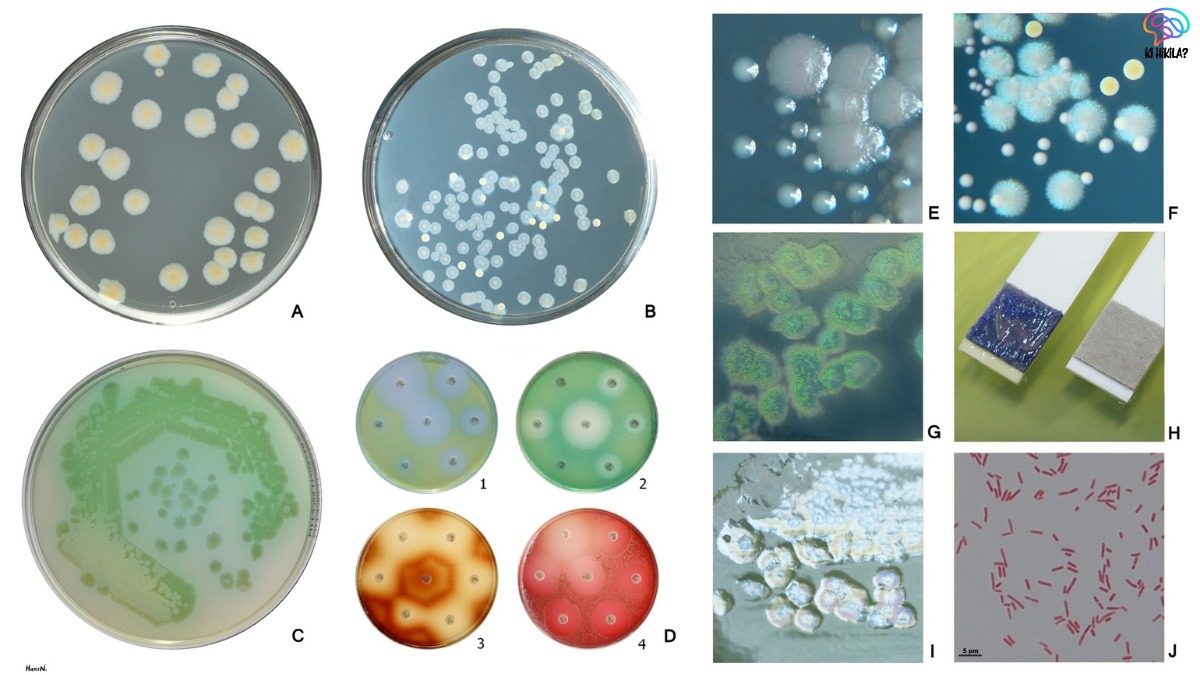
Bistable Gene Expression Pseudomonas: New Insights into Pathogen Survival

Bistable Gene Expression Pseudomonas research has recently uncovered groundbreaking findings about how Pseudomonas aeruginosa, a deadly hospital-associated bacterium, adapts and thrives in hostile conditions. Scientists have identified that this pathogen exhibits a rare biological phenomenon known as bistable gene expression, where genetically identical cells show vastly different levels of activity in the same gene. This discovery provides new clues into the bacterium’s survival strategies and opens potential avenues for tackling drug resistance and persistent infections.
Thank you for reading this post, don't forget to subscribe!Bistability in Microorganisms
Bistability refers to the coexistence of two distinct expression states of a single gene within identical cells. In simple terms, while two bacterial cells may share the same DNA, one may switch a critical gene “on” while another keeps it “off.” This creates variability in behavior and survival potential, even within a single bacterial colony.
What makes bistability especially important in bacteria is its role in adaptation. This variability is not random but heritable through epigenetic inheritance, meaning daughter cells can carry forward the expression state of the parent. For pathogens like Pseudomonas aeruginosa, such bistability may allow part of the population to withstand immune attacks, resist antibiotics, or exploit new niches inside the human body.
The glpD Gene and Its Role
The spotlight of the study is the glpD gene, which encodes an enzyme involved in glycerol metabolism. This gene, classified as a high expression gene (HEG), would normally be expected to behave uniformly across cells. Instead, researchers observed that glpD expression varied widely—some cells expressed it strongly, while others barely at all.

This unusual finding suggests that glpD operates in a bistable mode, behaving both as a high-expression and low-expression gene depending on the cell’s internal state. The variability adds a layer of unpredictability to the pathogen’s biology, making it difficult for treatments to target all cells equally.
Tracking Gene Expression with Fluorescent Proteins
To study this phenomenon, scientists used a clever experimental design. They fused the regulatory DNA of glpD with a green fluorescent protein (GFP) gene. Whenever glpD was expressed, the cells glowed green under fluorescence microscopy.
What they observed was striking: only a small fraction of bacterial cells glowed, signifying that glpD was “on” in just a few cells at any given time. Moreover, these “on” states often persisted across several generations, showing that the trait could be inherited epigenetically. However, sometimes daughter cells switched “off,” revealing the dynamic nature of bistability.
This single-cell level tracking confirmed that glpD’s bistable expression is not a one-time event but a regulated mechanism in Pseudomonas aeruginosa.
Impact on Pathogenicity and Bistable Gene Expression Pseudomonas
The real test of biological significance lay in the bacterium’s ability to cause infection. Using larvae of the greater wax moth (Galleria mellonella), researchers demonstrated that Pseudomonas aeruginosa lacking glpD was less effective at causing infection. This proved that glpD directly contributes to pathogenicity.
Further experiments with mouse immune cells revealed that exposure to host environments boosted glpD expression. This shows that the bacterium adjusts its gene expression in response to host defenses, enhancing its infectious potential. Essentially, bistability provides a survival advantage by ensuring that at least some cells are always primed for virulence.
Broader Implications for Medicine
The implications of Bistable Gene Expression Pseudomonas research are profound. Traditional antibiotics often target uniform bacterial populations, assuming predictable gene behavior. But with bistability, even if most of the population is eliminated, a subset with different gene states may survive and restart infection.
This helps explain why Pseudomonas aeruginosa is notoriously resilient in hospital environments, particularly in immunocompromised patients or those with chronic illnesses. It also sheds light on why treatments often fail to completely eradicate infections, leading to relapses.

Future therapeutic strategies may need to go beyond simply killing bacteria and instead focus on disrupting the regulatory mechanisms of bistability. By targeting how genes like glpD switch between states, it may be possible to prevent bacterial populations from maintaining “hidden” virulent subgroups.
Conclusion
The discovery of Bistable Gene Expression Pseudomonas marks an important step in understanding microbial adaptability. The role of the glpD gene in pathogenicity, its variable expression across genetically identical cells, and its persistence through generations highlight the sophistication of bacterial survival strategies.
For scientists and medical professionals, this means rethinking how infections are treated and controlled. For patients, it represents hope that with better understanding of gene expression mechanisms, more effective therapies could be developed against one of the most dangerous hospital-acquired pathogens.