



Chang’e-7 Mission Targets Moon’s South Pole

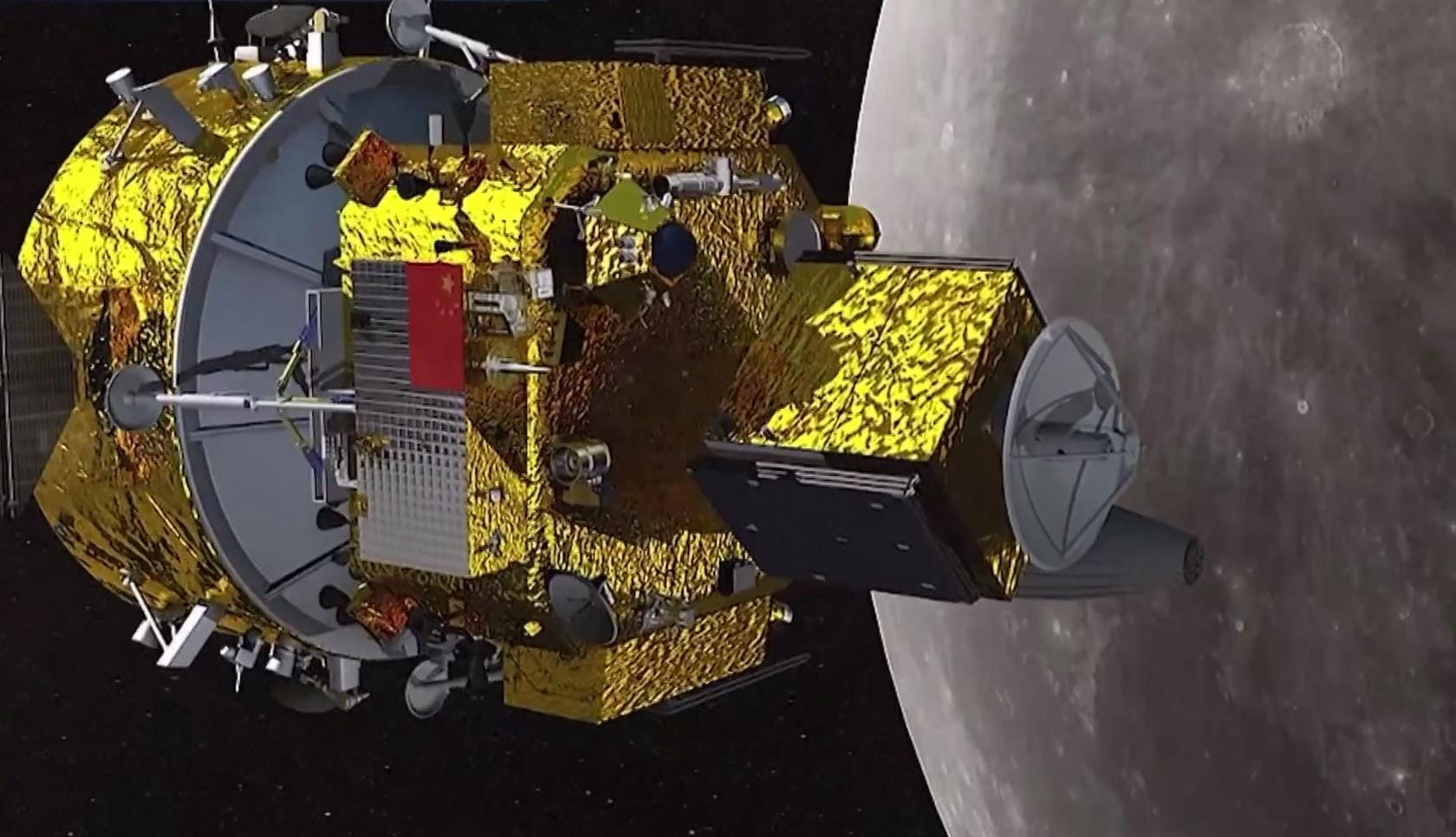
Chang’e-7 Mission is set to become an important step in China’s growing lunar exploration programme as the country prepares to explore the Moon’s mysterious south pole. China has scheduled the mission for launch on August 24, 2026, from the Wenchang Spacecraft Launch Site in Hainan. The spacecraft will travel aboard a Long March 5 Y14 rocket and will carry several systems designed to study one of the most challenging regions of the Moon.
The mission is especially focused on the search for water ice and the scientific study of permanently shadowed areas near the lunar south pole. These areas have become a major focus of global space agencies because frozen water could play an important role in future lunar exploration and possible long-term human activities on the Moon.

A Four-in-One Lunar Mission
Chang’e-7 has been designed as a four-in-one lunar exploration system. The mission includes an orbiter, a lander, a rover and a hopping probe. Each part has a different role and will work together to study the lunar environment.
The orbiter will operate around the Moon and collect information from above the surface. The lander will attempt to reach an area near the edge of Shackleton Crater, one of the best-known craters near the lunar south pole.
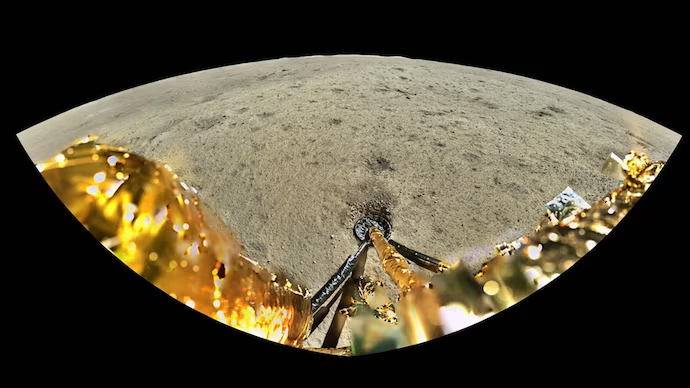
After landing, the rover will explore the lunar surface and collect scientific information from different locations. The hopping probe is one of the most interesting parts of the mission because it is designed to reach difficult areas that may be inaccessible to traditional rovers.
Focus on the Moon’s South Pole
The Moon’s south pole has become one of the most important destinations in modern space exploration. The region contains deep craters that receive little or no sunlight. Some of these permanently shadowed areas are extremely cold and may preserve water ice and other volatile materials for very long periods.
Chang’e-7 will search for signs of water ice near Shackleton Crater. Scientists are interested in understanding how much water may exist in these regions and how it is distributed across the lunar surface.
Water on the Moon could have several important uses for future exploration. It could potentially support astronauts, scientific research and future lunar missions. Water can also be separated into hydrogen and oxygen, making it an important resource for future space technologies.
Hopping Probe Will Explore Difficult Areas
The hopping probe is expected to help Chang’e-7 reach places where wheeled vehicles may face difficulties. The probe will use special shock-absorption technology to move into challenging terrain, including shadowed craters.
These dark regions are difficult to study because of the extreme conditions and lack of direct sunlight. Traditional solar-powered systems may also face operational challenges in such areas.
The hopping probe will analyse the environment and search for water molecules. Its work could provide scientists with valuable information about the chemical composition of the lunar south pole.
International Scientific Cooperation
Chang’e-7 will also include international scientific participation. The mission is expected to carry six scientific payloads supplied by six different countries and one international organisation.
International cooperation has become an increasingly important part of space exploration. Countries are sharing scientific instruments, research data and technical knowledge to study the Moon and other parts of space.
The mission comes at a time when several countries are increasing their focus on lunar exploration. The United States, China, India and other nations have shown growing interest in studying the Moon’s surface, resources and polar regions.
Queqiao-2 Supports Lunar Communication
Communication is another important part of the Chang’e-7 Mission. The spacecraft will use the Queqiao-2 relay satellite to maintain communication between Earth and the mission systems operating around and on the Moon.
Queqiao-2 was launched in March 2024 and is part of China’s growing lunar communication network. Relay satellites are particularly useful for missions operating in regions where direct communication with Earth may be difficult.
The Moon’s far side and polar regions can create communication challenges because the terrain and location may block direct signals. A relay satellite can receive signals from the spacecraft and send them back to Earth.
China’s Growing Lunar Exploration Programme
The Chang’e programme is China’s long-term lunar exploration initiative and is named after Chang’e, the Chinese moon goddess. Over the years, the programme has included orbiters, landers, rovers and sample-return missions.
China’s earlier lunar missions have helped the country develop experience in landing technology, surface exploration and communication systems. Chang’e-7 is expected to build on these achievements by focusing on polar science and resource detection.
The mission also reflects the growing global interest in the Moon’s south pole. Scientists believe that studying this region could provide new information about the Moon’s history, the presence of water and the possibilities for future space exploration.
With its orbiter, lander, rover and hopping probe working together, Chang’e-7 represents a major scientific effort to explore some of the Moon’s most difficult and least understood areas.