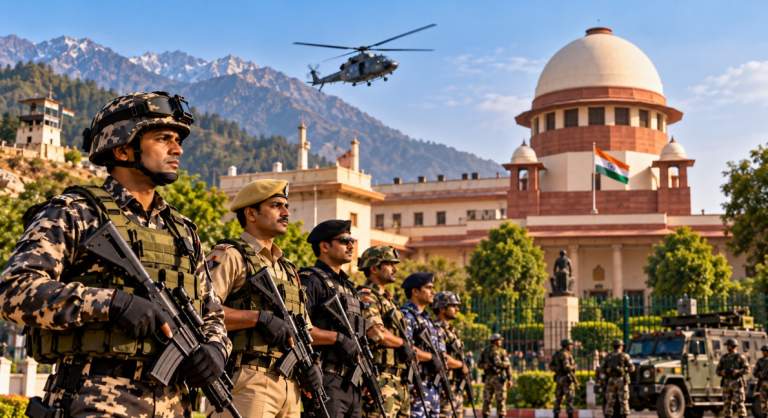



Pakistan Defence Reforms Reshape Nuclear Command

Pakistan Defence Reforms have introduced major changes to the country’s military leadership and nuclear command structure. Pakistan enacted the Defence Forces of Pakistan Act, 2026, and amended the National Command Authority Act, 2010, on August 20, 2026. The changes bring conventional military forces and strategic nuclear command under a more centralised leadership structure.
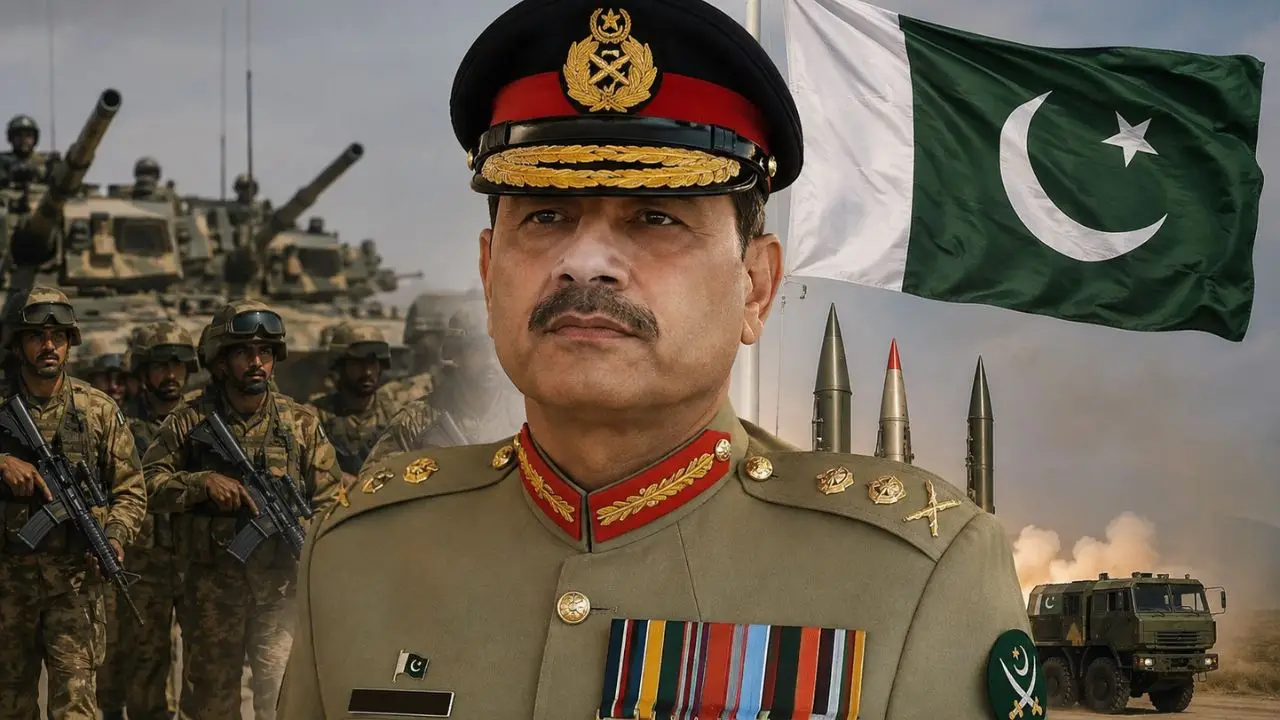
Thank you for reading this post, don't forget to subscribe!The reforms follow constitutional changes made in 2025 that removed the position of Chairman Joint Chiefs of Staff Committee (CJCSC) and created the statutory post of Chief of Defence Forces (CDF). Field Marshal Asim Munir became Pakistan’s first CDF while continuing as Chief of Army Staff (COAS).
New Structure Under the Chief of Defence Forces
The Defence Forces of Pakistan Act, 2026, gives legal backing to the new CDF system. The law brings the Army, Navy and Air Force under a unified command structure at the Defence Forces Headquarters in Chaklala, Rawalpindi.
The CDF is also designated as the principal military adviser to the Prime Minister on national security and matters involving the three armed services.
One of the major changes is the expansion of the CDF’s administrative authority. The position has powers relating to military personnel, including appointments, retirements and other service-related decisions, subject to provisions of Pakistan’s constitutional and legal framework.
This represents a significant move away from the earlier system, in which the CJCSC had mainly an advisory and coordinating role while the Army Chief held substantial operational influence.
Changes to Pakistan’s Nuclear Command
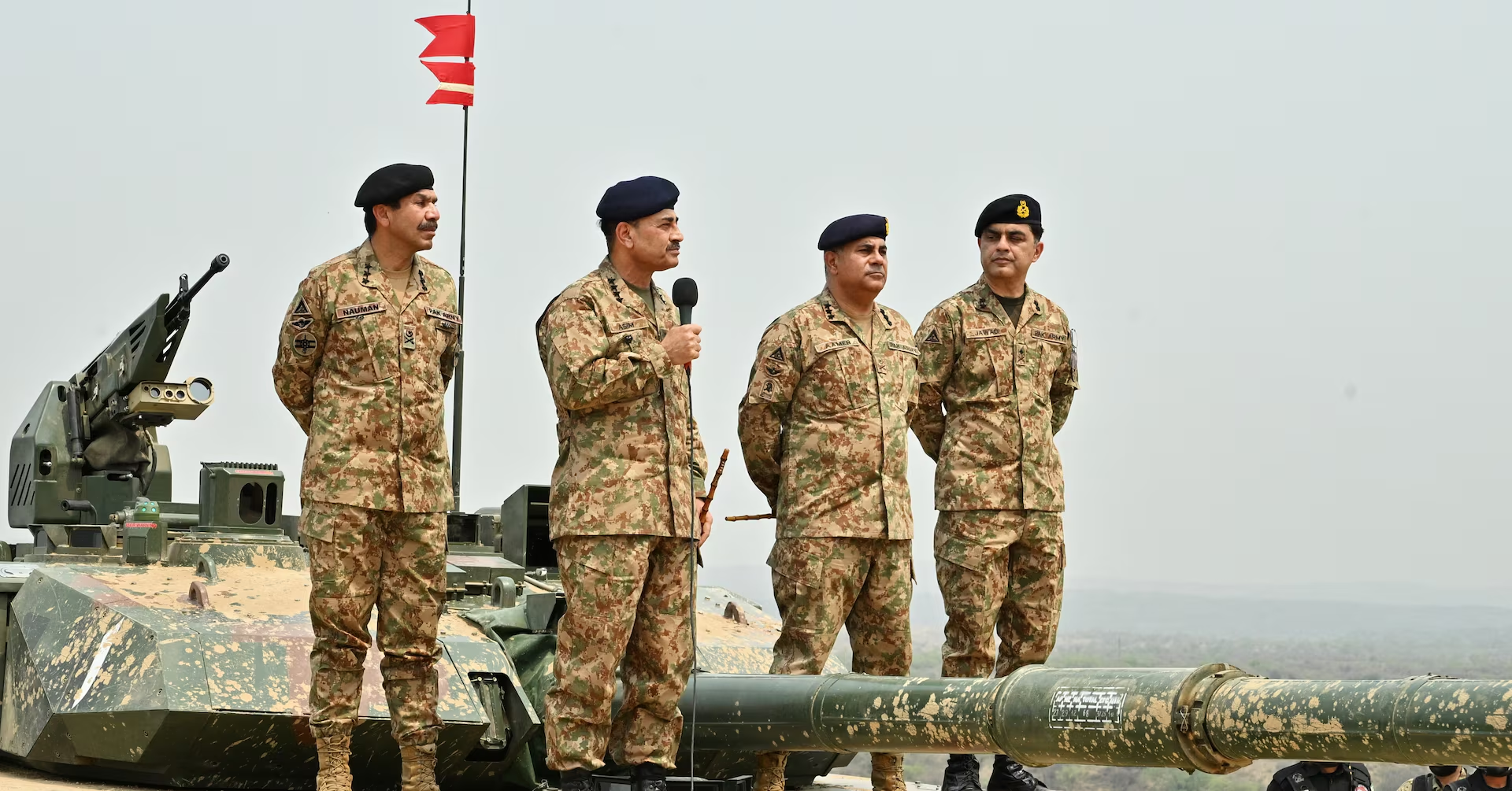
The Pakistan Defence Reforms also affect the country’s nuclear command system. Amendments to the National Command Authority law replace references to the former CJCSC with references to the COAS and CDF.
The changes also formally accommodate the newly created Commander of the National Strategic Command (CNSC). General Syed Aamer Raza assumed this position in July 2026.
The CNSC has a three-year term, with a provision for a possible further three-year extension based on the recommendation of the CDF. The amended legal framework also provides strong protection for the appointment and tenure of the CNSC from judicial challenges.
How Pakistan’s National Command Authority Works
Pakistan’s National Command Authority (NCA) is the country’s top-level institution for nuclear policy and strategic decision-making. Its structure includes several important bodies responsible for different aspects of nuclear command and management.
The Employment Control Committee deals with decisions concerning nuclear employment and broad strategic policy.
The Development Control Committee oversees the development and production of strategic systems and related capabilities.
The Strategic Plans Division (SPD) provides administrative and institutional support to the nuclear command structure. It also has responsibilities connected with security and safety arrangements.
The National Strategic Command provides an operational structure for strategic capabilities of the armed forces under the CNSC.
Although Pakistan’s Prime Minister formally chairs the NCA, the latest changes give the military leadership a stronger and more clearly defined role in strategic decision-making.
Greater Military Integration
A central objective of the reforms is to improve coordination among Pakistan’s three armed services. The new structure is designed to create a single chain of command for joint military operations.
Supporters of greater military integration may view this as a way to improve coordination, reduce duplication and speed up decision-making. A unified structure can be useful when military operations involve land, air, naval and strategic capabilities at the same time.
However, the concentration of authority also raises questions about the independence of individual services. The Army, Navy and Air Force traditionally maintain their own organisational structures and operational doctrines. A stronger central command could reduce the autonomy of the Navy and Air Force in important areas.
Impact on Civil-Military Relations
The Pakistan Defence Reforms could also influence the country’s long-standing civil-military relationship.
Pakistan’s military has historically played an influential role in national security and political affairs. The latest legal changes give greater statutory authority to the military leadership rather than leaving much of that influence to informal arrangements.
The creation of the CDF position and the concentration of conventional and strategic responsibilities under a senior military leader may reduce the distance between military advice and military decision-making.
At the same time, questions about parliamentary and civilian oversight could become more important as the new structure develops.
Implications for Nuclear Stability
Changes to nuclear command structures are closely watched because Pakistan and India are nuclear-armed neighbours. Any restructuring that affects how strategic decisions are made can have consequences for crisis management and deterrence stability.
A more unified command could potentially improve coordination during a crisis. However, highly centralised decision-making can also create concerns if fewer institutions and individuals are involved in major strategic decisions.
The balance between speed, control and oversight is particularly important for nuclear forces. Clear communication channels and reliable safeguards remain essential for preventing misunderstandings during periods of tension.
Significance for India and South Asia
The changes are also relevant to India’s security environment. A more integrated Pakistani military structure could allow the country to coordinate conventional and strategic capabilities more closely.
For India, this means monitoring developments in Pakistan’s military organisation, command arrangements and strategic capabilities will remain important. Crisis communication between the two countries is also significant because rapid decision-making during a military confrontation can increase the risk of miscalculation.
The reforms come at a time when both countries are developing new military technologies and strengthening multi-domain capabilities. Changes in command structures therefore form part of a wider regional security environment involving missiles, air power, naval forces, cyber capabilities and space-based systems.
Key Concerns Around the Reforms
The new system raises several broader questions about Pakistan’s defence governance. One concern is whether greater military centralisation could reduce civilian oversight of defence and strategic policy.
Another is the possibility of reduced inter-service checks within the armed forces. Concentrating authority can improve operational coordination, but it may also create stronger dependence on a single command structure.
There are also concerns about transparency because strategic decision-making, particularly in nuclear matters, naturally involves a high degree of confidentiality.
The effectiveness of the reforms will therefore depend not only on the new legal structure but also on how Pakistan maintains institutional checks, professional military coordination and civilian oversight.

A Major Shift in Pakistan’s Defence Architecture
The Pakistan Defence Reforms mark a significant change in the country’s military command architecture. The replacement of the CJCSC system with the CDF structure, the creation of the National Strategic Command leadership and changes to the National Command Authority law have brought Pakistan’s conventional and strategic command systems closer together.
The reforms are likely to remain important for Pakistan’s domestic civil-military structure as well as the wider security environment of South Asia. Their long-term impact will depend on how the new command arrangements operate in practice and how civilian institutions, the armed services and strategic authorities interact under the revised system.