



Charles Correa Gold Medal 2026: Kochi Student Wins

Charles Correa Gold Medal 2026 was awarded to a Kochi-based architecture student in Mumbai on 22 October 2026. The student received the 28th edition of the award for an undergraduate thesis titled “Energy Commons: Reimagining energy infrastructure as a place for civic engagement.” The project explores how energy infrastructure can become more than a place for providing power and can also create spaces where people meet, interact and take part in community activities.
The Charles Correa Gold Medal is an annual award that recognises outstanding undergraduate architectural thesis projects in India. It focuses on ideas that address challenges related to buildings, public spaces and the wider built environment. The 2026 edition focused on the theme “Equitability through Design” and asked an important question: “Who are we designing for?”

What Is the Charles Correa Gold Medal?
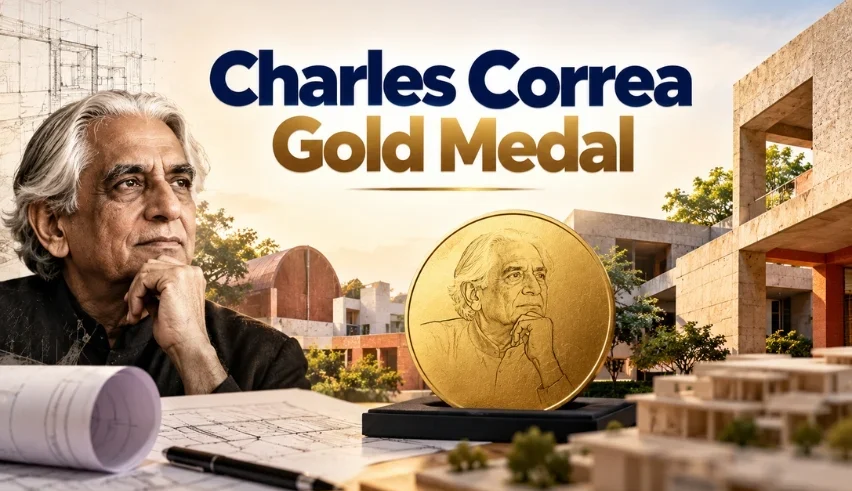
The Charles Correa Gold Medal is an architecture award established in 1998 by Indian architect Charles Correa. It recognises creative and thoughtful work by undergraduate architecture students. The award encourages young designers to develop ideas that respond to real problems in the built environment.
The Charles Correa Foundation (CCF) has administered the award annually since its beginning. Through this initiative, the foundation supports new ideas in architecture and encourages students to think about how design affects people’s lives.
Architecture is not limited to designing houses, offices or other buildings. It also involves planning public spaces, improving access to essential services and creating places that support communities. The award gives students an opportunity to present projects that explore these wider responsibilities of architecture.
The winner of the 2026 edition received a cash prize of ₹25,000. The award also recognises the importance of research, creativity and social responsibility in architectural education.
About the Winning Project: Energy Commons
The winning undergraduate thesis was titled “Energy Commons: Reimagining energy infrastructure as a place for civic engagement.” The project examined how energy infrastructure could be designed to support public interaction and community participation.
Energy infrastructure includes facilities and systems involved in producing, storing and distributing energy. These facilities are essential for everyday life, but they are often planned mainly around their technical purpose. The winning project explored the possibility of viewing such infrastructure as a place that could also serve the public.
The idea of civic engagement refers to people taking part in community life and matters that affect society. Public spaces can help people meet, exchange ideas and participate in activities. By connecting energy infrastructure with civic engagement, the thesis considered how design could bring technical facilities and public life closer together.
The project matched the 2026 award theme, “Equitability through Design.” It encouraged a wider discussion about who benefits from architectural projects and how design decisions affect different groups of people.
Understanding the Theme: Equitability Through Design
The theme “Equitability through Design” was central to the 2026 Charles Correa Gold Medal. It encouraged architecture students to think carefully about the people who will use the spaces they design.
Equitable design considers the needs of different people and aims to make spaces more inclusive and accessible. For example, a public building should consider the needs of people with disabilities, older people, children and other users. A public space should also be planned so that people from different backgrounds can use it safely and comfortably.
The question “Who are we designing for?” asks architects to look beyond the appearance of a building. It encourages them to understand the needs of the community before deciding how a space should be planned.
This approach is important as cities continue to grow and face challenges involving housing, transport, public services, energy use and access to public spaces. Architecture can help address these issues when design decisions consider both practical needs and the wider effects on society.
Eligibility for the Charles Correa Gold Medal
The Charles Correa Gold Medal has expanded its reach over the years. Since 2022, architecture colleges across India have been eligible to participate. Before this change, the award was limited to architecture colleges in Mumbai and Goa.
To take part, applicant colleges must be approved by the Council of Architecture (COA). This requirement connects the award to recognised architectural education institutions in India.
For the 2026 edition, registration opened on 16 April 2026. Colleges had to submit their registration forms by 3 July 2026, while the deadline for submitting the required project materials was 21 August 2026.
The award focuses on undergraduate architectural thesis projects. A thesis is a major academic project in which students research a topic, develop an idea and present their findings or design proposal. Such projects allow students to show their understanding of architectural principles and their ability to respond to real-world challenges.
Role of the Council of Architecture in India
The Council of Architecture is India’s statutory body responsible for regulating architectural education and the architectural profession under the Architects Act, 1972.
The Council plays an important role in maintaining standards in architectural education and professional practice. Its role includes matters related to the recognition of architectural qualifications and the registration of architects, as provided under the law.
For the Charles Correa Gold Medal, the requirement that participating colleges be approved by the Council of Architecture helps establish an eligibility standard for institutions entering the award.
The Architects Act, 1972, provides the legal framework for the Council’s work. It is an important part of India’s system for regulating the architecture profession.
Previous Editions of the Charles Correa Gold Medal
The Charles Correa Gold Medal has recognised undergraduate architectural work for more than two decades. Its annual editions encourage students to explore new ideas and respond to changing needs in society.
The 2025 award ceremony was held on 16 September 2025 at IFBE in Mumbai. The theme was also “Equitability through Design.” During the event, Amit Chandra launched “Designing Equitable Cities,” a publication containing the proceedings of the Z-axis 2018 Conference.
The 2023 medal recognised an undergraduate architectural thesis based on the idea “form follows climate.” The award ceremony for that edition took place online on 9 May 2024.
These editions show how architecture awards can encourage students to study topics such as climate, public life, inclusive design and the relationship between people and their surroundings.
Why the Charles Correa Gold Medal Matters
The Charles Correa Gold Medal provides a platform for architecture students to share original ideas and research. It also encourages them to think about the social impact of the spaces they design.
The 2026 winning project brought attention to the possible connection between energy infrastructure and civic engagement. Its theme also highlighted the need to consider the different people who use buildings and public spaces.
As cities face growing demands for energy, housing and public services, architects have an important role in creating spaces that are practical, accessible and responsive to community needs. Awards such as the Charles Correa Gold Medal encourage young designers to explore these challenges and develop thoughtful solutions.
The 2026 award therefore recognised an undergraduate thesis that connected infrastructure with public participation while supporting a wider discussion about equity in design.