

Black Hole Observatories: Major Telescopes

Black Hole Observatories help scientists study some of the most mysterious objects in the universe. Black holes cannot be seen directly because their gravity is so strong that light cannot escape from within their event horizons. However, scientists can study their effects on nearby stars, gas, light and spacetime. Using powerful telescopes on Earth and in space, researchers investigate how black holes grow, rotate and influence the galaxies around them.
What Are Black Holes?
A black hole is a region of space where gravity is extremely strong. The boundary around it is called the event horizon. Once matter or light crosses this boundary, it cannot escape back into the outside universe.

Black holes are generally grouped by their mass. Stellar-mass black holes can form when massive stars collapse at the end of their lives. Supermassive black holes contain millions or even billions of times the mass of the Sun. They are found at the centres of many galaxies, including the Milky Way.
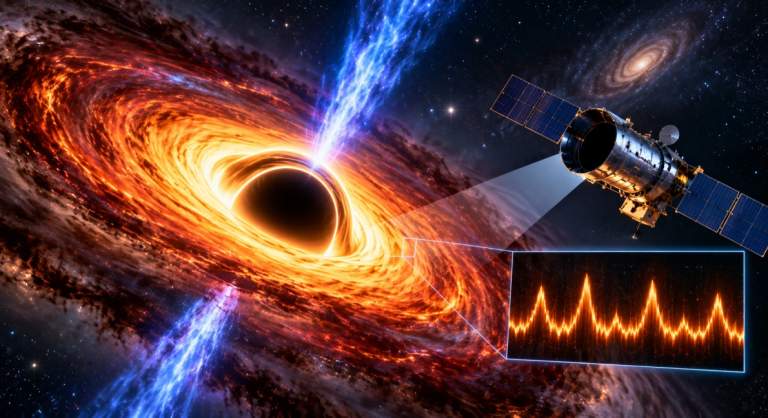
Scientists study black holes by observing the matter around them. Gas and dust can form a rotating structure called an accretion disk as they move towards a black hole. The material can become extremely hot and release radiation, including X-rays, before it crosses the event horizon.
How Do Scientists Study Black Holes?
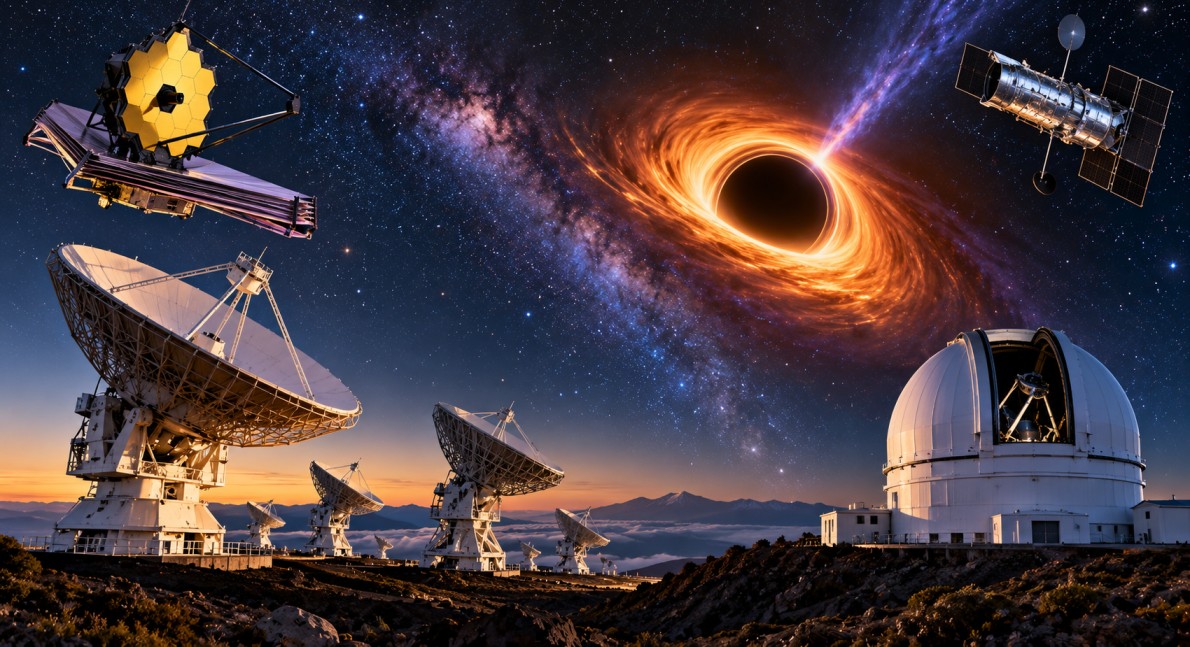
Different observatories collect different types of information. Radio telescopes can reveal structures near black holes, while optical and infrared telescopes help scientists study stars, gas and distant galaxies. X-ray observatories detect high-energy radiation from hot matter around black holes.
Scientists also study gravitational waves. These are ripples in spacetime produced by powerful events, including the merging of black holes. By analysing these signals, researchers can estimate the masses and spins of the objects involved.
Another method involves gravitational lensing. A black hole’s gravity can bend light travelling near it, changing the apparent position or shape of objects behind it. Scientists can use such effects to investigate the gravitational influence of massive objects.
When a star passes too close to a black hole, it can be torn apart by strong tidal forces. This event is called a tidal disruption event. The resulting flare of radiation allows researchers to study the black hole and its surroundings.
Major Observatories That Study Black Holes
Several international observatories contribute to black hole research. Each uses different instruments and methods to explore these objects.
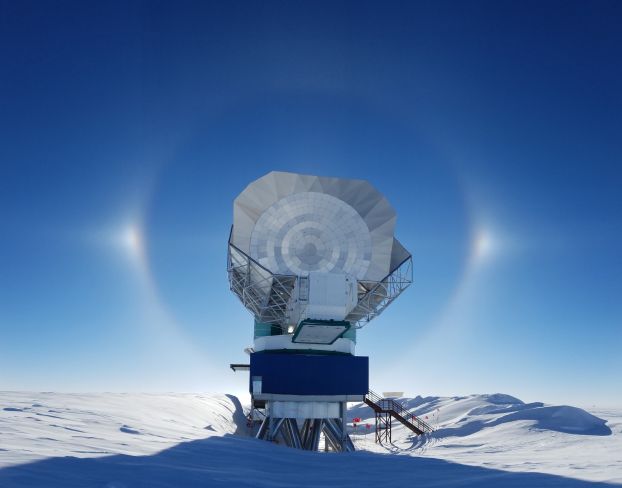
Event Horizon Telescope (EHT): The EHT is a global network of radio telescopes that uses a method called Very Long Baseline Interferometry (VLBI). By combining observations from telescopes around the world, it works like a virtual telescope the size of Earth. It produced the first image of a black hole’s shadow in the galaxy M87 in 2019 and an image of Sagittarius A*, the supermassive black hole at the centre of the Milky Way, in 2022.
Chandra X-ray Observatory: NASA’s Chandra observatory studies high-energy X-rays from the universe. It helps scientists investigate hot gas, black hole binaries and active galactic nuclei, where matter falling towards a supermassive black hole releases large amounts of energy.
XMM-Newton: Operated by the European Space Agency, XMM-Newton observes X-rays from astronomical objects. Its measurements help researchers study changes in the radiation produced by matter near black holes.
NuSTAR: NASA’s Nuclear Spectroscopic Telescope Array observes high-energy X-rays. It helps scientists investigate energetic regions near black holes and examine radiation that can provide clues about their surroundings and spin.
LIGO, Virgo and KAGRA: These observatories detect gravitational waves. Their measurements have revealed signals from merging black holes, allowing researchers to study events that cannot be understood through ordinary light observations alone.
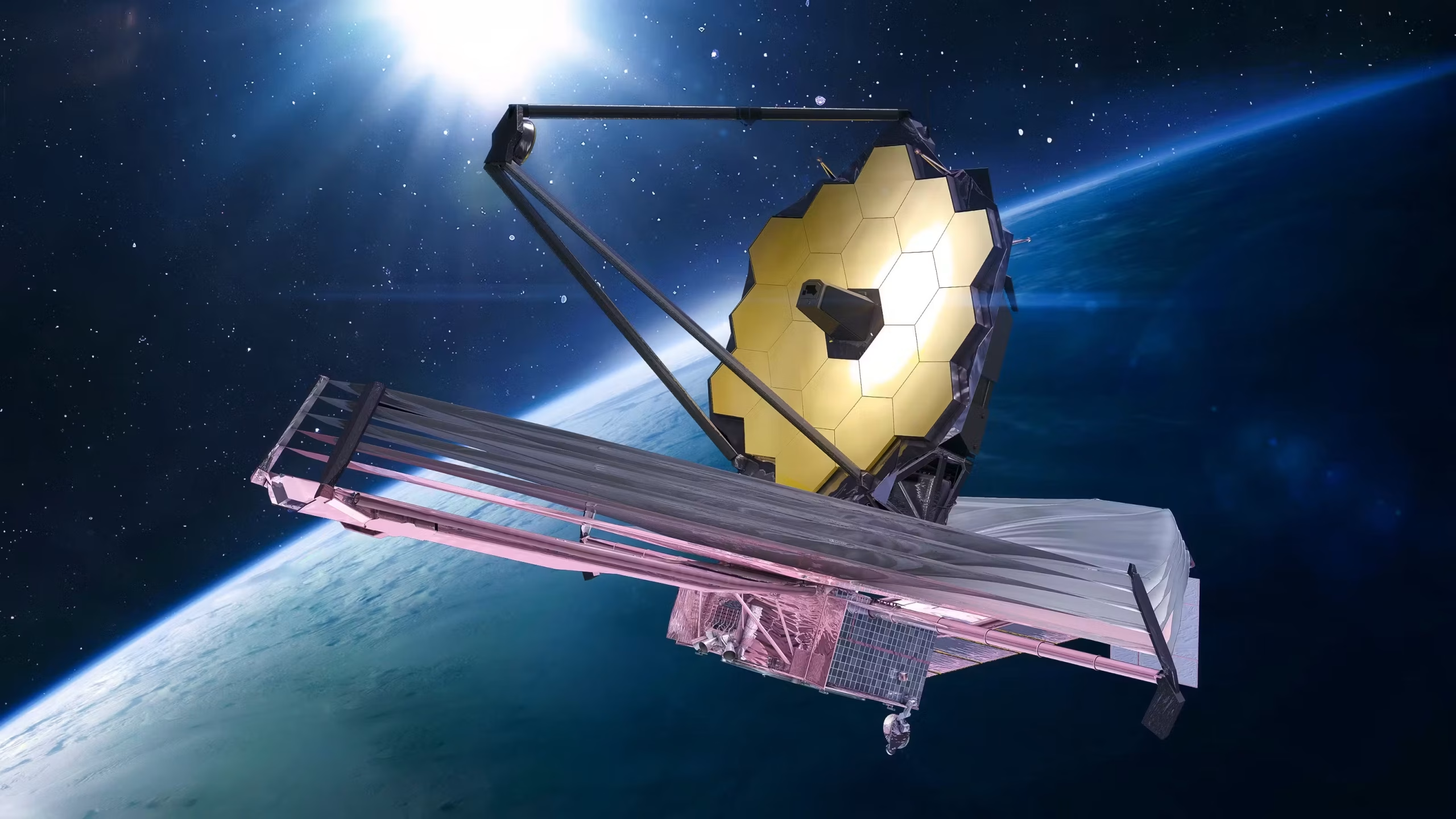
James Webb Space Telescope (JWST): JWST observes the universe mainly in infrared light. It helps researchers investigate distant galaxies and the environments of supermassive black holes, including active galaxies in the early universe.
Hubble Space Telescope: Hubble’s observations of stars, gas and galaxies have helped scientists investigate the presence and influence of supermassive black holes. The movement of stars near galactic centres can provide evidence about the mass of an unseen central object.
Famous Black Holes Under Scientific Study
Scientists use observations of individual black holes to test theories about gravity, rotation and the movement of matter.
Cygnus X-1 is a well-studied system containing a black hole and a companion star. Material drawn from the star produces X-rays as it moves towards the black hole. Researchers use these emissions to investigate how matter behaves in strong gravitational fields.
M87* is the supermassive black hole at the centre of the galaxy Messier 87. The EHT’s observations revealed its shadow-like central region surrounded by bright emission. Scientists also study its powerful jets, which extend far beyond the galaxy’s central region.
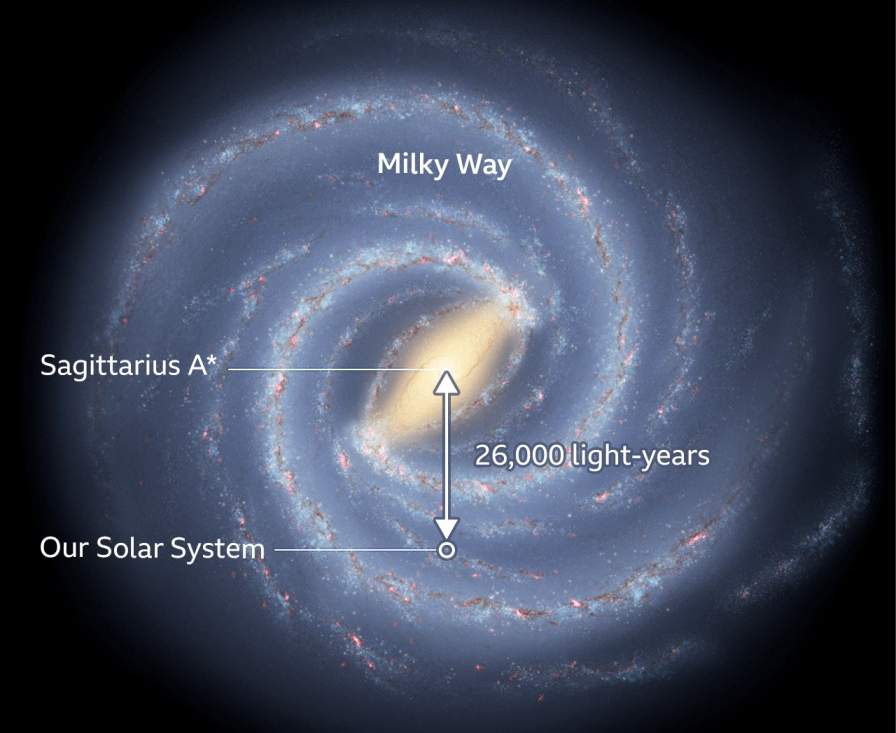
Sagittarius A* lies at the centre of the Milky Way. It has a mass of about four million Suns. Studying the stars and gas around it helps scientists understand the gravitational environment at the centre of our galaxy.
Researchers are also investigating how a black hole’s spin affects the surrounding accretion disk. According to general relativity, a rotating massive object can drag nearby spacetime around with it. This is known as frame-dragging. Under certain conditions, it can cause an accretion disk to wobble or change orientation over time.
Recent Research on Black Hole Spin and X-rays
Research into black hole spin and X-ray variability continues to improve scientific understanding of these objects. One useful signal is a quasi-periodic oscillation, or QPO, which is a repeating pattern in the brightness of an astronomical source.
Scientists study QPO frequencies to investigate the physical conditions near a black hole. These signals can help test models of accretion disks and the movement of hot matter. However, interpreting them requires care because different models may produce different estimates of a black hole’s properties.
The recent research described in the supplied report, dated 23 October 2026, examined simulations of viscous accretion flows. It reported that rapid black hole rotation could move accretion shocks closer to the black hole and affect QPO frequencies. The reported results included simulated frequencies above 100 hertz for black holes with masses around ten times that of the Sun. These are simulation findings, not a universal frequency for all black holes.
Why Black Hole Observatories Matter
Black hole observatories help test some of the most important ideas in modern physics, especially Einstein’s theory of general relativity. By combining radio, infrared, optical and X-ray observations with gravitational-wave measurements, scientists can investigate black holes from different angles.
International cooperation is important because no single telescope can provide every detail. Shared observations and improved instruments allow researchers to compare evidence, test models and study events across the universe.
As telescope technology and computer simulations improve, scientists will continue to explore how black holes form, how they grow and how they influence the evolution of galaxies.