



China Japan Export Ban Raises Tensions Over Taiwan

China Japan Export Ban has emerged as a major international development after Beijing announced strict restrictions on the export of dual-use goods to Japan. The decision comes at a sensitive time, as political tensions between the two Asian powers rise over comments related to Taiwan. The move is expected to affect trade flows, supply chains and diplomatic ties, adding another layer of complexity to the already fragile regional balance.
Thank you for reading this post, don't forget to subscribe!China’s announcement signals a strong response to what it sees as external interference in its internal matters. By targeting goods that have both civilian and military uses, Beijing has chosen an approach that combines economic pressure with strategic messaging.
China Japan Export Ban Comes Into Force Immediately
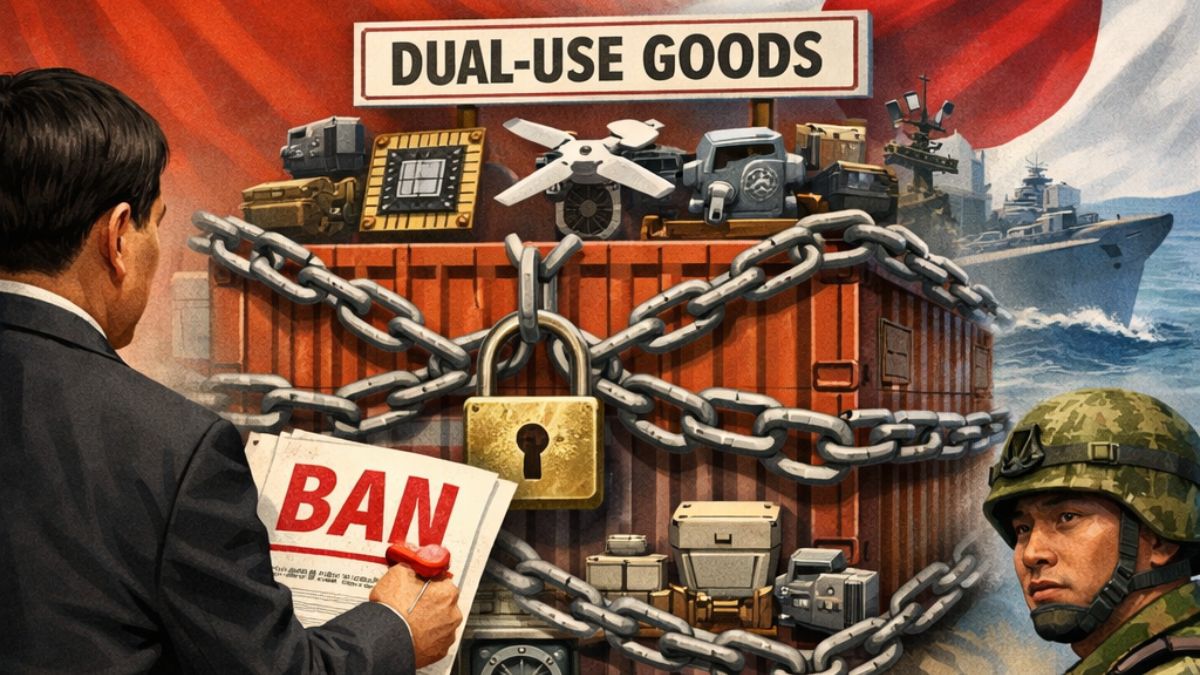
China’s Ministry of Commerce confirmed that the export restrictions would take effect without delay. The ban covers a wide range of dual-use items, meaning products that can serve peaceful commercial purposes as well as defence-related roles. While officials did not release a full product-by-product list, they stated that the move aligns with China’s national security interests and international non-proliferation responsibilities.
The announcement was brief but firm, indicating that exporters must now comply with stricter controls before shipping certain goods to Japan. This sudden enforcement has left many Japanese companies assessing how deeply their operations may be affected.
China Japan Export Ban Highlights Rare Earth Dependence

One of the most closely watched aspects of the China Japan Export Ban is its impact on rare earth minerals. These materials are essential for manufacturing smartphones, electric vehicles, wind turbines, medical equipment and advanced defence systems. China dominates global rare earth production and processing, giving it significant influence over supply.
Japan depends heavily on Chinese rare earth imports, with recent data showing that nearly two-thirds of its supply comes from China. Any disruption could force Japanese manufacturers to seek alternative sources, often at higher costs and with limited availability. Industries linked to electronics, clean energy and high-tech manufacturing are expected to feel the pressure first.
China Japan Export Ban and Strategic Technology Controls
Beyond rare earths, the reference list shared by Chinese authorities includes advanced electronics, aerospace and aviation components, drones and nuclear-related technologies. These sectors are closely linked to both economic growth and national security.
By placing controls on such goods, China is sending a signal that technology and trade are no longer separate from geopolitics. The restrictions highlight how economic tools are increasingly used to influence diplomatic behavior, especially in regions facing strategic competition.
China Japan Export Ban Linked to Taiwan Remarks
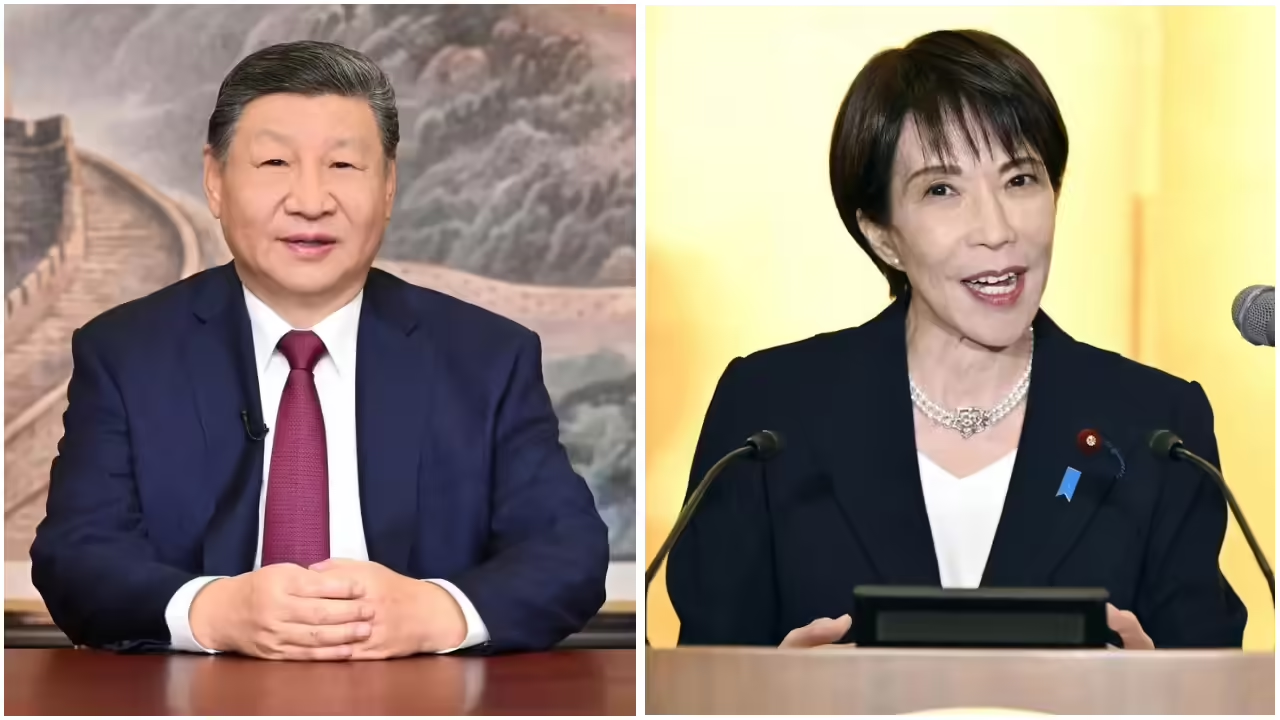
The immediate trigger for the China Japan Export Ban appears to be remarks made by Japan’s Prime Minister Sanae Takaichi regarding Taiwan. Beijing reacted strongly, viewing the comments as interference in an issue it considers strictly internal.
China maintains that Taiwan is an inseparable part of its territory and responds sharply to any foreign statements that challenge this position. Following the remarks, Chinese authorities summoned Japan’s ambassador to lodge a formal protest. Travel advisories were also issued, warning Chinese citizens about visiting Japan, further signaling Beijing’s displeasure.
China Japan Export Ban Reflects Longstanding Friction
China and Japan share deep economic ties, but their relationship has long been shaped by unresolved historical issues, territorial disputes and differing security priorities. Despite being major trading partners, both countries frequently find themselves on opposite sides of regional and global issues.
In recent years, tensions have increased as the Indo-Pacific region becomes a focus of strategic competition. Japan’s growing security cooperation with other regional players and its stance on Taiwan have drawn close attention from Beijing. The export ban reflects how quickly economic relations can be affected by political disagreements.
China Japan Export Ban and Supply Chain Uncertainty
The restrictions could create uncertainty for Japanese manufacturers that rely on steady access to Chinese components and materials. Supply chain disruptions may lead to production delays, higher costs and increased efforts to diversify sourcing.
Some companies may accelerate plans to secure rare earth supplies from other countries, though alternatives remain limited. Building new supply chains takes time, investment and cooperation with new partners, making short-term adjustments difficult.
China Japan Export Ban in a Wider Global Context
The move also fits into a broader global pattern where countries use trade and technology controls to protect strategic interests. From chip restrictions to export licensing rules, economic measures are becoming a common tool in international relations.
For observers, the China Japan Export Ban highlights how interconnected global markets remain vulnerable to political shifts. Actions taken by one major economy can ripple across industries and regions, influencing prices, availability and long-term planning.
China Japan Export Ban and Diplomatic Messaging
Chinese officials have urged Japan to take concrete steps to improve relations, suggesting that words alone are not enough. The export ban serves as a clear message that Beijing expects changes in approach, especially on sensitive issues like Taiwan.
At the same time, the decision leaves room for future adjustment. Export controls can be tightened or relaxed depending on diplomatic developments, making them a flexible tool in statecraft.