Circular Stone Labyrinth Discovered in Maharashtra’s Boramani Grasslands

Circular Stone Labyrinth discovery in Maharashtra has opened a fresh window into India’s ancient past, drawing attention from archaeologists, historians, and heritage lovers across the country. Found in the Boramani grasslands of Solapur district, this rare stone structure is being described as the largest circular labyrinth ever recorded in India. Experts believe it was built nearly 2,000 years ago, making it an important reminder of the skill, planning, and cultural links of early Indian societies.
Thank you for reading this post, don't forget to subscribe!Circular Stone Labyrinth Found in Solapur Grasslands
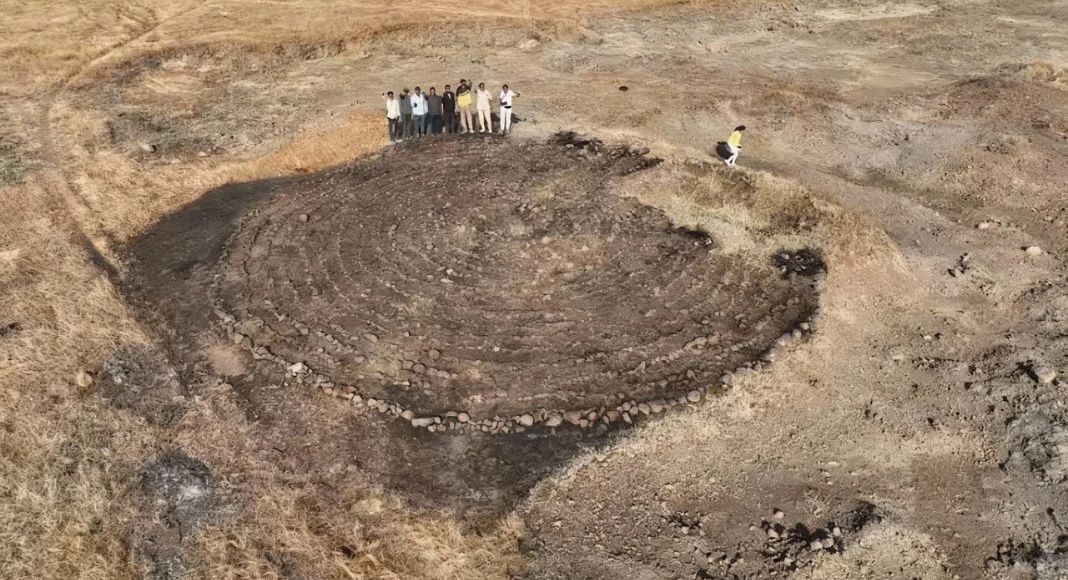
The newly discovered Circular Stone Labyrinth lies quietly in the open Boramani grasslands, an area better known for wildlife than archaeology. Spread over a wide patch of land, the structure measures around 50 feet by 50 feet. It is made entirely of stone and laid out in a perfectly round shape. What makes it stand out is its careful design, which shows a deep understanding of geometry and space by the people who built it centuries ago.
Archaeologists say such discoveries are extremely rare in India, especially in circular form. The find has instantly become a landmark in the study of ancient stone structures in the country.
A Design That Stands Apart
One of the most striking features of the Circular Stone Labyrinth is its design. It consists of 15 stone rings placed one inside another, forming a complex circular path. Each ring has been positioned with great accuracy, creating a smooth and balanced shape that has survived for almost two millennia.
Earlier labyrinths found in India were mostly square, not round. Because of this, the Boramani structure has surprised experts. Until now, the largest known circular labyrinth anywhere in the world had only 11 stone rings. With 15 concentric circles, this discovery sets a new record and shows a higher level of planning and effort.
How It Compares With Earlier Finds

While the Circular Stone Labyrinth in Maharashtra is the biggest of its kind in circular form, it is the second-largest labyrinth overall in India. The largest by area is a square labyrinth measuring 56 feet, discovered at Gedimedu in Tamil Nadu. However, the Boramani find is unique because of its circular shape, which adds a new chapter to India’s ancient architectural story.
This difference in shape also raises interesting questions about regional styles, beliefs, and purposes behind such structures.
Links to Ancient Trade and Culture
Historians have connected the Circular Stone Labyrinth to the Satavahana period, when the Satavahana rulers controlled large parts of the Deccan region. This era is known for strong trade links with other parts of the world, including the Roman Empire.
The patterns of the labyrinth look similar to designs seen on ancient Roman coins. Because of this, experts believe the structure may have had something to do with Indo-Roman trade. It may have acted as a symbolic marker, a guiding point, or even a cultural signpost for Roman traders moving inland from India’s western coast.
Discovery Through Wildlife Protection
Interestingly, the labyrinth was not discovered during a planned archaeological survey. It was first noticed by a wildlife-focused NGO working in the Boramani grasslands. The group was tracking animals like the Great Indian Bustard and wolves when they came across the unusual stone pattern.
After archaeologists examined the site, its historical value became clear. The discovery shows how nature conservation and heritage research can come together in unexpected ways.
Protecting a Rare Heritage Site
The survival of the Circular Stone Labyrinth for nearly 2,000 years is remarkable. Experts say it reflects a rare meeting point of ecology, history, and ancient trade. Archaeologists are now working to document the site carefully and push for steps to protect it from damage.
Preserving this structure will help future generations understand how advanced and connected ancient Indian societies were. The Boramani labyrinth is not just a stone pattern on the ground—it is a silent story of travel, trade, and timeless human creativity.