High Seas: India Joins SIOFA

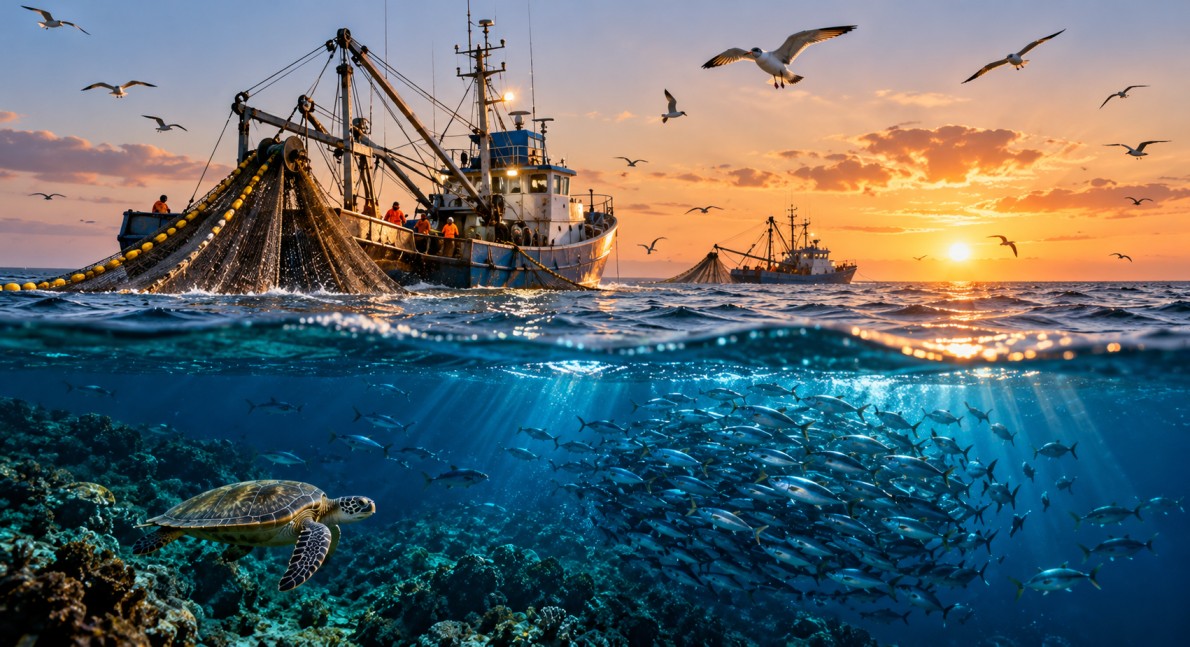
High Seas governance is important for protecting marine life, managing fishing activities and ensuring that ocean resources are used responsibly. On 14 October 2026, the Indian Central Government approved accession to the Southern Indian Ocean Fisheries Agreement (SIOFA), according to the supplied report. The decision marks a step in India’s participation in international efforts to manage fisheries in the Southern Indian Ocean.
India had held Cooperating Non-Contracting Party status under SIOFA since 2022. Accession will allow Indian-flagged vessels and businesses to fish for specified stocks under the agreement, subject to its rules. It will also enable India to participate in the agreement’s Scientific Committee, Compliance Committee and High Seas Boarding and Inspection Scheme.

The development comes at a time when countries are working to improve ocean conservation, prevent illegal fishing and manage marine resources affected by growing demand and environmental changes.
What Is High Seas Governance?
High seas governance refers to the international rules and agreements that guide activities in ocean areas beyond national jurisdiction. These waters are not owned by any single country, and all states have certain freedoms to use them under international law.
The United Nations Convention on the Law of the Sea (UNCLOS) provides the main legal framework for ocean governance. It was adopted in 1982 and entered into force in 1994. Often called the Constitution of the Oceans, UNCLOS defines maritime zones and sets out the rights and duties of coastal states and other countries.
The high seas support international shipping, fishing, scientific research and the laying of submarine cables and pipelines. However, these activities must follow international rules and respect the rights of other states.
Cooperation is especially important because fish populations, marine ecosystems and ocean currents do not follow national boundaries. Without shared rules, excessive fishing and harmful activities can put pressure on marine life and affect the livelihoods of coastal communities.
Understanding the Different Maritime Zones
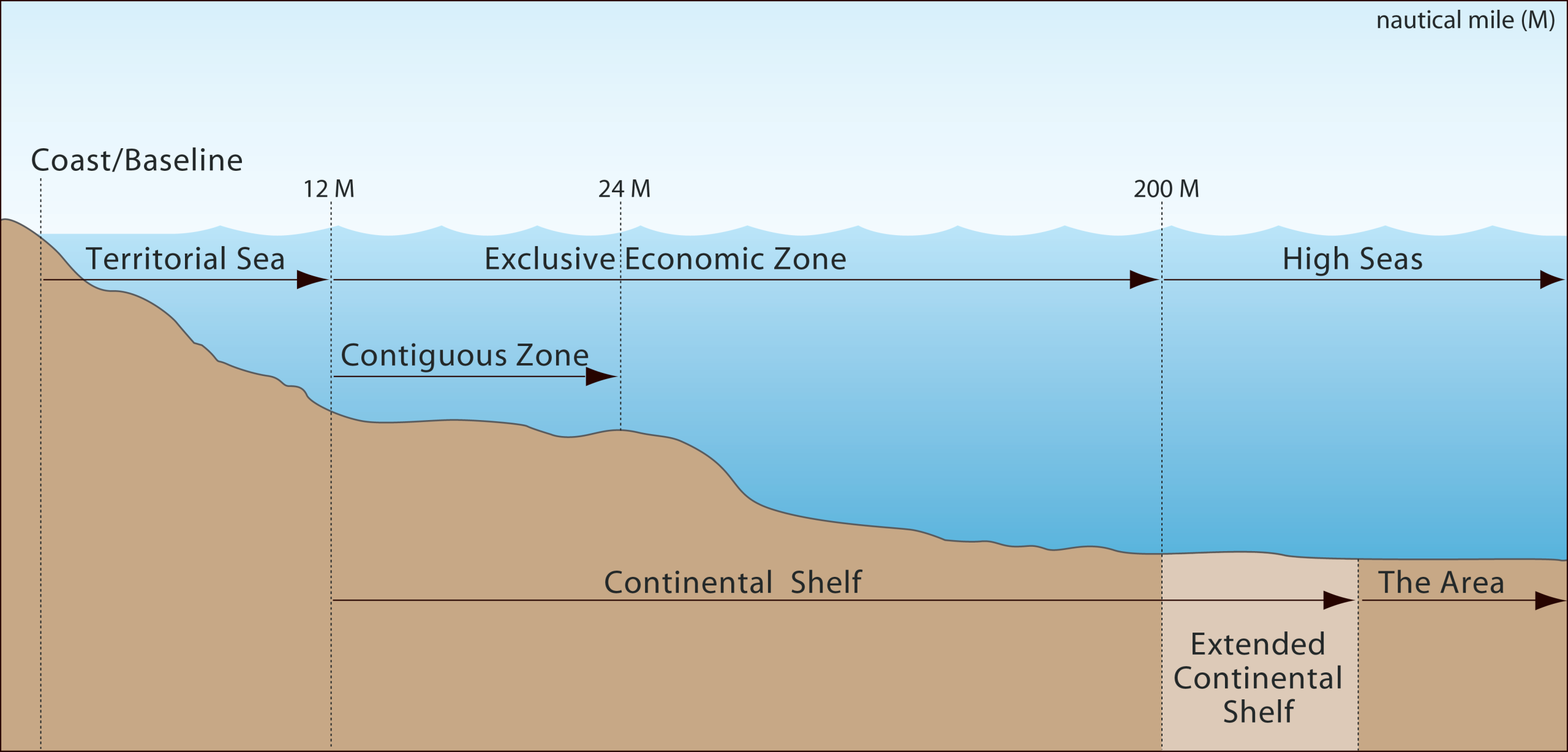
UNCLOS establishes different maritime zones, each with its own legal framework.
The territorial sea extends up to 12 nautical miles from a coastal state’s baseline. The coastal state has sovereignty over this area, subject to certain international rules, including the right of innocent passage for foreign ships.
The contiguous zone can extend up to 24 nautical miles from the baseline. Within this zone, a coastal state may exercise the control permitted under UNCLOS to prevent or punish infringements of its customs, fiscal, immigration and sanitary laws.
The Exclusive Economic Zone (EEZ) can extend up to 200 nautical miles from the baseline. In this zone, the coastal state has rights to explore, exploit, conserve and manage natural resources. Other states retain certain freedoms, including navigation and overflight.
The continental shelf covers the seabed and subsoil extending beyond the territorial sea along the natural prolongation of a state’s land territory, subject to the limits set by UNCLOS. Coastal states have sovereign rights over its natural resources.
The high seas consist of ocean areas outside national maritime zones such as territorial seas and EEZs. These waters remain open to all states, including countries without a coastline, subject to international law.
What Is the Southern Indian Ocean Fisheries Agreement?
The Southern Indian Ocean Fisheries Agreement, known as SIOFA, is a regional agreement designed to support the conservation and management of fisheries resources in the Southern Indian Ocean.
The agreement was signed in Rome on 7 July 2006 and entered into force in June 2012. It covers specified fish, molluscs, crustaceans and other sedentary species within its area of application. It excludes highly migratory species and sedentary species that fall under the jurisdiction of coastal states.
SIOFA provides a framework for participating countries to cooperate on fisheries management. Such cooperation can include collecting scientific information, reviewing fishing activities, adopting conservation measures and monitoring compliance with agreed rules.
The agreement is important because fishing in international waters can affect the long-term health of marine ecosystems. Scientific cooperation helps countries understand the condition of fish stocks and make decisions about sustainable harvesting.
What India’s Accession Means
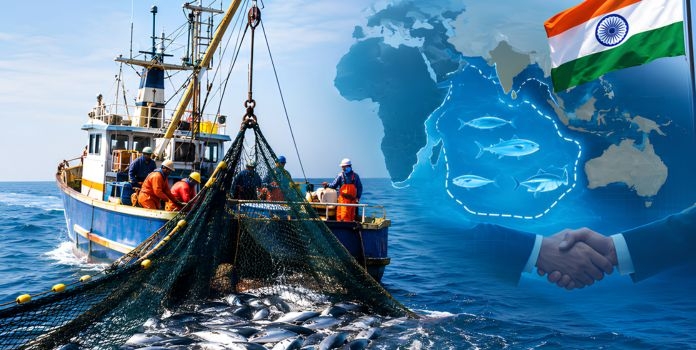
India’s accession to SIOFA is intended to strengthen its role in regional fisheries management. Under the agreement, Indian-flagged vessels and enterprises will be able to fish for specified stocks in accordance with applicable rules and conservation measures.
India will also be able to take part in the agreement’s scientific and compliance processes. This can provide opportunities to contribute information, discuss fisheries management decisions and participate in efforts to monitor fishing activities.
The High Seas Boarding and Inspection Scheme is another part of the agreement’s compliance framework. Such arrangements help participating states monitor whether fishing activities follow the agreed rules.
For India, participation is relevant to its wider maritime interests in the Indian Ocean. It also provides a formal channel to work with other countries on the sustainable use of fisheries resources.
The practical benefits will depend on implementation, scientific cooperation, compliance with conservation measures and the management of fishing activities within the agreement’s area.
Why Sustainable High Seas Fishing Matters
Fish stocks are an important source of food, employment and income for millions of people around the world. However, excessive fishing can reduce populations and damage marine ecosystems. Illegal, unreported and unregulated fishing can make the problem more difficult to control.
Regional fisheries management organisations and agreements help countries coordinate rules for shared or international fish stocks. Depending on their legal powers, these bodies may adopt catch limits, regulate fishing effort and establish technical requirements for fishing equipment.
The 1995 United Nations Fish Stocks Agreement also supports cooperation in conserving and managing straddling and highly migratory fish stocks. These are populations that move between national maritime zones and the high seas, or travel across large ocean areas.
Effective fisheries management also needs reliable scientific data. Information about fish populations, reproduction, migration and catches helps countries understand whether fishing levels can be maintained over time.
Climate change adds another challenge. Rising ocean temperatures and changes in marine conditions can affect the distribution of fish species. International cooperation is therefore important for responding to changing ecosystems while supporting fishing communities.
The International Seabed Authority and Deep-Sea Resources
High seas governance also involves the seabed beyond national jurisdiction. Under UNCLOS, the seabed, ocean floor and subsoil beyond national jurisdiction are known as the Area. Its mineral resources are designated as the common heritage of mankind.
The International Seabed Authority (ISA), established under UNCLOS, organises and controls activities related to mineral resources in the Area, with a mandate that includes protecting the marine environment from harmful effects.
This system is distinct from the rules governing fisheries. While SIOFA focuses on specified fisheries resources in the Southern Indian Ocean, the ISA deals with mineral-related activities on the international seabed.
Both illustrate the need for international rules when countries use resources in areas that do not fall under the sovereignty of a single state.
India’s approved accession to SIOFA brings renewed attention to cooperation in the Southern Indian Ocean. Its implementation will connect Indian fishing interests with shared scientific work, conservation measures and international compliance arrangements.