Lascaux Cave Prehistoric Art: A Window Into Early Human Creativity

Lascaux Cave Prehistoric Art stands as one of the most remarkable discoveries in human history, revealing how early humans expressed ideas, beliefs, and daily life through powerful visual images. Hidden beneath the landscape of southwestern France for thousands of years, the cave offers a rare glimpse into a time when art was deeply connected to survival, nature, and ritual. Since its discovery in 1940, Lascaux has continued to fascinate archaeologists, historians, and the general public across the world.
Thank you for reading this post, don't forget to subscribe!A Chance Discovery That Changed History
The story of Lascaux began during the Second World War, when life in rural France followed a quiet rhythm despite the conflict. In September 1940, an eighteen year old boy named Marcel Ravidat was walking near his village when his dog disappeared into a hole caused by a fallen tree. Curious, Ravidat climbed inside and found himself in a dark underground chamber unlike anything he had seen before.
He soon returned with three friends, and together they explored the cave using simple lamps. As they moved deeper, they saw walls covered with paintings of animals, drawn with great skill and movement. Realising that this was something special, they informed a local teacher, who then contacted experts. This chance moment would soon become one of the greatest archaeological discoveries of the twentieth century.
Location and Early Recognition
The cave is located near Montignac, in the Dordogne region of southwestern France. This area is already known for its rich prehistoric heritage, but Lascaux stood apart because of the scale and quality of its artwork. When specialists examined the site, they confirmed that the paintings were created nearly 17,000 years ago.
The famous archaeologist Henri Breuil played a key role in studying and documenting the cave. His work helped establish Lascaux as a masterpiece of prehistoric art, often described as the Sistine Chapel of the Stone Age.
Inside the World of Lascaux Cave Prehistoric Art
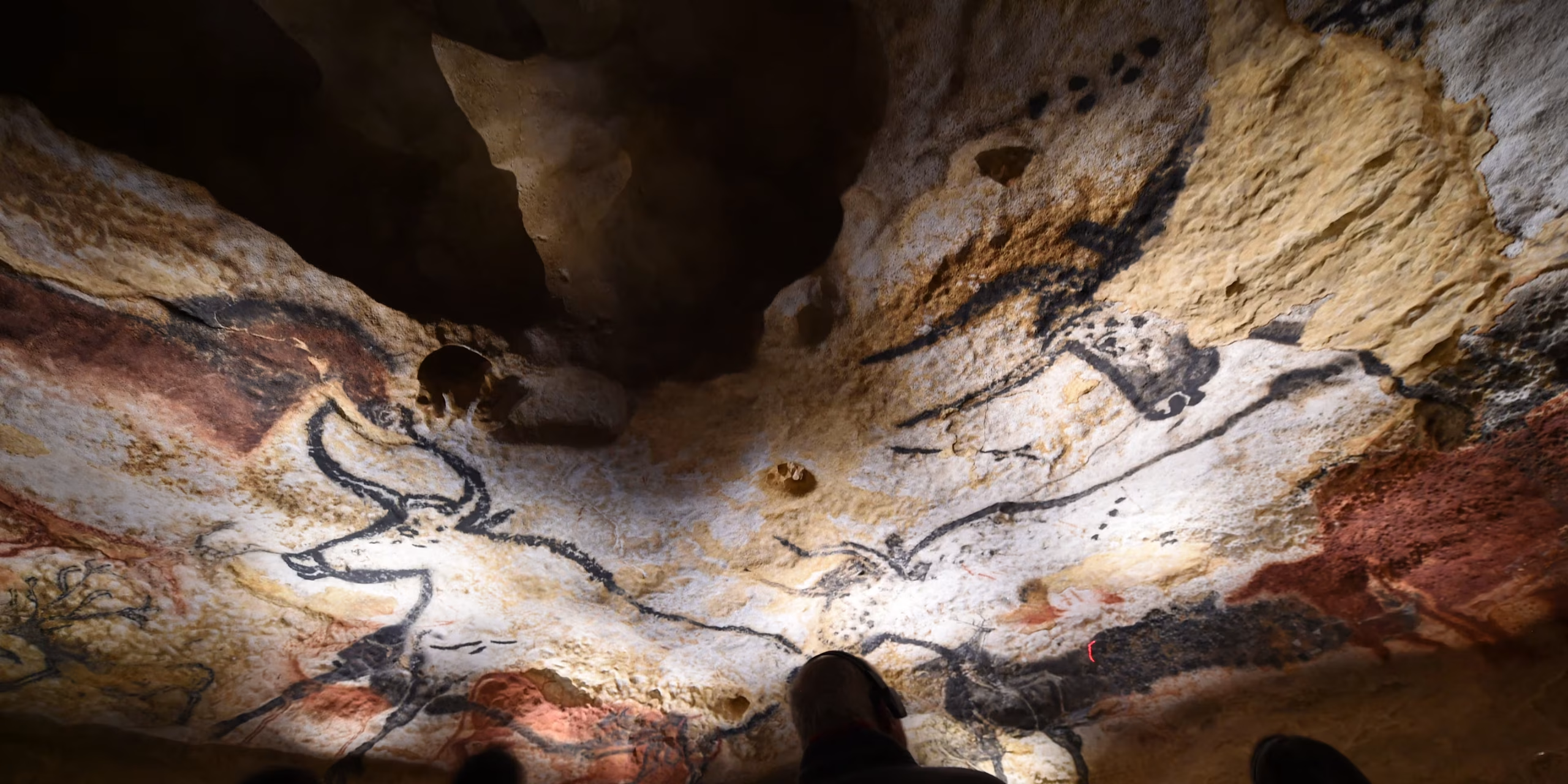
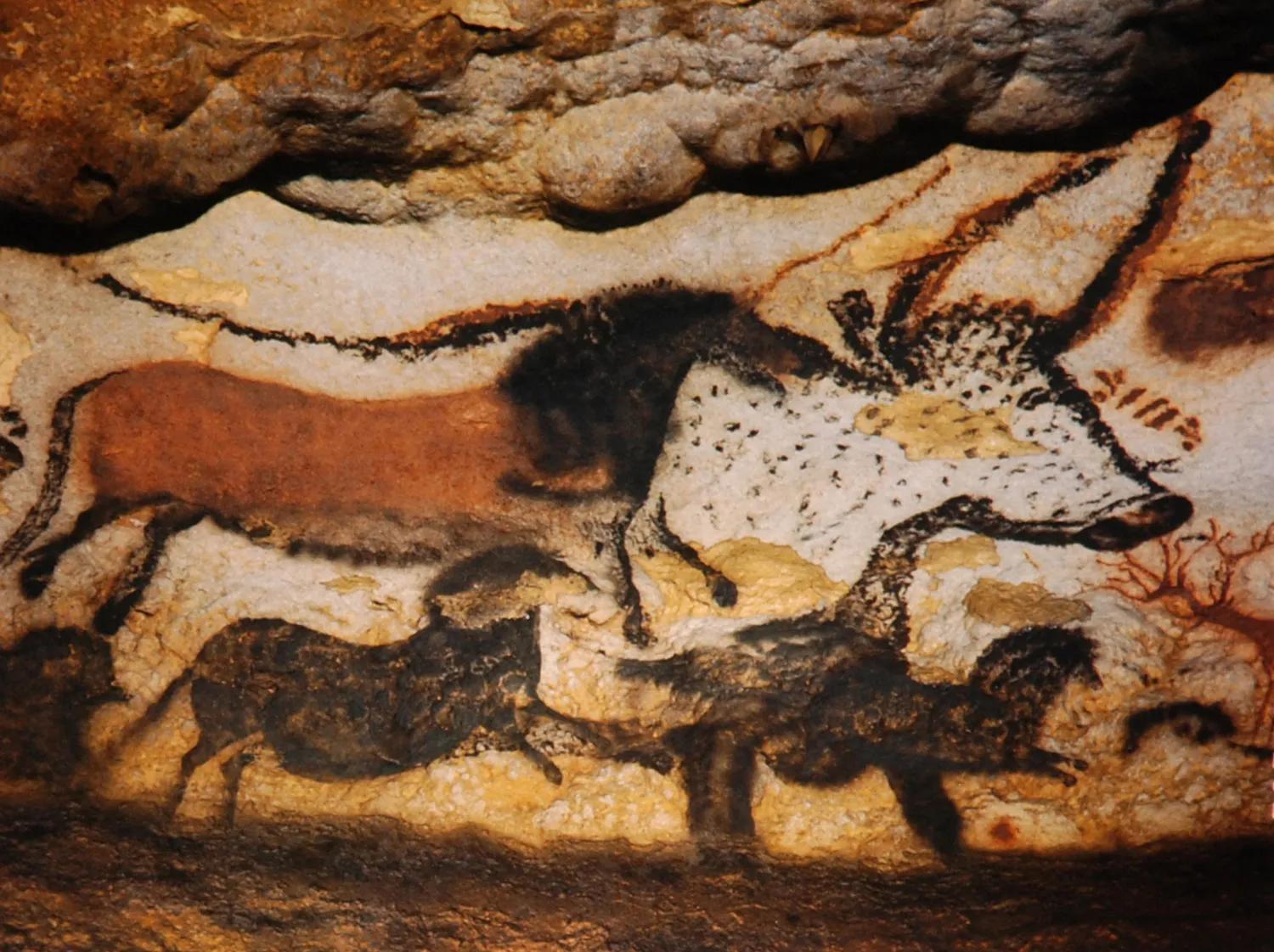
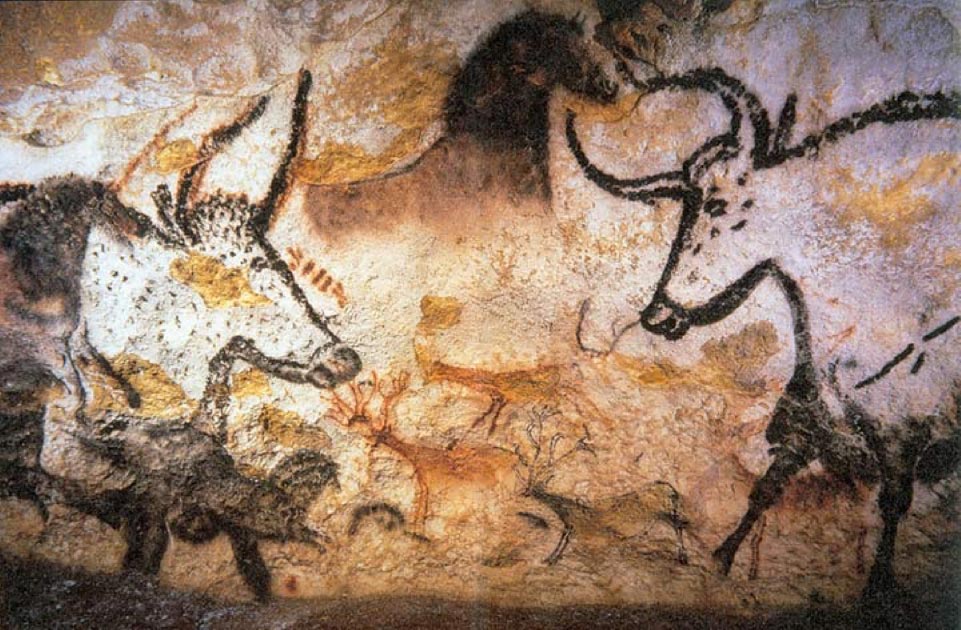
The walls and ceilings of Lascaux Cave contain more than 2,000 images and thousands of engraved figures spread across several chambers. The most famous area, the Hall of the Bulls, features huge animal figures, some stretching over six feet long. Horses, deer, wild cattle, and other animals appear in motion, suggesting speed, strength, and life.
What makes Lascaux Cave Prehistoric Art so impressive is the artists’ understanding of shape and movement. The painters used the natural curves of the rock to give animals a three dimensional look. They carefully selected pigments such as red ochre, charcoal, and minerals to create strong colors that have survived for thousands of years.
Skill, Planning, and Early Technology
The creation of these paintings was not random. Evidence shows that prehistoric artists planned their work carefully. They used stone tools to engrave outlines and made brushes from animal hair or moss. Oil lamps made from stone were used to light the dark chambers, allowing artists to work deep inside the cave.
Scaffolding marks suggest that painters built wooden structures to reach high walls and ceilings. This level of preparation proves that Lascaux Cave Prehistoric Art was the result of organized effort and shared knowledge, not simple decoration.
Meaning and Symbolism Behind the Art
The true purpose of the paintings remains a mystery, but many theories exist. Some experts believe the images were part of hunting rituals meant to ensure success. Others suggest they had spiritual or symbolic meanings, possibly linked to early beliefs about nature and animals.
One striking scene shows a wounded bison facing a human figure with a bird like head. This unusual image has led some scholars to think the cave was used for ceremonies or storytelling. The fact that many paintings are located deep inside the cave supports the idea that Lascaux was a special place, not meant for everyday living.
Conservation Challenges and Global Efforts
After the cave opened to the public in 1948, thousands of visitors entered each year. Over time, human breath and body heat changed the cave’s environment, causing damage to the paintings. By 1963, authorities closed the cave to protect it from further harm.
To share Lascaux Cave Prehistoric Art with the world while preserving the original, France created detailed replicas. These copies allow visitors to experience the beauty of the paintings without risking damage to the real cave. Modern technology, including 3D scanning and digital displays, has made it possible to study and admire Lascaux in new ways.
A Lasting Legacy of Early Human Expression
Today, Lascaux remains a powerful symbol of early human creativity. The paintings remind us that even thousands of years ago, people felt the need to express ideas, tell stories, and connect with the world around them. Lascaux Cave Prehistoric Art continues to inspire awe, showing that art has always been a central part of the human journey.