




Rah Veer Accident Aid Scheme: Delhi Encourages Citizens to Act Fast and Save Lives on the Roads

Rah Veer Accident Aid Scheme is emerging as a powerful step toward changing how people respond to road accidents in India’s capital. In a major announcement, Rekha Gupta confirmed that Delhi will implement the Centre’s Rah Veer Accident Aid Scheme to motivate ordinary citizens to help road accident victims during the most critical time for survival. The move focuses on the “golden hour”, the first sixty minutes after an accident when timely medical care can mean the difference between life and death.
Thank you for reading this post, don't forget to subscribe!A Scheme Designed to Save Lives Quickly
Road accidents remain one of the leading causes of accidental deaths in India. Many lives are lost not because injuries are always fatal, but because victims do not receive medical attention in time. The Rah Veer Accident Aid Scheme directly targets this gap. Under the scheme, any person who helps transport a seriously injured road accident victim to a hospital or trauma care centre within the golden hour will be rewarded with a cash incentive of twenty five thousand rupees.
This reward applies per accident case. Even if a rescuer helps more than one injured person in a single accident, the maximum amount payable for that case will remain twenty five thousand rupees. The idea is not to commercialize rescue, but to acknowledge and encourage brave and timely action by citizens who often hesitate due to fear or uncertainty.
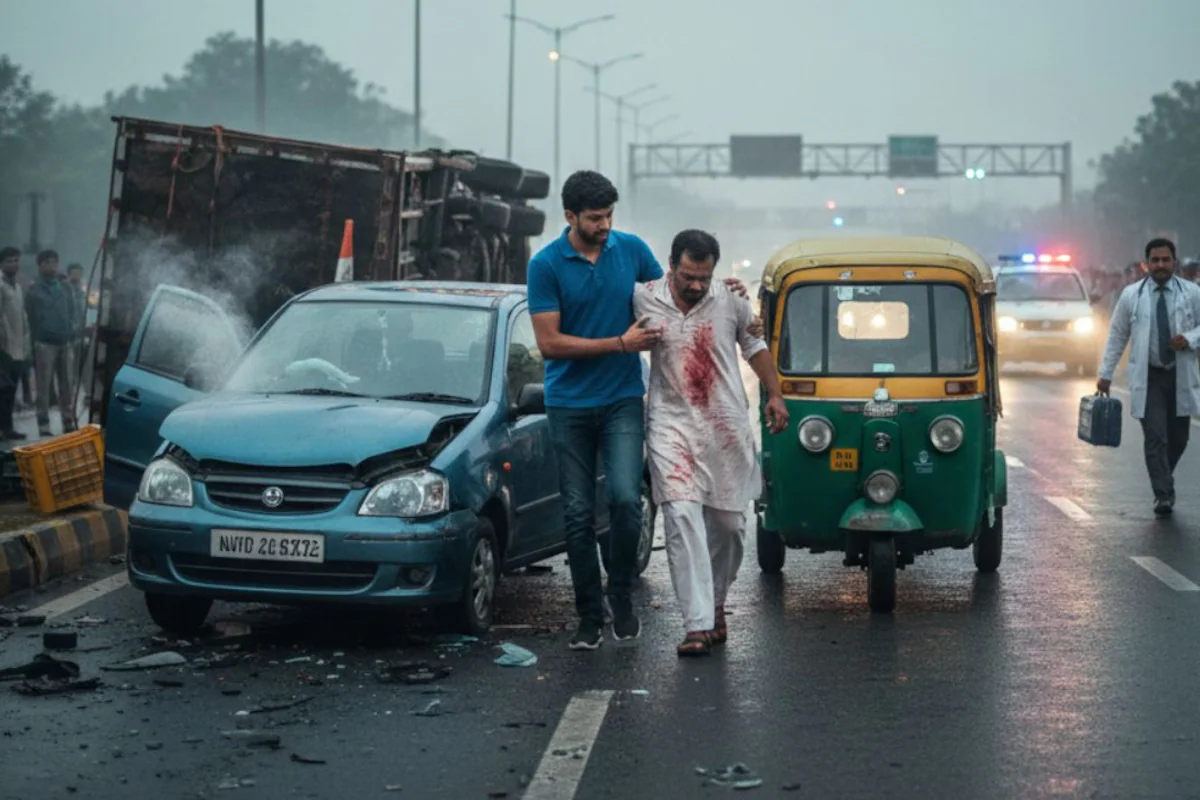
Addressing Fear and Hesitation Among Bystanders
One of the biggest challenges in emergency response on Indian roads is bystander hesitation. Many people witness accidents but choose not to get involved. The reasons are well known. Fear of police questioning, legal trouble, repeated visits to courts, and harassment often discourage people from stepping forward.
The Rah Veer Accident Aid Scheme tries to break this barrier by combining financial encouragement with strong legal protection. By clearly stating that helpers will be rewarded and protected, the government wants to send a simple message. Helping an accident victim is both safe and appreciated.
Cash Reward and Public Recognition
Apart from the cash incentive of twenty five thousand rupees, the Rah Veer Accident Aid Scheme also includes public recognition. Rescuers will receive a certificate acknowledging their role in saving a life. This recognition is meant to build social respect for Good Samaritans and inspire others to act without fear.
On a national level, the scheme goes a step further. Every year, ten outstanding individuals will be selected for a national award that carries a prize of one lakh rupees. This national recognition highlights the importance the government places on community participation in emergency care and road safety.
Strong Legal Protection for Helpers
Legal safety is a key pillar of the Rah Veer Accident Aid Scheme. The programme aligns with the Good Samaritan provisions under the Motor Vehicles (Amendment) Act. These provisions clearly protect people who voluntarily help road accident victims.
Under these rules, a helper cannot be forced to reveal personal details, cannot be detained by police, and cannot be repeatedly called for questioning. Hospitals are also required to provide immediate emergency care without insisting on formalities. This legal backing ensures that helping someone in distress does not turn into a personal problem for the rescuer.
Transparent Verification and Reward Process
To maintain transparency and fairness, each rescue case under the Rah Veer Accident Aid Scheme will go through a structured verification process. A District Level Evaluation Committee will examine every case before approving the reward. This committee includes the District Magistrate, senior police officials, the Chief Medical Officer, and the Regional Transport Officer.
Once a case is verified, the reward amount will be transferred directly to the rescuer’s bank account through an online system. This direct benefit transfer reduces delays, prevents misuse, and ensures that genuine helpers receive their reward without unnecessary paperwork.
Why the Golden Hour Matters
Medical experts often stress the importance of the golden hour in trauma cases. During this first hour after a serious injury, prompt medical treatment can prevent complications such as excessive blood loss, organ failure, or permanent disability. Unfortunately, traffic congestion, lack of awareness, and public hesitation often delay hospital access.
By encouraging citizens to act immediately, the Rah Veer Accident Aid Scheme strengthens the chain of survival. A quick decision by a passerby to take an injured person to the nearest hospital can save precious minutes and ultimately save a life.
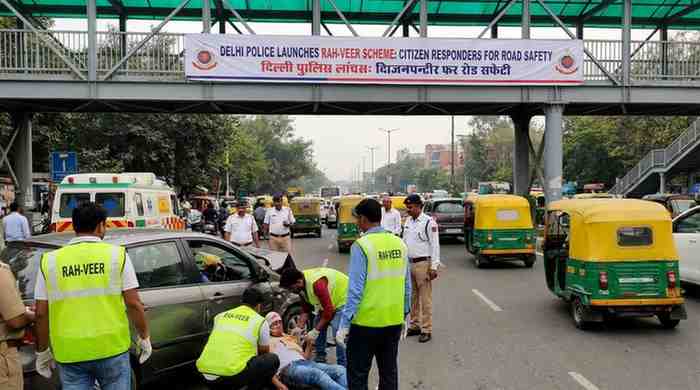
Impact on Delhi’s Road Safety Culture
Delhi has one of the highest vehicle densities in the country. With increasing traffic, the risk of road accidents also rises. Government emergency services cannot be present everywhere at all times. In such a scenario, citizens become the first responders.
The Rah Veer Accident Aid Scheme aims to transform public behavior by removing fear and building trust. When people know they are legally protected and financially acknowledged, they are more likely to help. Over time, this can create a culture where helping accident victims becomes a shared social responsibility rather than a rare act of courage.
Building a Community Driven Emergency Response
The implementation of the Rah Veer Accident Aid Scheme in Delhi reflects a broader vision. It recognizes that saving lives is not only the job of police or ambulances. Ordinary people on the road often arrive first at the scene of an accident.
By combining legal safeguards, financial incentives, and public recognition, the scheme encourages citizens to become active participants in emergency response. If implemented effectively, it can significantly reduce preventable deaths caused by delays in medical care and set an example for other states to follow.