




M. John Harrison Wins Booker Prize 2026 at 81

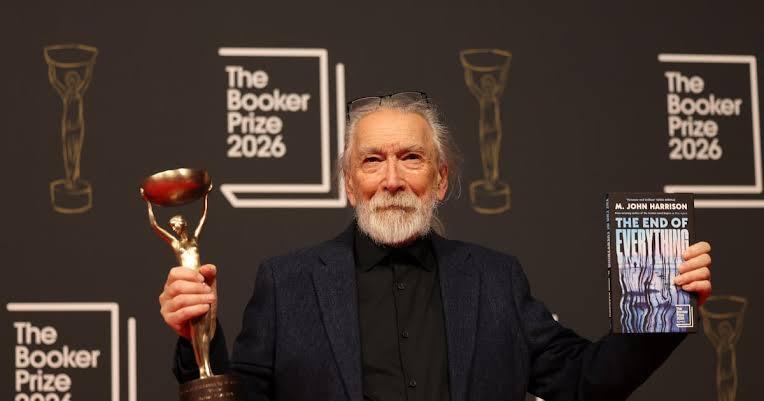
M. John Harrison won the 2026 Booker Prize on 9 November 2026 for his novel The End of Everything. At the age of 81, the British author became the oldest person to receive this prestigious literary award. His achievement has attracted attention from readers, writers and the international literary community.
Harrison’s victory is a major moment in his long writing career, which spans nearly six decades. He received the £50,000 prize for his 198-page novel, which explores a mysterious future world where artificial intelligence and human identity become important themes. The award also marks his first appearance on the Booker Prize shortlist.

M. John Harrison Becomes the Oldest Booker Prize Winner
At 81, M. John Harrison created a new record in the history of the Booker Prize. He became the oldest author to win the award, surpassing Canadian writer Margaret Atwood, who received the prize at the age of 79 in 2019 for her novel The Testaments.
The Booker Prize is one of the most respected literary awards in the world. It recognises outstanding novels originally written in English and published in the United Kingdom or Ireland.
Harrison’s achievement is especially notable because he received the award after spending around 60 years in the literary world. Despite his long career and several well-known books, this was his first time being shortlisted for the Booker Prize.

About the Winning Novel: The End of Everything
The End of Everything is the novel that brought M. John Harrison the 2026 Booker Prize. Published by Serpent’s Tail, the book contains 198 pages and is his 13th novel.
The story is set along the English coast in a near-future world following a major disaster. It presents a post-apocalyptic society where people face unusual changes and mysterious developments.
The central characters are a beachcomber named Phillip Tennent and his aunt Marnie. Their lives become connected with mysterious objects known as iGhetti. These objects have the unusual ability to imitate human beings.
Through this unusual idea, Harrison explores questions about technology, artificial intelligence, human identity and the difference between real people and machines.
The novel also raises questions about how society may change as artificial intelligence becomes more advanced. As AI technology develops rapidly across the world, the book’s themes connect with current discussions about machine intelligence and human relationships.
Artificial Intelligence and Human Identity in the Novel
One of the most interesting parts of The End of Everything is its connection with artificial intelligence. The mysterious iGhetti can copy human behaviour and appearance, creating uncertainty about what makes someone truly human.
Artificial intelligence has become an important topic in modern society. AI tools are now being used in education, healthcare, business, communication and scientific research.
However, the development of AI has also created discussions about machine intelligence, human emotions, privacy and the future of work.
Harrison uses a fictional setting to explore some of these questions. His novel encourages readers to think about whether machines can imitate human behaviour and how people may respond when technology becomes difficult to distinguish from real life.
Booker Prize 2026 Judging Panel
The 2026 Booker Prize winner was selected by a panel of judges chaired by British historian Mary Beard.
The judges selected Harrison’s novel from a total of 163 entries. The shortlist included six novels by writers from different literary backgrounds.
Mary Beard praised the winning novel for its expert writing and ambition. The book stood out because of its unusual storytelling, creative ideas and exploration of important questions about the future.
One notable detail was that The End of Everything was the shortest novel among the six shortlisted books. Despite its 198-page length, it impressed the judging panel and secured the prestigious award.
Other Authors on the Booker Prize 2026 Shortlist
The 2026 Booker Prize shortlist featured several well-known writers alongside M. John Harrison.
The shortlisted authors included:
- Marlon James: Known for his internationally recognised literary works.
- Douglas Stuart: A Scottish author and Booker Prize winner.
- Elizabeth Strout: An American novelist known for her character-based stories.
- Luke Kennard: A British writer and poet.
- Rebecca Perry: A writer whose work was included in the 2026 shortlist.
The selection of these writers reflected the wide range of themes and writing styles represented in contemporary English-language fiction.
M. John Harrison’s Writing Career and Famous Works
M. John Harrison has been an important name in British literature for around six decades. He is particularly recognised for his contributions to science fiction and experimental literature.
His writing often moves beyond traditional science fiction stories. Instead of focusing only on space travel, technology and adventure, his works explore human psychology, society, identity and unusual ideas.
Some of his well-known works include:
Viriconium Saga: This series is among Harrison’s most recognised literary creations. It is known for its imaginative world, unusual characters and experimental storytelling.
Light: Published in 2002, this science fiction novel explores different timelines, technology and human experiences. It is an important work in his literary career.
His writing has helped expand the boundaries of modern science fiction. His Booker Prize victory is also significant because he is described as the first author from the established science fiction world to receive the award.
Understanding the Booker Prize and International Booker Prize
The Booker Prize recognises outstanding novels originally written in English and published in the United Kingdom or Ireland. It celebrates literary creativity and encourages readers to explore important works of contemporary fiction.
The International Booker Prize is a separate award. It recognises translated fiction and is shared between the winning author and translator.
These awards help introduce writers and literary works to readers across different countries. They also support the growth of international literature by bringing attention to different cultures, languages and storytelling traditions.
M. John Harrison’s 2026 victory has brought renewed attention to science fiction as an important form of literary writing. His achievement also shows that creative storytelling can receive international recognition at any stage of an author’s life.