
UAE Sudan Report Links Mercenaries to Conflict

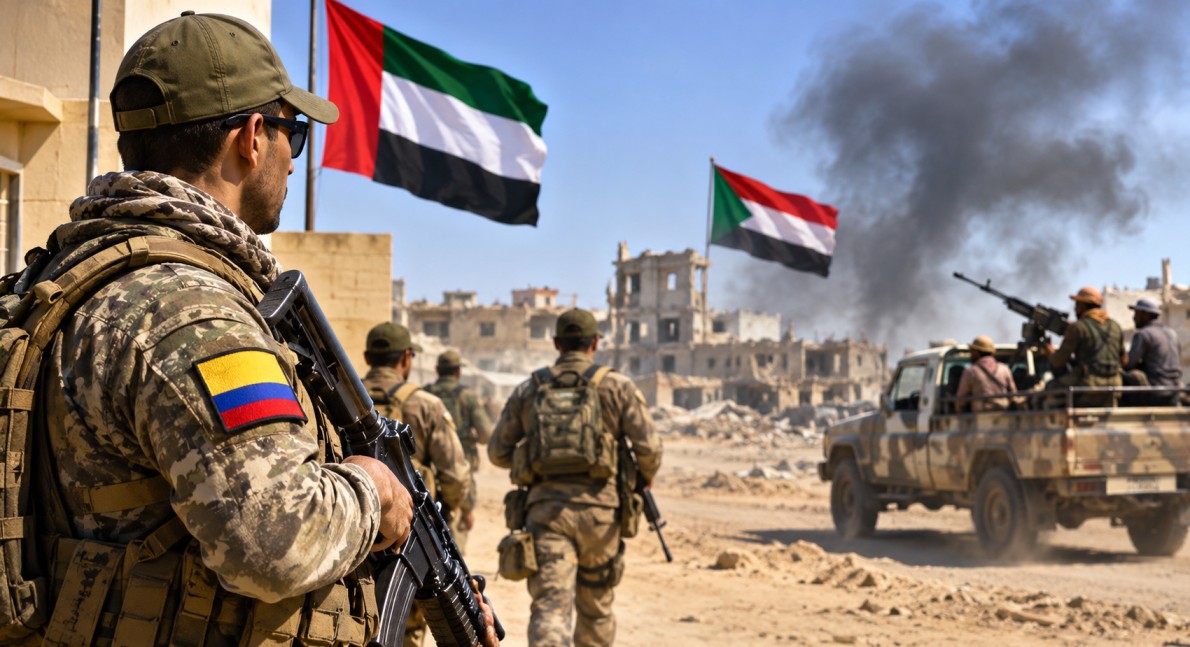
UAE Sudan Report findings have brought renewed attention to the involvement of foreign fighters in Sudan’s ongoing civil war. A confidential report by the United Nations Panel of Experts on Sudan, shared with the UN Security Council in early November 2026, reportedly found that a United Arab Emirates (UAE)-based security company recruited Colombian mercenaries who fought alongside Sudan’s Rapid Support Forces (RSF). The report also described alleged funding, training and transport arrangements connected to the deployment of these fighters.
The findings have increased international attention on the conflict and the role of foreign networks in supporting armed groups. However, the UAE has rejected allegations that it provided military support to any side in Sudan.

UN Report Identifies UAE-Based Security Company
According to the confidential report, Global Security Services Group (GSSG), a private security company based in the UAE, recruited Colombian fighters known as the “Desert Wolves”.
The UN investigators reportedly found that the fighters received training at Al-Ghayathi and Al-Wathba military facilities in Abu Dhabi. A facility linked to the UAE at the Puntland Maritime Police Force base in Bosaso, Somalia, was also identified as a training and transit location.
The report describes a network through which foreign fighters were allegedly recruited, trained and moved towards Sudan. These findings add to earlier investigations into the movement of Colombian military contractors and other foreign personnel into the country.
A May 2026 investigation by Human Rights Watch had also documented evidence that Colombian contractors recruited through private companies travelled through UAE military facilities before being deployed to Sudan. The organisation said its findings were based on interviews, company documents, videos and other evidence.
Role of Colombian Mercenaries in Sudan’s Conflict
The Colombian fighters reportedly supported RSF operations in the Darfur region. Their activities included operating drones and artillery, providing infantry support and training RSF members.
The report linked their involvement to major military operations, including the siege and capture of El Fasher in October 2025. The city, located in North Darfur, was an important centre during the conflict.
The RSF has faced serious allegations of violence against civilians, including war crimes and genocide. The UN’s independent fact-finding mission has also documented how foreign recruitment and external support networks have increased the military capabilities of the warring sides and contributed to civilian suffering.
Bosaso in Somalia Reportedly Used as a Transit Point
The report also draws attention to Bosaso, a port city in Somalia’s Puntland region. A UAE-linked facility at the Puntland Maritime Police Force base was reportedly used as a transit and training point for Colombian fighters before their deployment to Sudan.
The alleged route highlights the international nature of the recruitment network. Fighters and military support can move through several countries before reaching a conflict zone, making it difficult for authorities to monitor and prevent illegal transfers.
The use of private security companies and foreign recruitment networks has become an important issue in discussions about the Sudan conflict. These networks can provide armed groups with specialised skills, technical support and additional personnel.
UAE Rejects Allegations of Military Support
The UAE has denied providing weapons or military assistance to any party involved in Sudan’s civil war. Its Foreign Ministry said that authorities had investigated allegations involving Global Security Services Group and had shared information with the UN Panel of Experts.
The UAE has consistently rejected claims that it is involved in supporting the RSF. The latest findings are therefore part of a wider dispute over alleged foreign involvement in Sudan, and the claims should be understood alongside the UAE’s official response.
Earlier reports and investigations have also examined the alleged movement of weapons, drones and foreign fighters into Sudan. Reuters reported in July 2026 that a draft UN experts’ report described aircraft transporting RSF fighters, weapons and military equipment into Darfur.
UN Candidacy Brings Further Attention to the Issue
The report has also drawn attention because of its timing. UAE diplomat Lana Nusseibeh has been linked to the country’s campaign for the position of United Nations Secretary-General.
The findings have added to questions raised by Sudanese representatives about the UAE’s possible role in the conflict. Nusseibeh has previously denied UAE involvement in arming the RSF, while the UAE government has rejected allegations of military support.
The wider issue is expected to remain part of discussions at the United Nations, particularly as member states examine the movement of foreign fighters, weapons and military equipment into Sudan.
Sudan’s Civil War and the Impact of Foreign Support
Sudan’s conflict began in April 2023 between the Sudanese Armed Forces (SAF) and the Rapid Support Forces (RSF). The fighting has caused widespread displacement, damage to infrastructure, food shortages and a serious humanitarian emergency.
Darfur has experienced some of the most severe violence. International investigations have raised concerns about attacks on civilians, forced displacement and other serious violations.
The growing attention on foreign recruitment networks shows how support from outside Sudan can influence the course of the conflict. The UN has called on states connected to these networks to investigate suspected illegal activities and prevent assistance that could contribute to violations of international law.