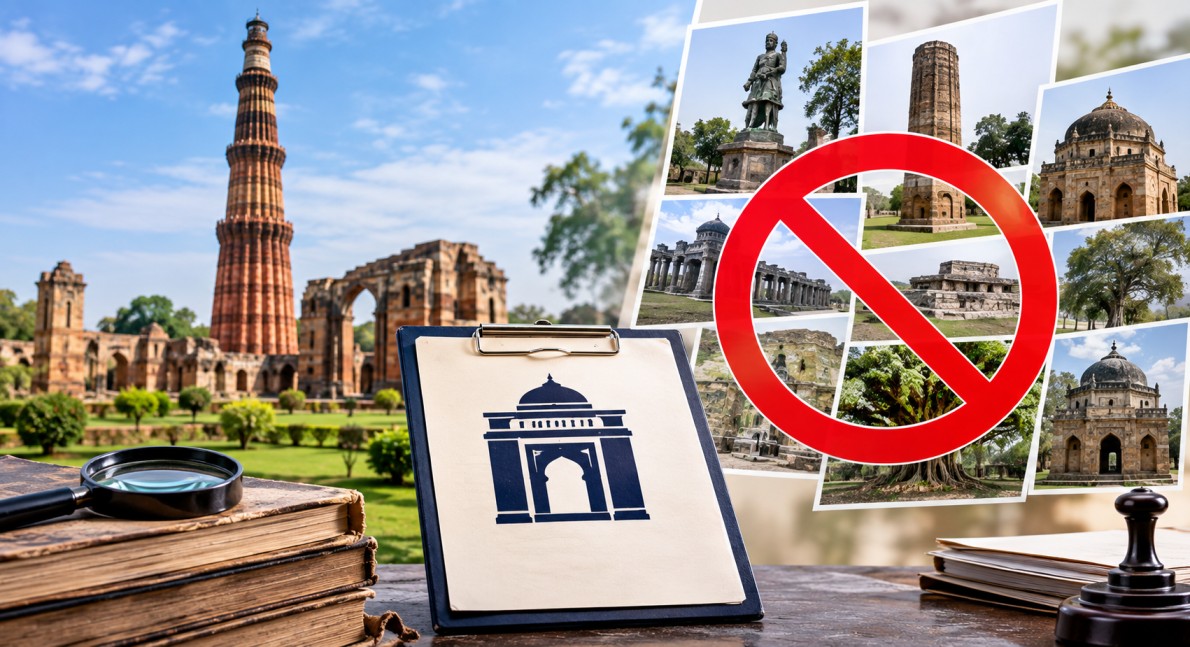
Monument Delisting: 18 Sites Removed from Protected List

Monument Delisting has brought attention to India’s changing approach to the protection of historic sites. The Central Government has removed 18 monuments from the list of centrally protected sites since 2021 after determining that they no longer met the requirement of being considered monuments of national importance. The Archaeological Survey of India (ASI) continues to look after thousands of protected monuments and archaeological sites across the country. Recent government records put the number at 3,686 centrally protected monuments and protected areas.
Thank you for reading this post, don't forget to subscribe!What Does Monument Delisting Mean?
Monument delisting means removing a site from the list of monuments that receive protection under the central government’s heritage framework. Once a monument is delisted, it is no longer covered by the same statutory conservation responsibility of the ASI.
The process is connected with the Ancient Monuments and Archaeological Sites and Remains (AMASR) Act, 1958. The law provides the framework for protecting ancient monuments and archaeological sites that are considered to have national importance.
The government has used the provisions of the Act to review whether certain sites continue to meet the criteria for central protection. This process is different from simply declaring a monument unimportant. It involves a formal legal and administrative decision about whether the site should continue under the centrally protected category.
How the ASI Protects Heritage
The Archaeological Survey of India works under the Ministry of Culture and is responsible for the conservation, preservation and maintenance of centrally protected monuments and archaeological sites.
These sites include forts, temples, tombs, archaeological remains, inscriptions, ancient structures and other historic places spread across different parts of India. Conservation work can include structural repairs, cleaning, restoration and measures to protect monuments from damage.
A March 2026 parliamentary reply stated that ASI was responsible for 3,686 centrally protected monuments and protected areas across the country.
Sites Included in the Delisting Process
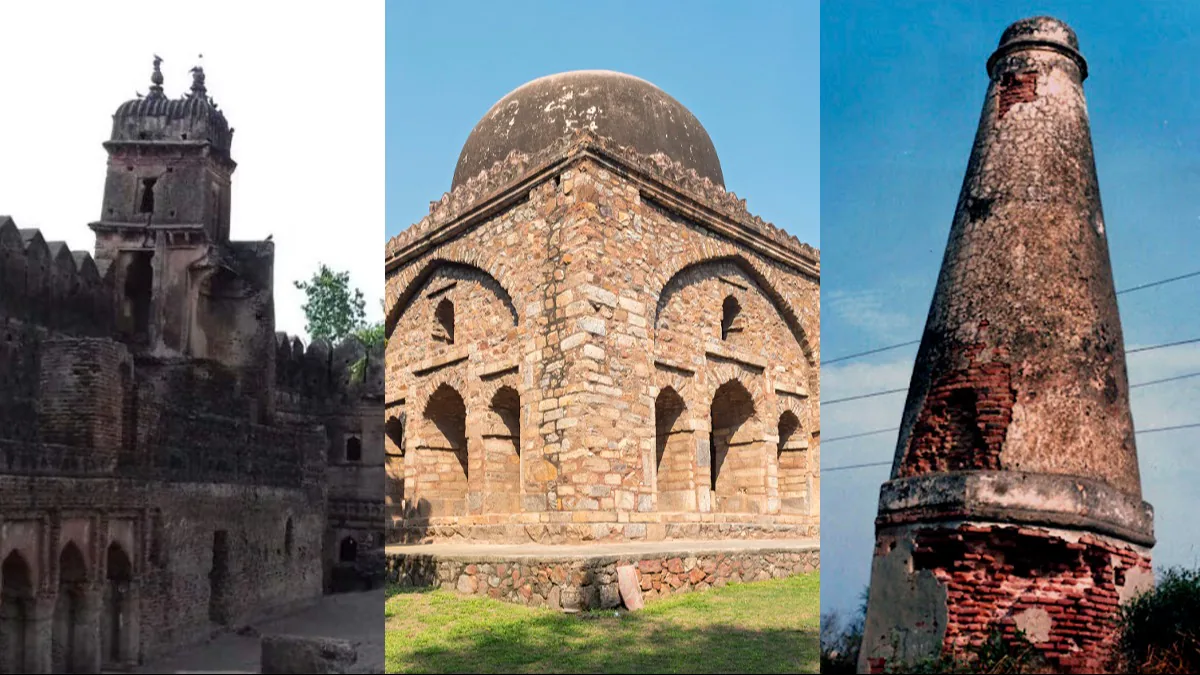
Among the sites reported as delisted are the Nicholson Statue in Delhi, Kos Minar No. 13 in Gurugram and a Kos Minar at Shahabad in Haryana.
Other examples include Bara Khamba Cemetery in Delhi, Gunner Burkill’s Tomb in Jhansi, Telia Nala Buddhist ruins in Varanasi and an old banyan grove in Ghazipur, Uttar Pradesh.
These sites represent different types of historical remains. Some are connected with colonial-era history, while others are associated with older travel routes, religious traditions or archaeological remains.
Legal Process Under the AMASR Act
The AMASR Act provides the legal framework for identifying and protecting monuments of national importance. The delisting process requires the government to follow the provisions of the law rather than simply removing a site from an administrative list.
The issue has also received attention because of the difference between centrally protected monuments and other heritage places. A site can have local or historical value even if it does not remain under central protection.
Government records show that the number of centrally protected monuments has changed over time. In December 2024, the Ministry of Culture told the Rajya Sabha that no centrally protected site had been delisted between January 2020 and October 2024.
India’s Wider Heritage Conservation Efforts
The discussion around monument delisting comes alongside broader efforts to document, preserve and restore India’s historical heritage. ASI continues conservation work at centrally protected sites based on their condition and the availability of resources.
India is also working to bring historical artefacts back from other countries. The Ministry of Culture has reported the recovery of hundreds of cultural objects from abroad in recent years. Such efforts are part of a wider focus on protecting India’s cultural heritage, improving documentation and returning historically important objects to the country.
The review of protected monuments therefore reflects one part of a larger heritage-management process, where governments must balance historical value, legal protection, conservation needs and available resources.