Black Hole Star Explains Little Red Dots

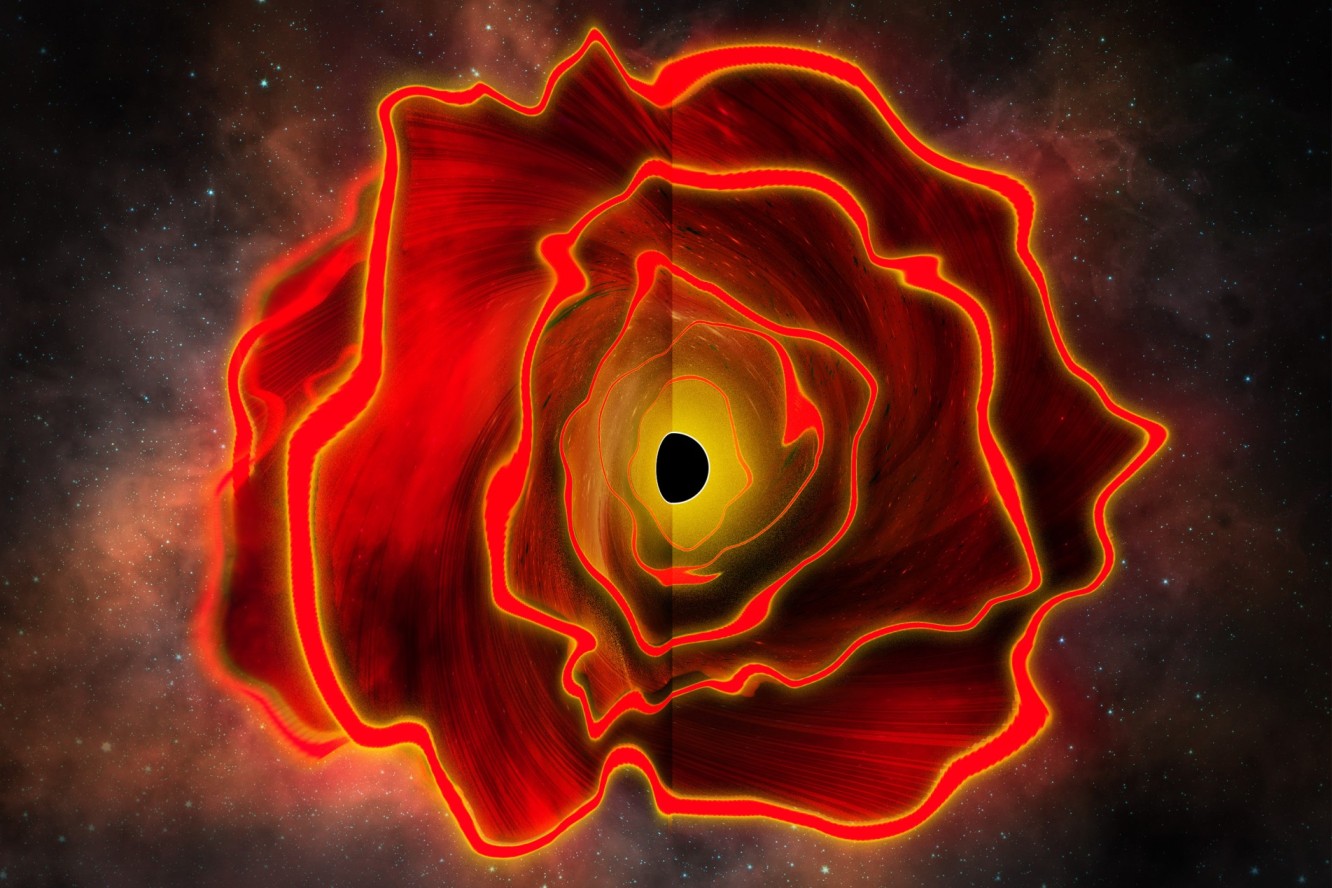
Black Hole Star is drawing attention from astronomers after the James Webb Space Telescope (JWST) observed an unusual object from the very early universe. The object, named MoM-BH-1*, may be a black hole surrounded by a dense envelope of gas. Researchers say this unusual structure could help explain the mysterious group of compact, red objects known as Little Red Dots that JWST has been finding in the distant universe.
Thank you for reading this post, don't forget to subscribe!What Is a Black Hole Star?
The term Black Hole Star, or BH*, describes a proposed type of cosmic object in which a growing black hole is hidden inside a very dense layer of gas. The black hole itself does not behave like an ordinary star. Instead of producing energy through nuclear fusion, it releases enormous amounts of energy as material falls towards it.
In the proposed model, the surrounding hydrogen-rich gas acts like a thick envelope. Radiation from the central black hole passes through this material, creating a spectrum that can show both black-hole-like and star-like characteristics. This combination makes these objects especially interesting to scientists studying the early universe.
MoM-BH*-1 and the Early Universe
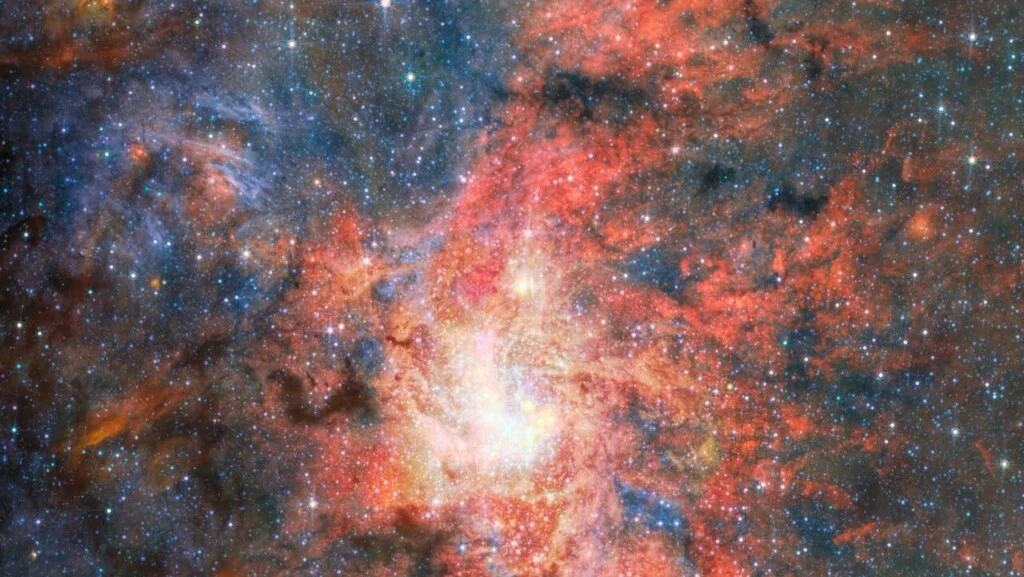
MoM-BH*-1 is an extremely distant object observed by JWST as part of the Mirage or Miracle (MoM) programme. Its light comes from a time when the universe was less than about 660 million years old. Because light takes time to travel, observing such a distant object allows astronomers to study conditions that existed during the early stages of cosmic history.
The object is particularly unusual because it appears extremely compact and bright. Researchers have suggested that its central black hole could have a mass in the range of millions of times that of the Sun, although the exact physical nature of the object remains an area of active research. Earlier work estimated the black hole associated with MoM-BH*-1 to be around the million-solar-mass scale.
A Possible Answer to the Little Red Dot Mystery
One of JWST’s surprising discoveries has been a population of small, very distant objects that appear red in infrared images. These objects are commonly called Little Red Dots (LRDs). Their unusual brightness, colour and spectra have led to several competing explanations.
The Black Hole Star model suggests that at least some of these objects could contain rapidly growing black holes wrapped in dense gas. The gas changes the light coming from the central black hole, giving the object some characteristics that can resemble those of stars or stellar populations.
Research published in 2026 has continued to explore this possibility. One study used models of BH*-dominated sources and identified hundreds of candidates in JWST observations, showing that the idea is being investigated across a much wider population rather than being limited to a single object.
The Importance of the Balmer Break
One of the most interesting features of MoM-BH*-1 is its strong Balmer break. This is a sharp change in the amount of light at wavelengths associated with hydrogen.
Astronomers normally use spectral features such as the Balmer break to learn about the material and stars inside distant galaxies. In MoM-BH*-1, however, the feature is unusually strong. Earlier research found that the object’s spectrum could be difficult to explain using an ordinary population of stars alone, supporting models involving a dense gas environment around a black hole.
What This Could Mean for Black Hole Growth
The discovery is important because scientists are still trying to understand how very massive black holes appeared so early in cosmic history. Some supermassive black holes existed when the universe was only a small fraction of its current age, creating a major question about how quickly they could have grown.
Black Hole Stars could represent an early stage in that process. A black hole surrounded by a dense supply of gas could grow rapidly while the surrounding material changes the way the object appears from Earth.
The idea is still a scientific model rather than a settled explanation for all Little Red Dots. Other studies have proposed different possibilities, including unusual stellar populations and other types of active galactic nuclei. More JWST observations and detailed spectroscopy will be needed to determine how common Black Hole Stars are and exactly how they formed.
JWST Continues to Change the Picture of the Early Universe
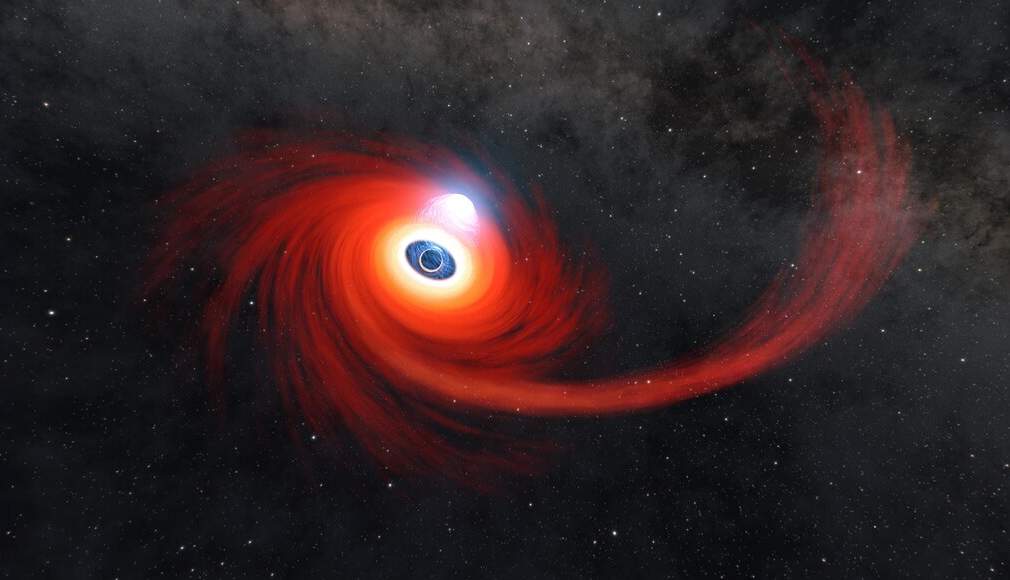
The James Webb Space Telescope has opened a new window into the universe’s earliest periods through its powerful infrared observations. Discoveries such as MoM-BH*-1 are challenging older ideas about how stars, galaxies and black holes developed.
As astronomers continue studying Little Red Dots and other distant objects, the Black Hole Star model could provide another important piece of the puzzle surrounding the rapid formation of massive black holes in the young universe.