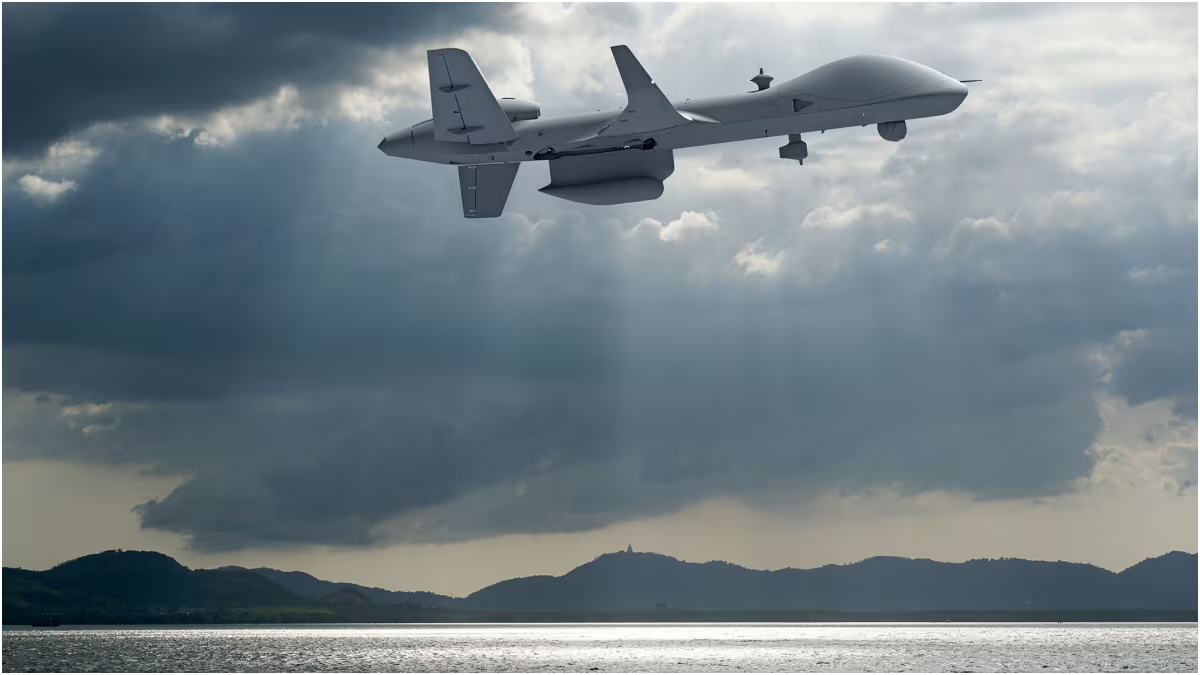
MQ-9B Sea Guardian Deal

MQ-9B Sea Guardian has become part of India’s latest effort to strengthen maritime surveillance in the Indian Ocean Region. The Ministry of Defence signed a contract worth around ₹1,943 crore with General Atomics Aeronautical Systems Inc. on August 17, 2026, for the lease of two MQ-9B Sea Guardian remotely piloted aircraft systems for the Indian Navy.
Thank you for reading this post, don't forget to subscribe!The two aircraft will be leased for 30 months and are expected to provide long-duration surveillance over important maritime areas. The agreement was signed at Kartavya Bhawan-2 in New Delhi.
MQ-9B Sea Guardian and Its Role
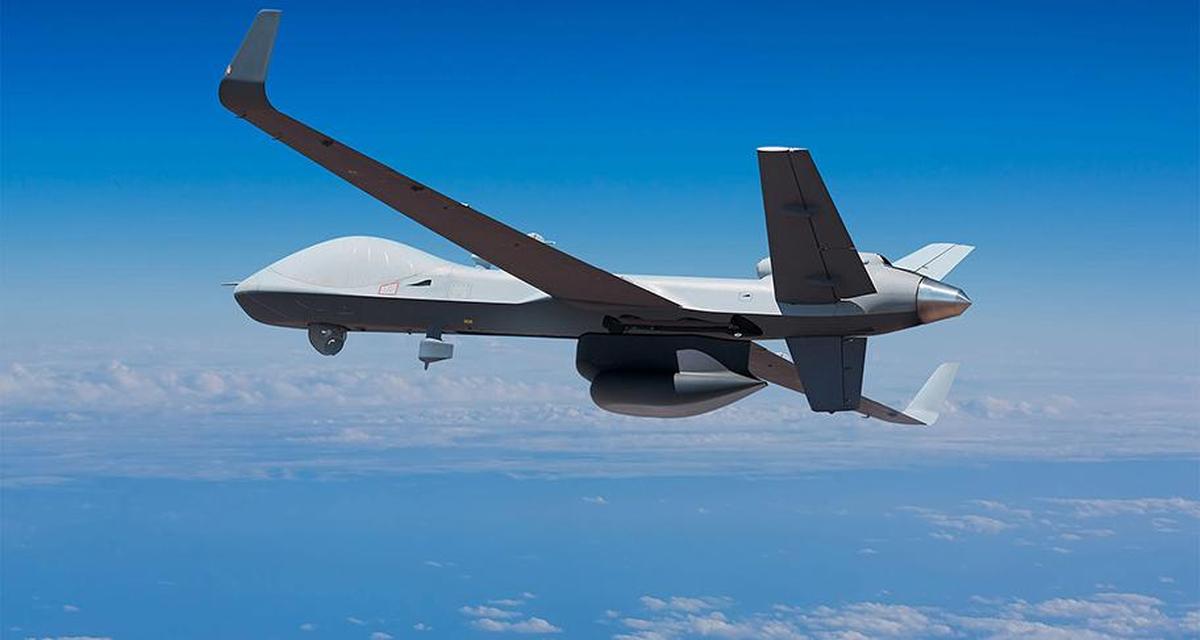
The MQ-9B Sea Guardian is a High-Altitude Long-Endurance remotely piloted aircraft system developed by US-based General Atomics Aeronautical Systems Inc. The platform is designed to remain airborne for long periods and support missions that require continuous monitoring.
For the Indian Navy, the aircraft will primarily support Intelligence, Surveillance and Reconnaissance activities. Their long endurance makes them useful for observing large areas of the sea and tracking activity across important maritime routes.
The aircraft can carry advanced sensors and other mission equipment. These capabilities allow naval forces to collect information from large distances and build a clearer picture of activity in the maritime environment.
Focus on the Indian Ocean Region
The MQ-9B Sea Guardian lease is closely connected with India’s focus on Maritime Domain Awareness. The Indian Ocean is an important region for global trade, energy transportation and shipping routes. Monitoring activity across this large area requires aircraft and other surveillance systems that can operate for extended periods.
The leased drones will therefore provide additional coverage for the Indian Navy. They can support monitoring of shipping activity and other developments at sea while reducing the need to keep manned aircraft continuously airborne for similar surveillance tasks.
Maritime surveillance has become increasingly important as countries invest in new technologies to monitor their surrounding waters and protect important sea routes.
India’s Earlier Use of the MQ-9B
This is not the first time India has used the MQ-9B platform. The Indian Navy began leasing the same type of drone in November 2020 for maritime surveillance.
The platform has since been used as part of India’s broader surveillance capabilities. One of the previously leased drones was involved in a crash in the Bay of Bengal in September 2024.
The new lease adds two more aircraft to the Navy’s operational surveillance resources for a fixed period of 30 months.
What High-Altitude Long-Endurance Means
The MQ-9B belongs to the High-Altitude Long-Endurance category. Such aircraft are designed to operate at relatively high altitudes while remaining airborne for extended periods.
This combination is useful for surveillance because an aircraft can cover a wide area without needing to return frequently for refuelling or replacement. Remotely piloted systems can also perform missions that would otherwise require significant use of manned aircraft.
For naval operations, long-endurance platforms are particularly useful because oceans cover vast distances and important activities can take place far from the coastline.
Contract Signed in New Delhi
The formal agreement was signed in New Delhi at Kartavya Bhawan-2 on August 17. Shri A. Anbarasu, Additional Secretary and Director General (Acquisition) in the Department of Defence, was present during the signing.
The contract with General Atomics Aeronautical Systems Inc. provides the Indian Navy with two leased MQ-9B Sea Guardian systems for 30 months. The arrangement gives the Navy additional surveillance capacity without immediately requiring a permanent acquisition of the platforms.
The deal comes at a time when unmanned systems are playing a growing role in defence operations around the world. Drones are increasingly being used for surveillance, reconnaissance, border monitoring and maritime observation.
Growing Role of Drones in Defence
The latest MQ-9B Sea Guardian agreement also reflects the wider growth of unmanned technology in India’s defence sector. Modern military operations increasingly combine satellites, aircraft, ships, sensors and unmanned systems to collect information over large areas.
For the Indian Navy, persistent surveillance is particularly valuable because the Indian Ocean Region contains busy commercial shipping routes and covers a very large maritime area. The new leased aircraft are expected to add another layer to India’s existing surveillance network while supporting the Navy’s efforts to maintain awareness of activities across the sea.