PSB Confluence 2026 Focuses on Banking Reforms

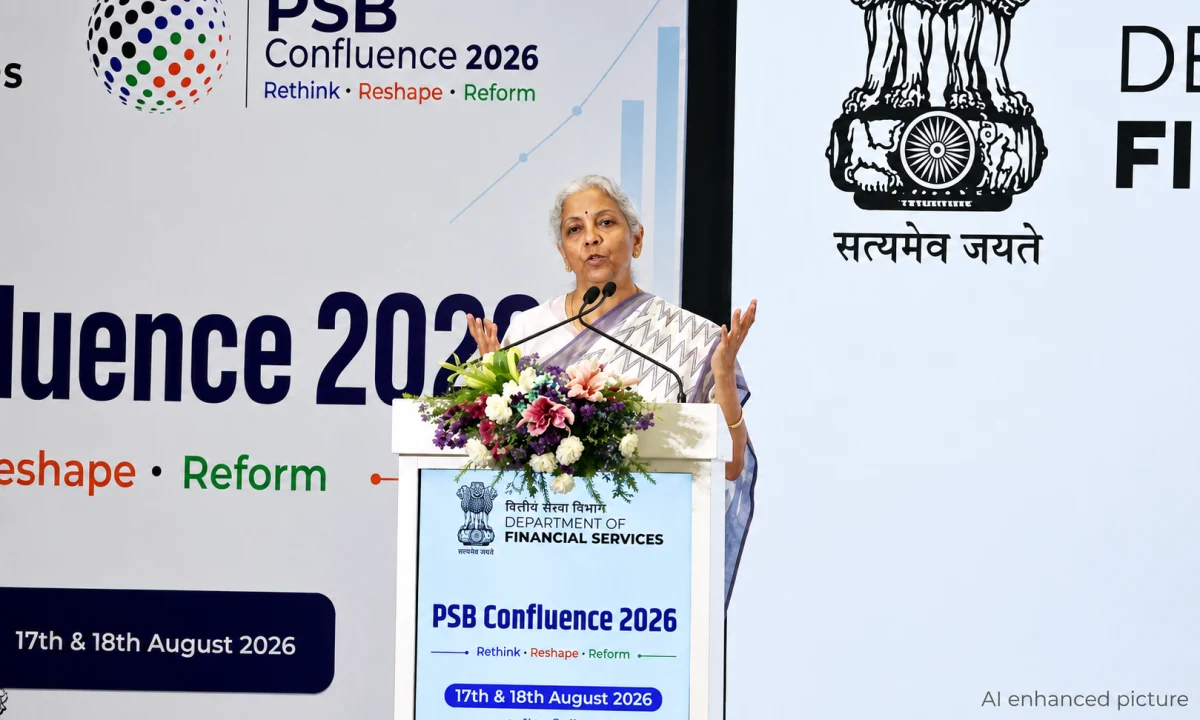
PSB Confluence 2026 was held in New Delhi on August 17 and 18, 2026, bringing senior representatives from Public Sector Banks (PSBs), Public Financial Institutions (PFIs) and the Indian Banks’ Association together for discussions on the future of India’s banking sector. The two-day event was organised by the Department of Financial Services (DFS), Ministry of Finance.
Thank you for reading this post, don't forget to subscribe!Around 125 senior representatives took part in the confluence. The discussions focused on how public sector banks can respond to changing customer needs, support economic growth and strengthen their role in building a more modern and inclusive financial system.
The event comes at a time when India’s banking sector is adapting to rapid digitalisation, changing customer behaviour, new financial technologies and the growing need for credit to support businesses and infrastructure.
Seven Key Areas Discussed at PSB Confluence 2026
The PSB Confluence 2026 discussions covered seven major themes. These included Deposit Mobilisation, Banking for Youth, Supporting the Investment Cycle, Global Capability Centres, Agriculture and Horticulture Value Chain Infrastructure, Re-imagining the Credit Card Business and Priority Sector Lending.
The first day mainly focused on four areas: attracting and retaining deposits, improving banking services for young people, supporting investment and strengthening the role of banks in the growth of Global Capability Centres.
The remaining themes were scheduled to receive attention as discussions continued during the second day.
These areas cover several important parts of India’s economy, from household savings and youth-focused financial services to agriculture, infrastructure and business investment.

Deposit Mobilisation Becomes an Important Banking Priority
Deposit mobilisation was one of the major subjects discussed at the confluence. Deposits are an important source of funds for banks because they provide money that can later be used for lending.
Public sector banks are therefore looking at ways to encourage customers to save and maintain deposits with banks while offering convenient and competitive services.
The growth of digital banking has changed how customers interact with banks. Mobile banking, internet banking and digital payment systems have made many banking services faster and easier.
At the same time, banks need to maintain customer trust and provide secure services as more financial activities move online.
Banking for Young Indians
Another major theme was banking for youth. Finance Minister Nirmala Sitharaman highlighted India’s young population during the opening session.
She noted that people between 15 and 29 years account for around 29% of India’s population. The government is therefore looking at ways to connect young people with opportunities in education, employment, entrepreneurship and financial services.
The Mera Yuva Bharat platform was also mentioned during the discussions. According to the information presented at the event, the platform has more than 2.6 crore registered users.
For banks, the large young population represents both an opportunity and a responsibility. Young customers increasingly expect quick digital services, easy payments, online financial products and convenient access to credit.
Banks can also play a role in helping young entrepreneurs and first-time borrowers understand savings, investment and responsible borrowing.
Public Sector Banks and the Investment Cycle
Supporting the investment cycle was another important subject at PSB Confluence 2026.
Banks play an important role in providing credit for businesses, infrastructure projects and other productive activities. When companies receive adequate financing, they can expand operations, purchase equipment, create jobs and increase production.
Public sector banks have traditionally played a significant role in financing large parts of the Indian economy. The confluence discussed ways to make this role stronger as India continues to expand infrastructure and industrial capacity.
The discussions are particularly relevant as India works towards its broader Viksit Bharat vision and seeks stronger economic growth over the coming years.
Global Capability Centres and New Business Opportunities
Global Capability Centres, commonly known as GCCs, were also included among the key themes.
GCCs are centres established by multinational companies to carry out functions such as technology development, research, finance, data management and other specialised services.
India has become an important destination for such centres because of its large skilled workforce and growing technology ecosystem.
Banks can support the expansion of GCCs by providing financial services, business banking solutions, payment systems and other forms of financial support.
The discussion at the confluence shows how the banking sector is increasingly connected with India’s technology and services economy.
Agriculture and Horticulture Value Chains
Agriculture and horticulture value chain infrastructure was another major area on the agenda.
Farmers and agricultural businesses need access to finance at different stages, including production, storage, transportation, processing and marketing. Better financial support can help reduce losses and improve the value received by producers.
Public Financial Institutions such as NABARD have an important role in supporting rural development and agricultural finance.
The discussions at PSB Confluence 2026 therefore extended beyond traditional banking and included the wider economic systems that depend on access to formal credit.
Re-imagining the Credit Card Business
The confluence also examined the credit card business and the need to rethink how credit card services can develop in a changing financial environment.
India has witnessed rapid growth in digital payments, with consumers increasingly using cards, mobile payments and other digital methods for everyday transactions.
Banks need to balance convenience with responsible lending and customer protection. Better digital tools can help financial institutions understand customer needs while also managing credit risks.
The discussion on credit cards reflects the broader transformation taking place across India’s financial sector.
Priority Sector Lending Remains Important
Priority Sector Lending was another key theme of the event. The policy requires banks to provide credit to selected areas of the economy that are considered important for inclusive growth.
These areas include agriculture, micro and small enterprises and certain weaker sections of society.
Priority Sector Lending helps connect formal banking services with people and businesses that may otherwise face difficulties in obtaining institutional credit.
For public sector banks, maintaining effective priority-sector lending is important for supporting balanced economic development.
Banking Reforms and Viksit Bharat
Finance Minister Nirmala Sitharaman also announced that the Central Government will soon establish a high-powered committee on banking reforms for Viksit Bharat.
The discussions and recommendations emerging from PSB Confluence 2026 are expected to provide inputs for the proposed committee.
The move comes as India’s financial sector enters a new phase. Banks are dealing with rapid technological change while also being expected to support economic growth, financial inclusion and investment.
The future banking reform process could therefore look at issues such as technology adoption, customer service, lending practices, risk management and the ability of Indian banks to compete in a global financial environment.
Public Sector Banks Enter a New Phase
The current health of public sector banks was also discussed during the event. Sitharaman pointed to historically low levels of Non-Performing Assets (NPAs), which can give banks greater room to focus on new areas of growth.
NPAs are loans where scheduled payments have not been made for a specified period. Lower levels of stressed loans can improve the financial position of banks and allow them to concentrate more on lending and business expansion.
The discussions at PSB Confluence 2026 therefore focused not only on existing challenges but also on how banks can prepare for the next phase of India’s economic and financial development.

Role of the Department of Financial Services
The Department of Financial Services, under the Ministry of Finance, plays a major role in matters related to India’s banking and financial institutions.
The department works on policy issues involving public sector banks, financial institutions, insurance and other areas of the financial sector.
The two-day confluence provided a platform for senior banking officials and policymakers to discuss practical issues facing the industry and identify areas where further reforms may be required.
The event brought together public sector banks, public financial institutions and the Indian Banks’ Association, creating a common platform for discussions on India’s changing banking landscape.