


Project Meridian to Study Future War

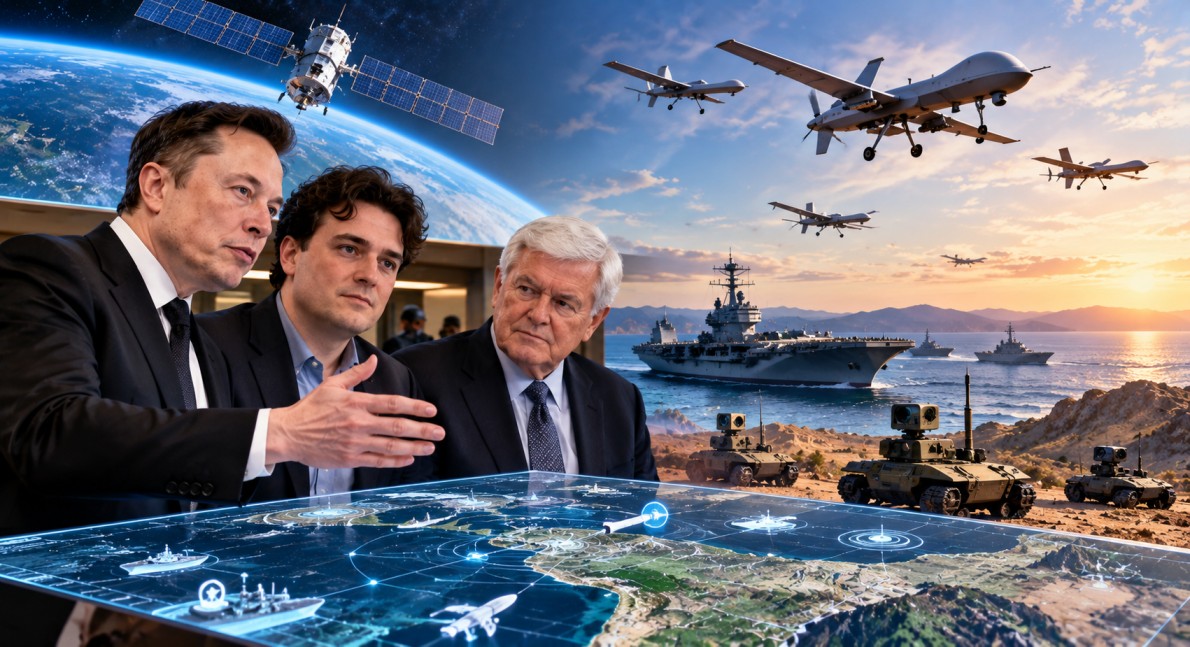
Project Meridian is a new US military initiative announced by Defense Secretary Pete Hegseth to study how warfare could change as artificial intelligence, autonomous systems, robotics and other technologies develop. Elon Musk, Anduril founder Palmer Luckey and former US House Speaker Newt Gingrich will co-lead the project under the direction of Pentagon technology chief Emil Michael. The initiative was announced on September 30, 2026, during Hegseth’s State of the Force address at Marine Corps Base Quantico in Virginia.
Thank you for reading this post, don't forget to subscribe!Project Meridian Gets 120 Days
Project Meridian has been given 120 days to examine the capabilities and technologies that the US military may need for future battlefields. The findings are due by January 28, 2027.
The final work will include a public, unclassified report as well as a classified annex for military leaders. The Pentagon says the project will look at practical steps for developing, testing and deploying advanced technologies for future military operations.
The project is part of a wider set of military initiatives announced by Hegseth as the US Department of Defense focuses more attention on autonomous systems, drones and rapidly developing technologies.

Elon Musk Joins Future Warfare Study
Elon Musk is joining the project alongside Palmer Luckey and Newt Gingrich. Musk leads SpaceX and Tesla and has also been involved in the development of artificial intelligence and autonomous technology.
Luckey is the founder of Anduril Industries, a defence technology company that develops autonomous systems and other military technologies. Gingrich is a former Speaker of the US House of Representatives and has worked on defence and national security issues.
The three will work with other participants from areas including technology, academia and policy. The project will operate under Emil Michael, the Pentagon’s Chief Technology Officer.
Technologies Under Review
The Project Meridian study will examine a wide range of technologies that could affect future military operations. These include artificial intelligence, autonomous systems, robotics, directed-energy technologies and biotechnology.
The study has a particularly broad geographic and operational scope. It is intended to consider future battlefields across land, air and sea, as well as operations below the Earth’s surface, in space and in the Earth-Moon region.
The growing use of drones in recent conflicts has increased military interest in autonomous technology. The war in Ukraine, in particular, has demonstrated the expanding role of relatively low-cost unmanned systems for surveillance, targeting and battlefield operations. Reuters reported that the Pentagon sees autonomous and robotic systems as an important part of its future military planning.
New Autonomous Warfare Command
Project Meridian is being announced alongside a separate restructuring of US military capabilities. Hegseth also announced the creation of the Autonomous Warfare Command, or AutoWarCom.
The new command is planned as a four-star combatant command with service-like authorities to expand autonomous and robotic capabilities across the US military. According to a Pentagon-related memo reported by Defense One, the command is expected to become operational by October 1, 2027.
The command will focus on areas such as unmanned systems, drones and artificial intelligence. Its creation is part of the Pentagon’s effort to speed up the development and deployment of autonomous military technology.
Wider US Military Technology Push
The announcement of Project Meridian comes as the US military is examining how quickly its acquisition systems can respond to technological changes.
Hegseth has argued that the pace of technological development and modern warfare is moving faster than traditional military procurement processes. The new autonomous warfare command is intended to address that gap by giving greater attention to rapidly developing robotic and unmanned systems.
The project and the new command are separate initiatives but are connected by their focus on future military technology. Project Meridian is primarily a strategic study of future warfare, while AutoWarCom is intended to become an operational military command focused on autonomous and robotic capabilities.
The 120-day study will therefore provide a near-term assessment of technologies and future battlefield requirements, while the new command is being developed as a longer-term organisational change within the US military.