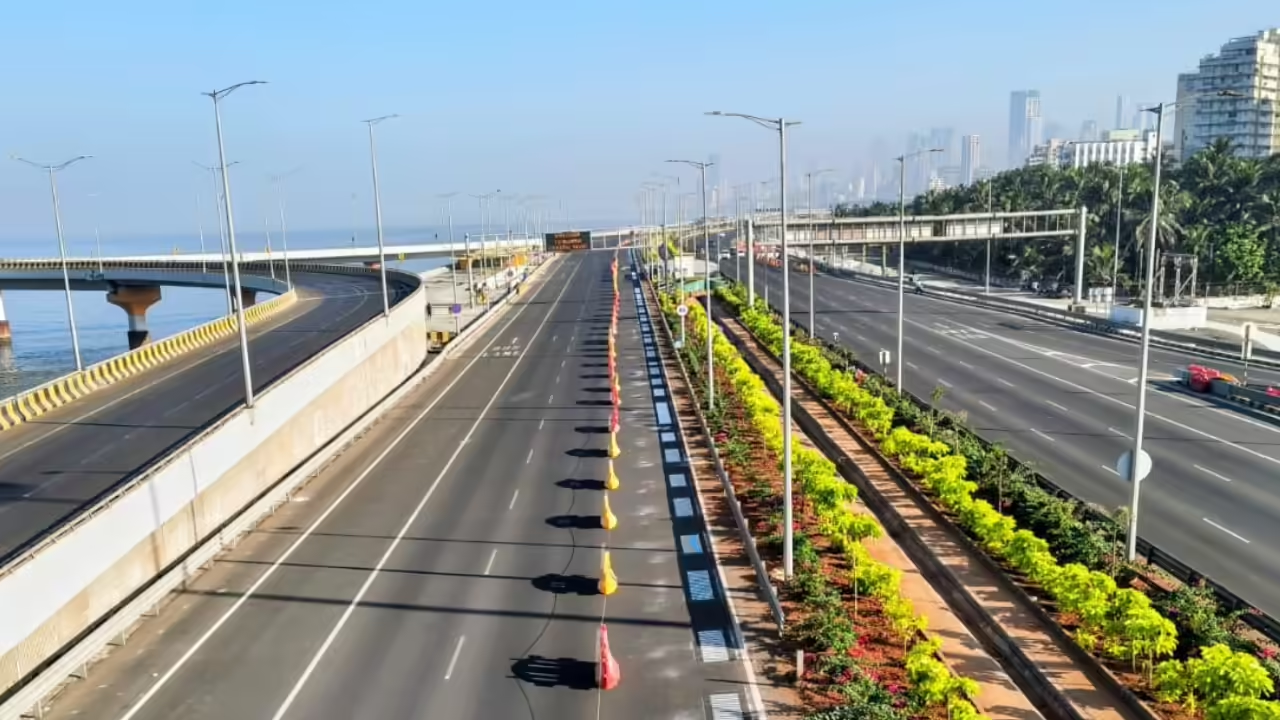
Mumbai Coastal Road Musical Road Brings Music to Daily Commutes

Mumbai Coastal Road Musical Road has added a fresh and creative chapter to the city’s transport story. Known for its fast pace, dense traffic, and constant movement, Mumbai has now introduced something that blends engineering with art. Civic officials describe it as India’s first “musical road”, a stretch where drivers can actually hear a song while driving, provided they maintain the recommended speed. The idea is simple yet striking: make driving more engaging while gently guiding motorists towards safer and steadier driving habits.
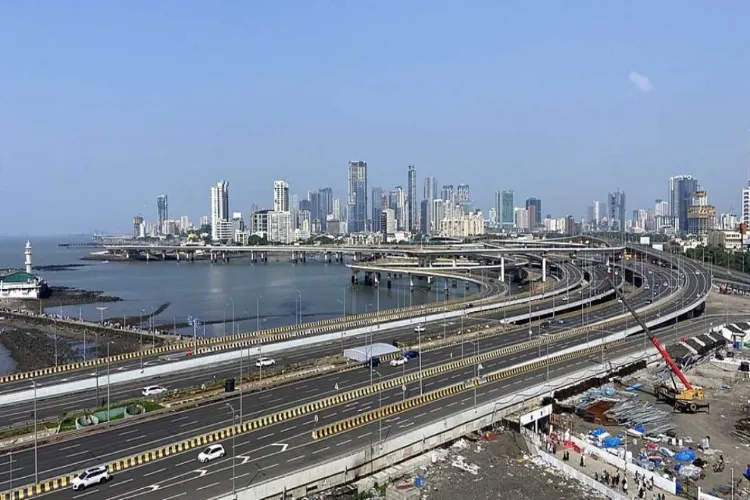
Thank you for reading this post, don't forget to subscribe!This new feature has been developed on the Mumbai Coastal Road, a major infrastructure project that connects south Mumbai with the western suburbs. The musical road has already drawn public attention because it turns an everyday commute into a unique experience that combines sound, motion, and discipline on the road.
A New Kind of Driving Experience on Mumbai’s Coast
The Mumbai Coastal Road Musical Road is not designed as a full-length musical track across all lanes. Instead, it is a carefully planned and lane-specific feature. The musical stretch is located on the northbound carriageway, starting after vehicles exit the underground tunnel at Worli while travelling from Nariman Point towards Worli.
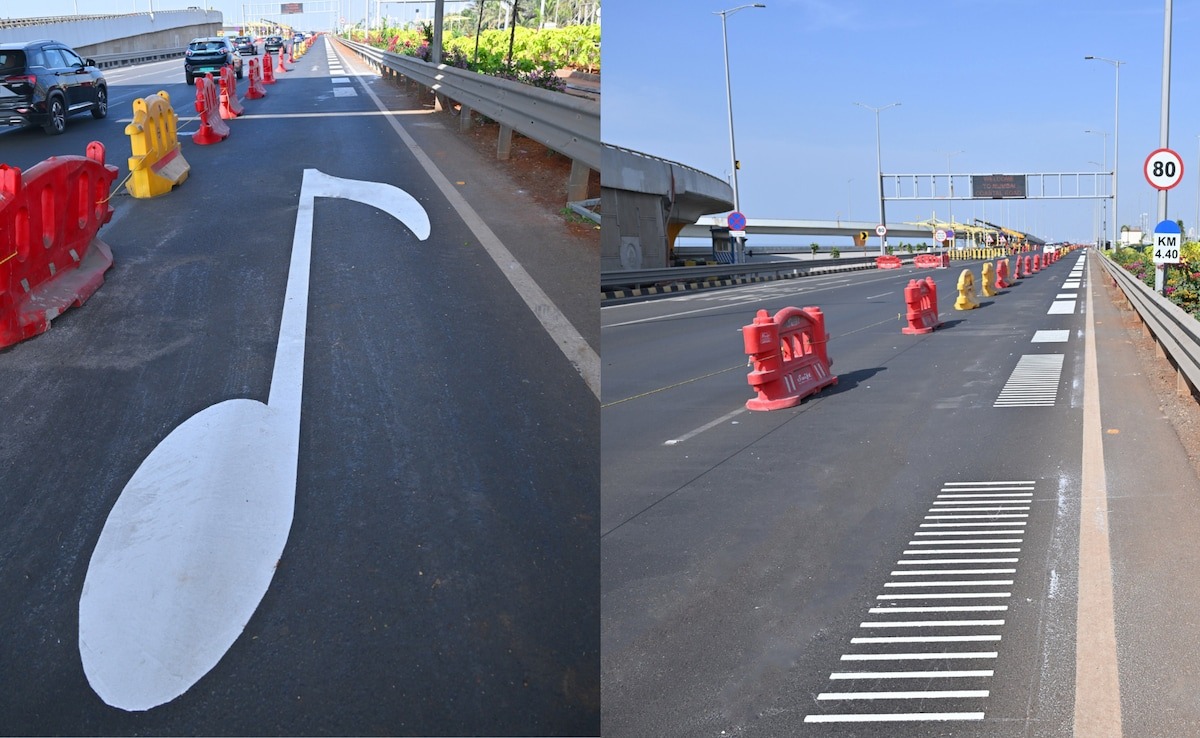
The grooves have been installed only on the first lane next to the divider and extend for about 500 metres. This design ensures that the musical effect remains controlled and does not interfere with vehicles in other lanes. Drivers who choose this lane and maintain the suggested speed are rewarded with a recognisable tune playing through the vibrations created by their tyres.
The project is scheduled to be formally inaugurated on February 11, 2026, at 12.30 pm by Maharashtra chief minister Devendra Fadnavis. With this launch, Mumbai becomes part of a small global group of cities experimenting with musical roads as both a novelty and a subtle road-safety tool.
How the Mumbai Coastal Road Musical Road Creates Sound
The science behind the Mumbai Coastal Road Musical Road lies in precision engineering. The surface of the road has been fitted with specially measured rumble strips, also known as grooves. These grooves are placed at exact intervals and depths so that when tyres roll over them at a speed of around 70 to 80 kilometres per hour, they create vibrations.
These vibrations produce sound waves that combine into a melody heard inside the vehicle. If the speed is too slow or too fast, the rhythm breaks and the tune sounds distorted. This makes speed itself the key to enjoying the music, turning the road into a natural guide for consistent driving.
The selected tune for this stretch is ‘Jai Ho’, the globally popular song from the film Slumdog Millionaire. The song gained worldwide fame and remains instantly recognisable, making it a fitting choice for a project that aims to surprise and delight motorists without confusing them.
Signboards and Guidance for Motorists
To make sure drivers are not caught off guard, authorities have installed multiple signboards before the musical stretch begins. These signs appear inside the tunnel and at distances of around 500 metres, 100 metres, and 60 metres before the musical road starts.
The signboards inform motorists about the upcoming feature and advise them to stay alert, choose the correct lane, and maintain a steady speed. Officials believe that this advance warning is essential, as sudden surprises on busy roads can lead to unsafe reactions such as sharp braking or swerving.
By clearly guiding drivers in advance, the Mumbai Coastal Road Musical Road aims to remain a pleasant experience rather than a distraction.
Why the Musical Road Was Introduced
The idea of the Mumbai Coastal Road Musical Road was proposed by former MP Rahul Shewale and later developed through coordination between civic bodies and engineers. The project was executed under the supervision of the Brihanmumbai Municipal Corporation, which emphasised that the measurements and spacing of the grooves were crucial to achieving the desired musical effect.
Officials describe the initiative as more than just a novelty. At its core, it is meant to encourage smoother driving behaviour. Maintaining a constant speed is one of the key factors in reducing accidents, fuel wastage, and sudden traffic slowdowns. By linking speed with sound, the road provides immediate feedback to drivers without the need for enforcement or penalties.
Learning from Global Examples
Musical roads are not entirely new in the world. Similar experiments have been carried out in countries such as Japan, South Korea, and the Netherlands. In many cases, these roads were introduced in rural or scenic areas to keep drivers alert on long, monotonous stretches.
Mumbai’s version is different because it has been placed on a busy urban corridor with heavy daily traffic. This makes the Mumbai Coastal Road Musical Road an important test case. Authorities will closely observe how drivers react, whether lane discipline improves, and if the feature has any impact on accident rates or traffic flow.
Public Reaction and Road Safety Questions
The announcement of the Mumbai Coastal Road Musical Road has sparked curiosity and debate among commuters. Many see it as a refreshing and creative idea that adds character to the city’s infrastructure. Others have raised concerns about possible distractions, especially during peak traffic hours.
Civic officials have acknowledged these concerns and stated that traffic behaviour will be monitored closely. Since the musical effect works only at a steady speed and on a specific lane, it is expected to discourage sudden acceleration or braking rather than encourage it.
As Mumbai continues to expand and modernise its transport systems, the Mumbai Coastal Road Musical Road stands out as an example of how infrastructure can be functional, innovative, and even a little playful, all at the same time.