

Navy ROV Delivery

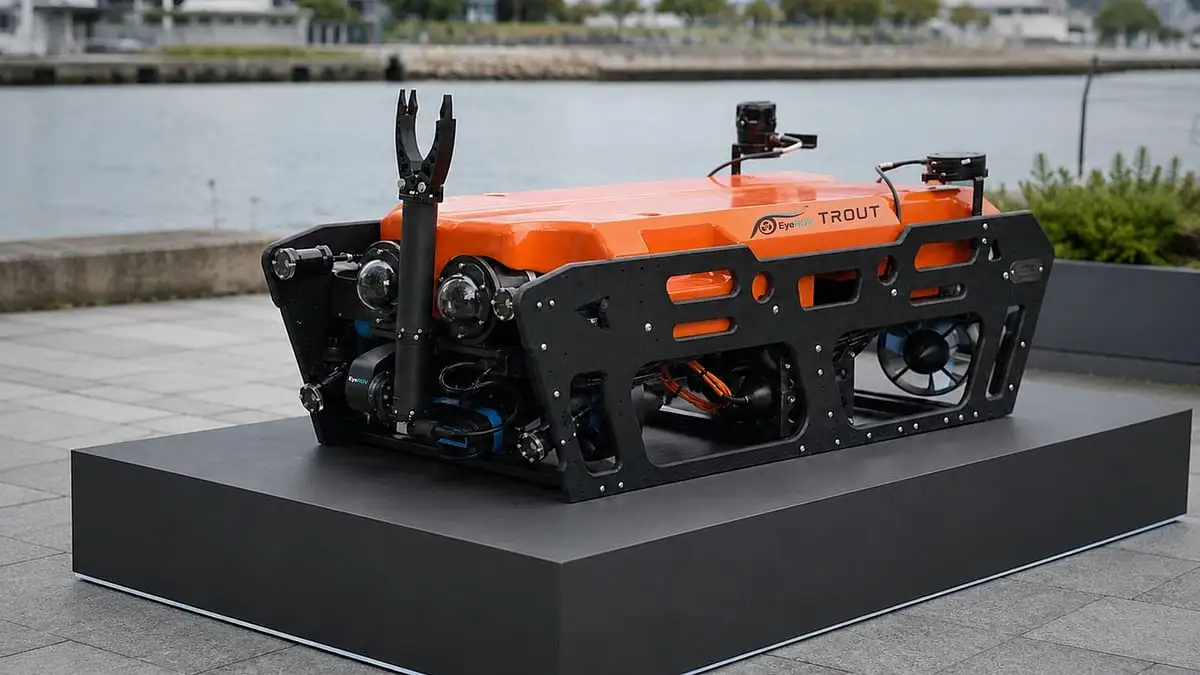
Navy ROV systems have entered a new phase of indigenous defence technology after Kochi-based company EyeROV delivered two TROUT underwater remotely operated vehicles to the Indian Navy on October 7, 2026. The delivery is the first part of an order for five systems and marks the introduction of an indigenously built military-grade ROV for the Navy. The TROUT is designed to operate at depths of up to 300 metres and can support several underwater operations.
Thank you for reading this post, don't forget to subscribe!Indian Navy Gets Indigenous Underwater Technology
The delivery of the Navy ROV systems is part of India’s wider effort to develop specialised defence equipment within the country. Underwater systems are becoming increasingly important for naval forces because they can perform tasks in deep or difficult environments without directly putting personnel underwater.
The TROUT has been designed for underwater inspection, surveillance and reconnaissance, detection, search and recovery, and other robotic operations. Its cameras and sensors can provide operators with information from underwater locations in real time.
The system can also work in conditions such as poor visibility and strong underwater currents, which can make human diving operations more difficult.
What Is a Remotely Operated Vehicle?
A remotely operated vehicle, or ROV, is an uncrewed underwater machine controlled by an operator. A tether normally connects the vehicle to a surface vessel or control station and carries communication signals between the vehicle and the operator.
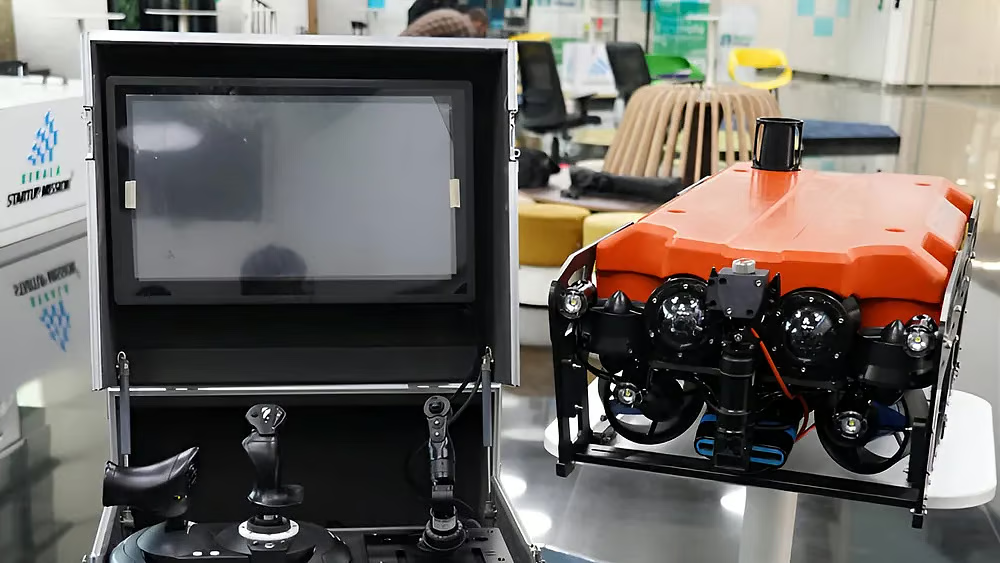
ROVs can be equipped with cameras, lights, sonar, sensors and robotic arms. These tools allow operators to inspect underwater structures, locate objects and carry out specific tasks.
This is different from an autonomous underwater vehicle, or AUV. An AUV can follow a planned mission without continuous direct control through a tether and is commonly used for surveying, mapping and data collection.
TROUT Developed Under iDEX and SPRINT
The Navy ROV project was developed through the Innovations for Defence Excellence, or iDEX, framework. The TROUT was selected under the iDEX Defence India Startup Challenge 7 SPRINT Challenge.
iDEX is a Ministry of Defence initiative designed to support Indian innovators and companies developing new defence and aerospace technologies. SPRINT is an Indian Navy initiative focused on encouraging indigenous development of technologies for naval applications.
The development of TROUT therefore brings together India’s startup ecosystem and the Navy’s requirements for specialised underwater equipment.
Testing Before Navy Delivery
Before being delivered to the Indian Navy, the TROUT underwent field trials and system-level validation. The testing covered several important areas, including manoeuvrability, deep-diving capability, navigation and endurance.
The system was also tested for its performance in underwater currents and its ability to detect and operate in challenging conditions.
The trials were important because underwater equipment has to work under pressure and in environments where communication, visibility and navigation can be difficult.
EyeROV had earlier secured a contract worth about ₹47 crore from the Indian Navy for advanced underwater ROV systems.
Military-Grade Quality Checks
The Navy ROV systems were processed through the quality assurance framework of the Directorate of Quality Assurance (Naval), known as DQA(N).
The quality assurance process is designed to check whether naval equipment meets the required standards before being introduced into service. The TROUT was also engineered to meet applicable military requirements, including Environmental Stress Screening.
Environmental Stress Screening is used to check whether equipment can withstand environmental conditions associated with its intended operation. Such testing is particularly important for underwater systems because they have to operate under water pressure and in changing marine conditions.
Uses of TROUT in Naval Operations
The Indian Navy can use underwater ROVs for a range of activities. One important application is the inspection of underwater infrastructure. ROVs can examine structures, vessels and other subsea equipment without requiring divers to remain underwater.
They can also support surveillance and reconnaissance around ports and harbours. Cameras and sensors can provide operators with information about underwater objects and conditions.
Search and recovery is another potential application. ROVs can help locate objects underwater and provide visual information from areas that may be difficult or unsafe for divers to reach.
The vehicles can also support detection tasks and, depending on their equipment, robotic intervention.
India Expands Indigenous Defence Capabilities
The Navy ROV delivery is part of a wider push to increase the use of domestically developed technology in India’s defence sector. Underwater robotics requires expertise in mechanical systems, electronics, navigation, communications, sensors and software.
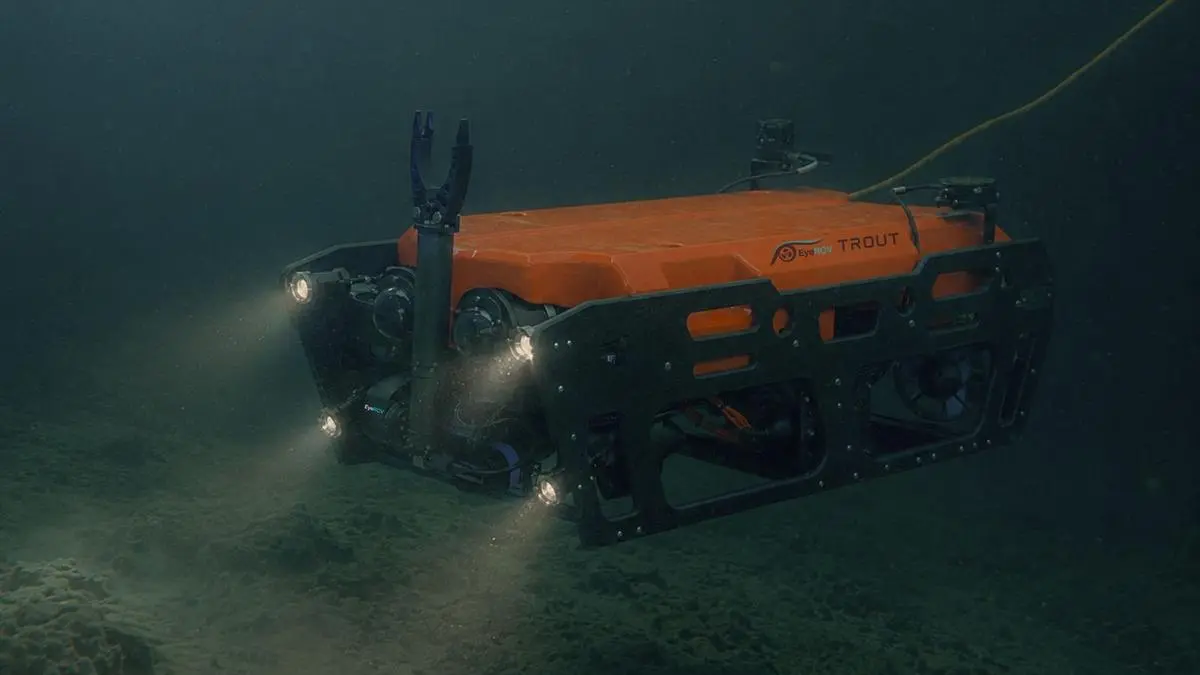
The involvement of an Indian deep-tech company in developing and supplying a military-grade underwater system demonstrates the growing role of startups in specialised defence technology.
The five-system Navy order will see three more TROUT systems delivered after the first two. The programme could provide further operational experience and data for the development of future Indian underwater robotic systems.
Growing Importance of Underwater Robotics
Modern naval operations increasingly depend on technologies that can work below the surface. Underwater robots can inspect infrastructure, gather information and perform tasks while reducing the need for personnel to enter hazardous underwater environments.
The delivery of the first two TROUT systems gives the Indian Navy an indigenous capability in this area. With underwater surveillance, search and recovery, infrastructure inspection and maritime security becoming increasingly technology-driven, remotely operated systems are expected to remain an important part of India’s naval technology development.