

New Seahorse Species Found by KUFOS

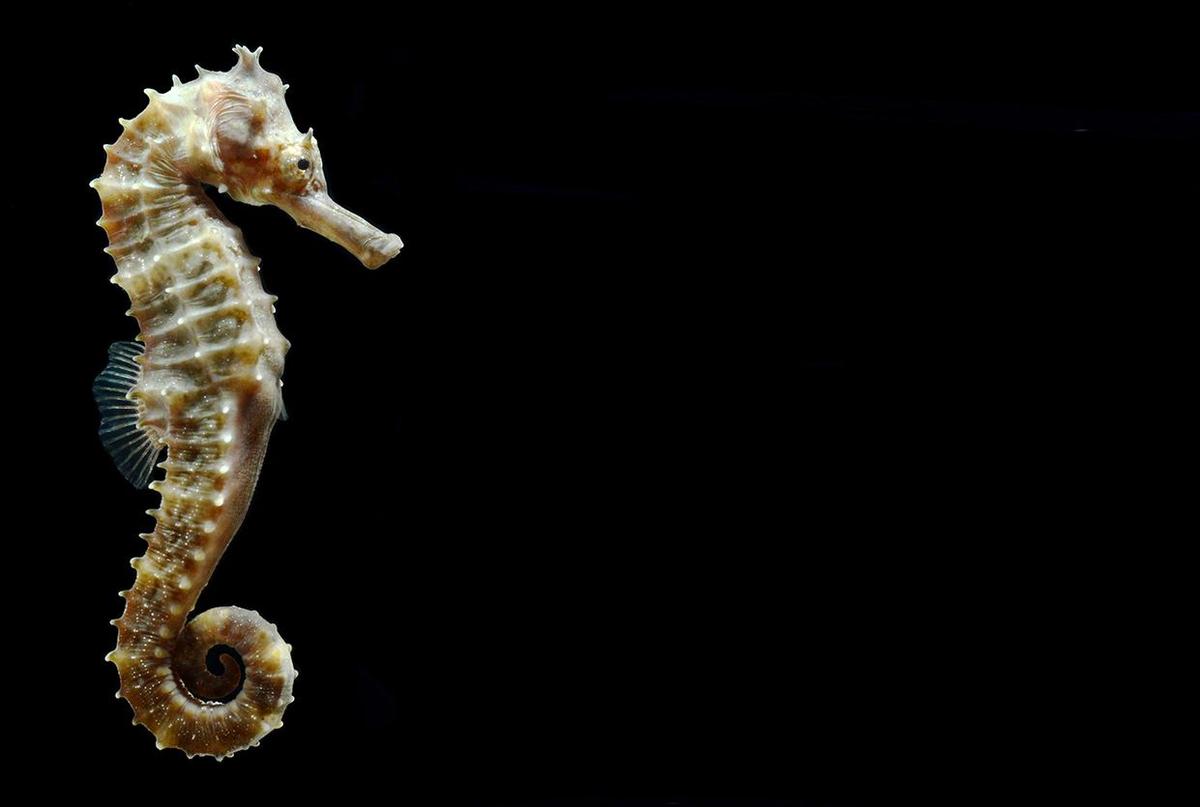
New Seahorse Species has been discovered by researchers from the Kerala University of Fisheries and Ocean Studies (KUFOS), adding another important chapter to India’s marine biodiversity research. The newly identified species has been named Hippocampus amandavincentae in honour of renowned marine biologist Dr. Amanda Vincent, who has made significant contributions to seahorse conservation around the world.
Thank you for reading this post, don't forget to subscribe!The discovery was officially reported in August 2026 and published in the international scientific journal Zootaxa. Scientists believe this finding improves our understanding of seahorse diversity in the Indian Ocean and helps correct a classification that had remained unchanged for nearly 150 years.
Discovery of the New Seahorse
The research was carried out by a team from KUFOS, one of India’s leading institutions for fisheries and marine science.
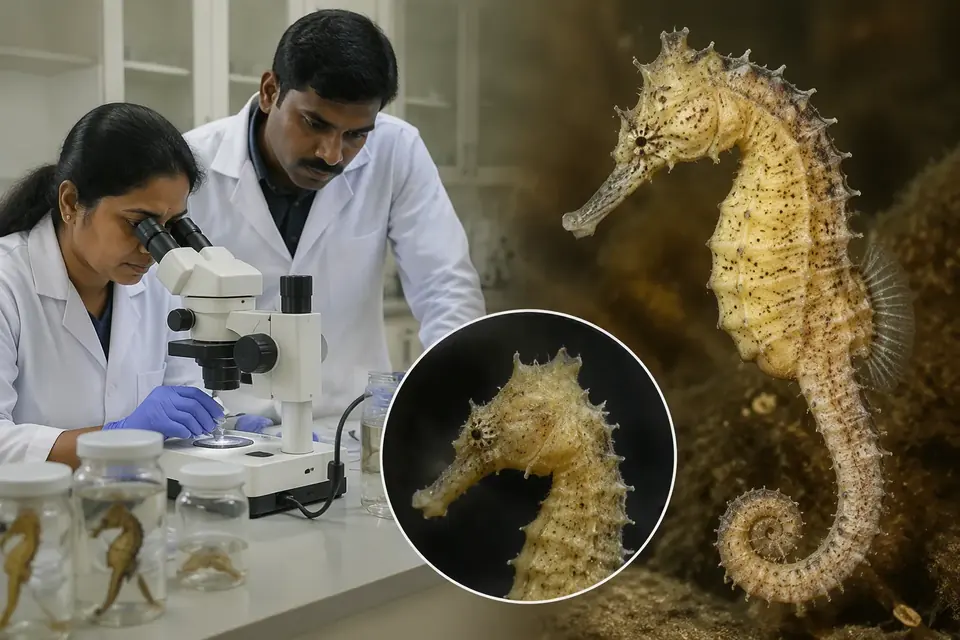
The new seahorse was first identified from fish bycatch collected at Tuticorin Fisheries Harbour in Tamil Nadu.
The lead researcher, Shalu Kannan, a PhD graduate from KUFOS, carefully examined the specimen during her research.
Detailed scientific analysis showed that the specimen belonged to a completely different species rather than the previously identified Hippocampus histrix.
This important finding led researchers to describe it as a new species.
Named After Marine Biologist Amanda Vincent
The new species has been given the scientific name Hippocampus amandavincentae.
It was named in honour of Dr. Amanda Vincent, an internationally respected marine biologist known for her work in marine conservation, especially the protection of seahorses and their habitats.
Naming newly discovered species after scientists is a common practice in biology to recognise their valuable contributions to research and conservation.
Understanding Seahorse Taxonomy
Seahorses belong to the:
- Genus: Hippocampus
- Family: Syngnathidae
Taxonomy is the branch of biology that identifies, names, and classifies living organisms.
Scientists use several methods to determine whether an organism belongs to a new species.
These include:
- External body structure
- Body shape and spine patterns
- Museum specimens
- DNA and genetic analysis
- Scientific comparison with previously known species
Modern genetic techniques have made species identification much more accurate than in the past.
Correcting a 150-Year-Old Classification
One of the most important outcomes of the study is the correction of a long-standing scientific classification.
For nearly 150 years, many thorny seahorses found in the Indian Ocean were classified as Hippocampus histrix.
However, after examining historical museum collections and modern genetic evidence, researchers concluded that the thorny seahorse group actually contains three separate species.
The study also confirmed that Hippocampus jayakari, found in the northwestern Indian Ocean, is a valid species distinct from the others.
This revision provides a more accurate understanding of seahorse diversity across the region.
Importance of Fish Bycatch
The newly discovered seahorse was found in fish bycatch.
Fish bycatch refers to marine animals that are unintentionally caught while fishermen target other species.
Although bycatch is often considered an environmental challenge, it sometimes helps scientists discover rare or previously unknown marine organisms.
Many important marine species have first been identified through careful examination of bycatch collected during fishing activities.
India’s Rich Marine Biodiversity
India has one of the richest marine ecosystems in the world.
Its coastline borders:
- The Arabian Sea
- The Bay of Bengal
- The Indian Ocean
These waters support thousands of marine species, including fish, corals, turtles, dolphins, whales, crustaceans, molluscs, and seahorses.
With the discovery of Hippocampus amandavincentae, the number of known seahorse species found along the Kerala coast has increased to five.
Scientists continue to study India’s coastal ecosystems because many marine organisms remain poorly understood.
Why This Discovery Matters
The discovery of a new species is important for several reasons.
It helps scientists:
- Better understand marine biodiversity.
- Improve species conservation plans.
- Protect threatened marine habitats.
- Monitor ecosystem health.
- Expand scientific knowledge about ocean life.
Accurate species identification also supports environmental policies and conservation programmes designed to protect vulnerable marine ecosystems.
As climate change, pollution, and habitat loss continue to affect oceans worldwide, documenting marine biodiversity has become increasingly important.
Publication in Zootaxa
The research findings were published in Zootaxa, one of the world’s leading peer-reviewed journals for zoological taxonomy.
The journal is widely recognised for publishing new species descriptions, biological classifications, and systematic research from scientists around the world.
Publication in an international journal ensures that the discovery becomes part of the global scientific record and can be used by researchers worldwide.
The New Seahorse Species discovered by the KUFOS research team represents another significant contribution to India’s growing marine science research. The identification of Hippocampus amandavincentae not only expands the country’s known marine biodiversity but also corrects a long-standing scientific classification, providing researchers with a clearer understanding of seahorse diversity in the Indian Ocean and supporting future conservation efforts.