



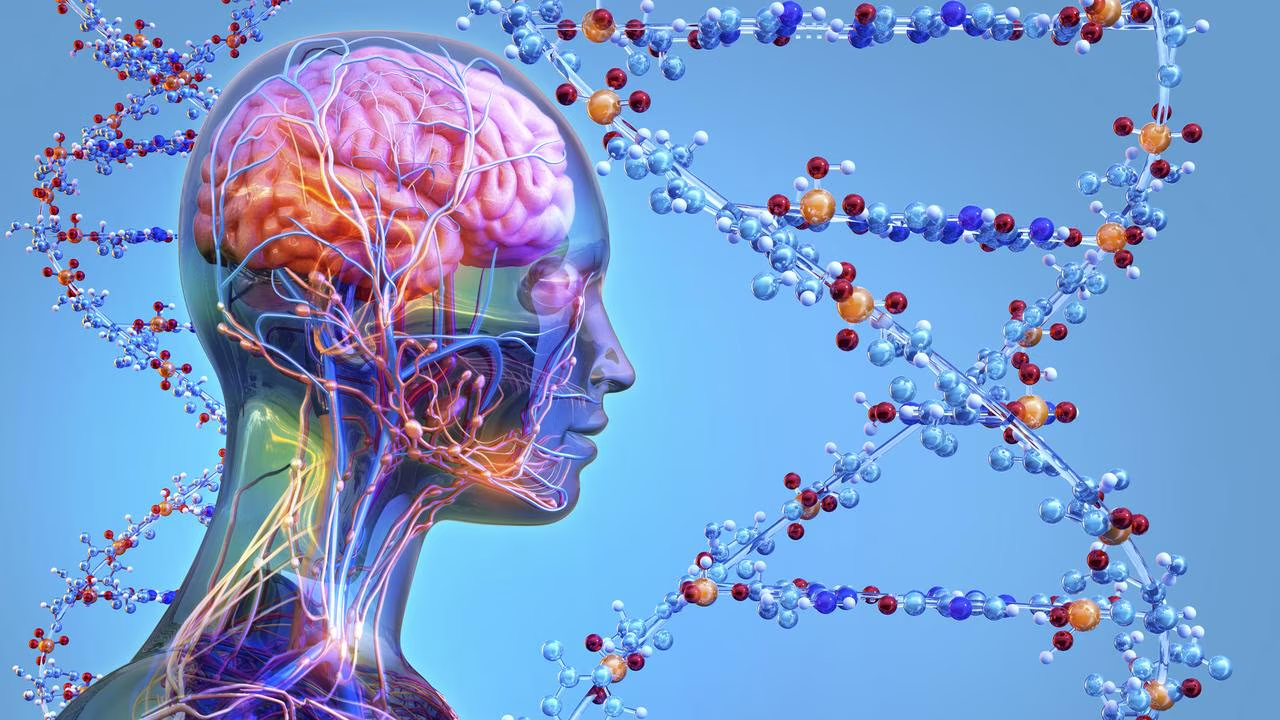
AlphaGenome Atlas Maps Human DNA

AlphaGenome Atlas was launched by Google DeepMind on 8 September 2026 as an open-access resource designed to help researchers study human DNA. The new database uses artificial intelligence to analyse genetic variations across the human genome and provides a large collection of precomputed predictions that can be explored through a web-based platform.
The launch comes as AI is becoming an increasingly important tool in genetics and biomedical research. Scientists are using AI models to understand how changes in DNA may affect genes, cells and biological processes.

AlphaGenome Atlas and the Human Genome
The AlphaGenome Atlas focuses on genetic changes that occur across the human genome. The human genome contains about 3 billion base pairs, which are the basic units that make up DNA.
The Atlas contains predictions covering billions of possible single-letter changes in human DNA. These changes are commonly known as point mutations or single-nucleotide variants. A change involving only one DNA letter can sometimes have little effect, while other changes may influence how a gene works.
The resource is designed to help researchers examine these possible effects without having to calculate every prediction from the beginning.

Why Non-Coding DNA Matters
A major feature of the AlphaGenome Atlas is its attention to non-coding DNA. Around 98% of the human genome does not directly provide instructions for making proteins.
For many years, researchers often focused heavily on protein-coding regions because they have a direct role in producing proteins. However, non-coding regions can also play important biological roles.
Some non-coding sections contain regulatory elements such as promoters and enhancers. These regions can influence when, where and how strongly genes are switched on or off.
Many genetic variations associated with diseases are found outside protein-coding areas. Understanding these regions can therefore help researchers investigate why certain genetic changes may be linked to disease or other biological traits.
AI Helps Predict Genetic Effects
The new resource is based on artificial intelligence predictions generated by Google’s AlphaGenome technology. Instead of looking at a genetic change in isolation, AI models can examine patterns across large sections of DNA.
This can help researchers study how a mutation might affect processes such as gene regulation and RNA splicing. RNA splicing is an important process in which sections of RNA are joined or removed before the final messenger RNA is used by cells.
By bringing these predictions together in one resource, researchers can compare genetic variants across different parts of the genome.
AlphaGenome Variant Impact Score
Google has also introduced the AlphaGenome Variant Impact, or AVI, score. The score provides a common way to rank the possible effects of genetic variants.
The aim is to make it easier to compare changes occurring in coding and non-coding regions. A unified scoring system can help researchers identify variants that deserve closer investigation.
The score does not mean that an AI prediction automatically proves that a particular genetic change causes a disease. Experimental and clinical research is still needed to establish the biological and medical importance of individual variants.
Open Access for Researchers
The AlphaGenome Atlas is available as an interactive online resource. Researchers can explore the information through a standard web browser, making it possible to investigate genetic predictions without requiring advanced programming skills.
The database is also intended to support academic research. Open access to large genomic resources can help scientists examine genetic variation and develop new research questions.
The availability of precomputed data can also reduce the computing work needed for individual research projects. Instead of running large AI models for every genetic variant, researchers can access predictions that have already been generated.
Research on Rare Genetic Conditions
One area where the Atlas could be useful is the study of rare genetic conditions. Some disease-causing variants are difficult to identify because they occur in regulatory or other non-coding parts of DNA.
Researchers at the Broad Institute have used the AVI score to investigate genetic variation involving the DNM1 gene. Certain mutations in this gene can affect RNA splicing and have been associated with rare neurological conditions.
Tools that help researchers rank possible genetic effects can make it easier to identify variants that require further laboratory investigation.
Population Genomics Applications
The AlphaGenome Atlas can also be used with large population datasets. Researchers can compare genetic information from thousands of people to investigate links between DNA variation and human traits.
One reported analysis used genomic information from more than 54,000 UK Biobank participants. The research identified additional non-coding genetic associations and reported genetic regions connected with body mass index.
Population genomics studies can help scientists understand how genetic differences are distributed among people and how they may relate to measurable traits.
AI and the Future of Genomic Research
The launch of the AlphaGenome Atlas reflects the growing connection between artificial intelligence and genomics. Modern genetic datasets are extremely large, making computational tools increasingly important for analysing them.
AI systems can examine large numbers of possible DNA changes and identify patterns that may be difficult to detect using traditional approaches alone. Researchers can then combine these predictions with laboratory experiments and existing biological knowledge.
As genomic databases become larger and AI models become more capable, such tools may help scientists investigate gene regulation, rare genetic conditions and complex human traits in greater detail.
The AlphaGenome Atlas therefore provides researchers with a large AI-generated map of potential genetic effects, with particular attention to the vast non-coding portion of human DNA.