

Space Rice Harvest by China

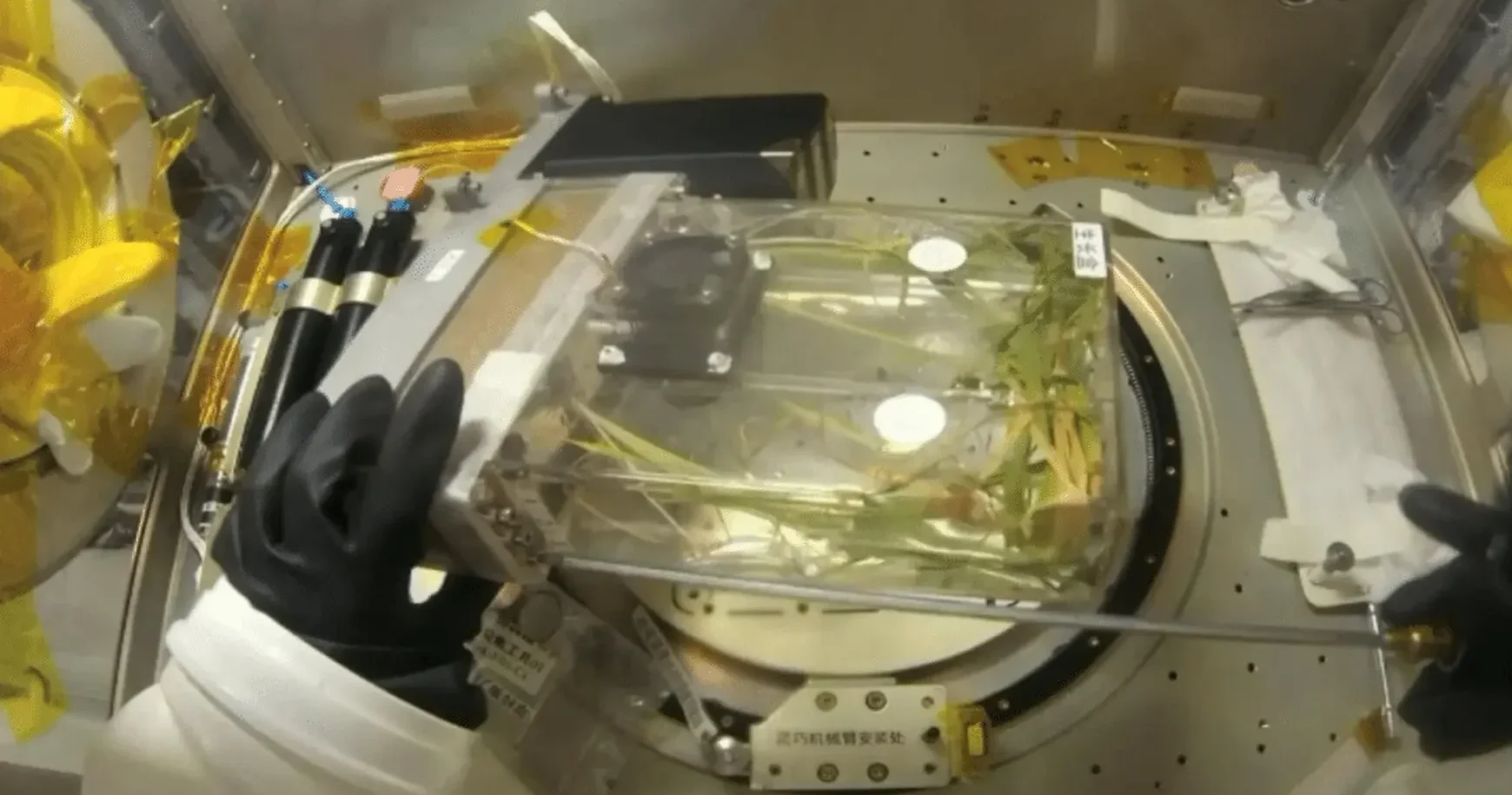
Space Rice Harvest has become a major milestone in space agriculture as Chinese astronauts successfully harvested the first rice crop grown in orbit aboard the Tiangong Space Station. The achievement was announced on 5 August 2026 during the Shenzhou-23 mission, marking an important step toward producing food in space for future long-duration missions.
Thank you for reading this post, don't forget to subscribe!The harvested rice samples will now be returned to Earth for detailed scientific analysis. Researchers hope the findings will help develop sustainable farming systems that can support astronauts during future missions to the Moon, Mars, and beyond.
First Rice Harvest in Space
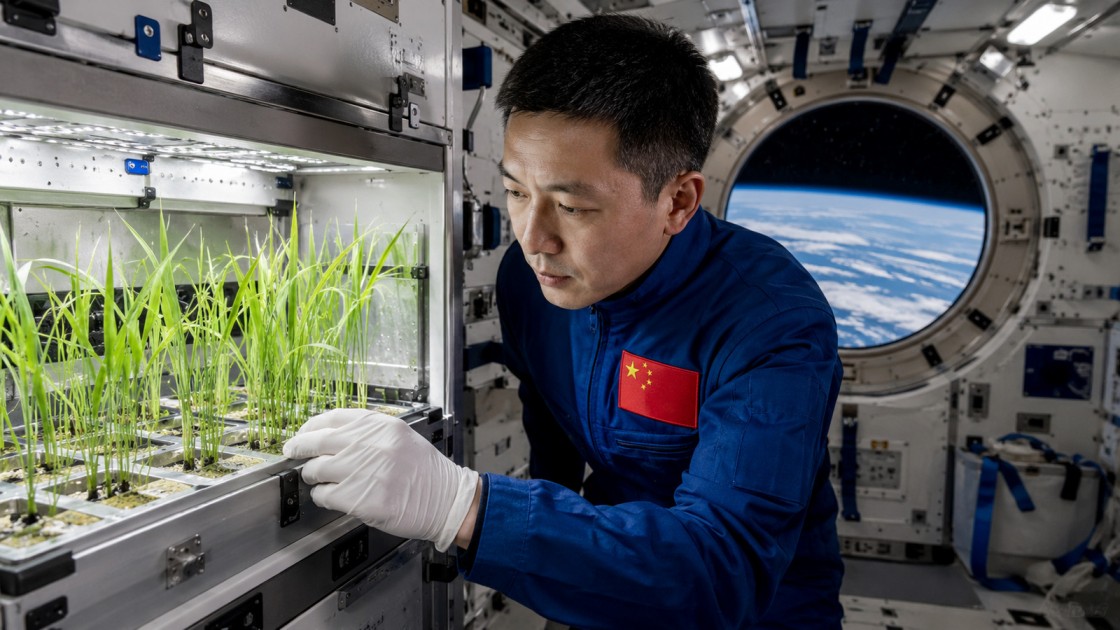
For the first time, astronauts successfully harvested rice that was cultivated entirely in orbit.
The experiment took place aboard China’s Tiangong Space Station, where scientists have been carrying out advanced biological and agricultural research.
The rice was grown under carefully controlled conditions inside special cultivation units designed for space experiments.
After harvesting the crop, astronauts safely stored the samples so they can be transported back to Earth for further examination.
The achievement is considered an important step toward producing fresh food during future space missions.
Shenzhou-23 Mission
The rice cultivation experiment is part of the Shenzhou-23 mission, which was launched on 24 May 2026.
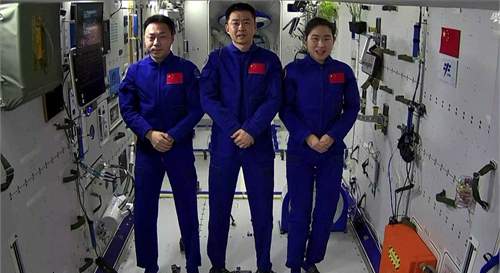
The mission crew includes:
- Zhu Yangzhu
- Zhang Zhiyuan
- Lai Ka-ying
Besides conducting scientific experiments, the astronauts have been responsible for monitoring plant growth, collecting data, harvesting the rice, and preserving the samples.
The mission continues China’s long-term research programme focused on life sciences, human survival, and sustainable living in space.
What Is Tiangong Space Station?
Tiangong, meaning “Heavenly Palace,” is China’s permanently occupied modular space station located in Low Earth Orbit (LEO).
The station supports:
- Human space missions
- Scientific research
- Biological experiments
- Medical studies
- Technology demonstrations
Since becoming fully operational, Tiangong has hosted several astronaut crews and numerous experiments aimed at preparing for future deep-space exploration.
The successful rice harvest is one of its most significant agricultural achievements so far.
Growing Rice in Microgravity
Growing plants in space is very different from growing them on Earth.
In microgravity, plants experience almost no effective weight, which changes the way they:
- Grow roots
- Absorb water
- Develop stems
- Produce seeds
- Complete their life cycle
Scientists want to understand how crops respond to these unusual conditions because future astronauts will need reliable food supplies during long missions.
Studying plant growth in space may also help improve farming technologies on Earth.
Two Types of Rice Used
Researchers selected two varieties of japonica rice for the experiment.
These included:
- Ordinary rice seeds that had never been to space.
- “Space lineage” rice developed from seeds first grown aboard Tiangong in 2022 and later bred on Earth for three generations.
Comparing these two groups allows scientists to examine whether repeated exposure to space conditions influences plant growth, seed quality, and genetic stability.
The results could provide valuable information for future crop development.
Testing Two Reproduction Methods
The experiment also compared two different methods of producing rice plants.
Traditional Seed-to-Seed Method
This is the normal process where plants grow from seeds, mature, produce new seeds, and complete their life cycle.
Scientists are studying whether this natural cycle can continue successfully under microgravity.
Ratooning Method
The second method is known as ratooning.
Instead of planting new seeds, fresh shoots grow from the remaining roots or stubble after harvesting the first crop.
If successful in space, this technique could reduce the amount of seed astronauts need to carry during future missions.
Why Space Farming Matters
Future space exploration will require astronauts to stay away from Earth for months or even years.
Transporting all food from Earth would be expensive and difficult.
Growing crops in space offers several benefits:
- Fresh food for astronauts
- Reduced dependence on supply missions
- Better nutrition during long missions
- Oxygen production through photosynthesis
- Carbon dioxide absorption
- Improved psychological well-being from caring for plants
Space farming is therefore considered an essential technology for future lunar bases and missions to Mars.
Building on Earlier Success
China has already made important progress in space agriculture.
In 2022, scientists successfully completed the first full life-cycle rice cultivation experiment aboard Tiangong.
That experiment produced 59 space-grown rice seeds, which were later returned to Earth for detailed study.
The latest Space Rice Harvest builds on that earlier achievement by moving closer to continuous rice production in orbit.
Researchers will now analyse the harvested grains, leaves, and stems to better understand how rice develops under long-term space conditions.
The Space Rice Harvest aboard China’s Tiangong Space Station represents another major advance in space science and agricultural research. By successfully growing and harvesting rice in orbit, scientists have taken an important step toward developing sustainable food production systems for future missions beyond Earth. The knowledge gained from this experiment may support future human exploration of the Moon and Mars while also contributing to new agricultural technologies that could benefit farming on Earth.