Sahara Spinosaurus Discovery Reveals a New Predator From Ancient Africa

The Sahara Spinosaurus Discovery has opened an exciting new chapter in the story of dinosaur evolution. Deep in the remote Sahara Desert of Niger, palaeontologists have uncovered fossils belonging to a previously unknown species of Spinosaurus. This remarkable find is helping scientists better understand how giant predators lived, hunted, and adapted to Africa’s ancient river systems nearly 95 million years ago.
Thank you for reading this post, don't forget to subscribe!This discovery shows that the Sahara, now one of the driest places on Earth, was once a land filled with flowing rivers, rich wildlife, and powerful carnivorous dinosaurs that ruled the ecosystem.
Discovery in the Heart of the Sahara
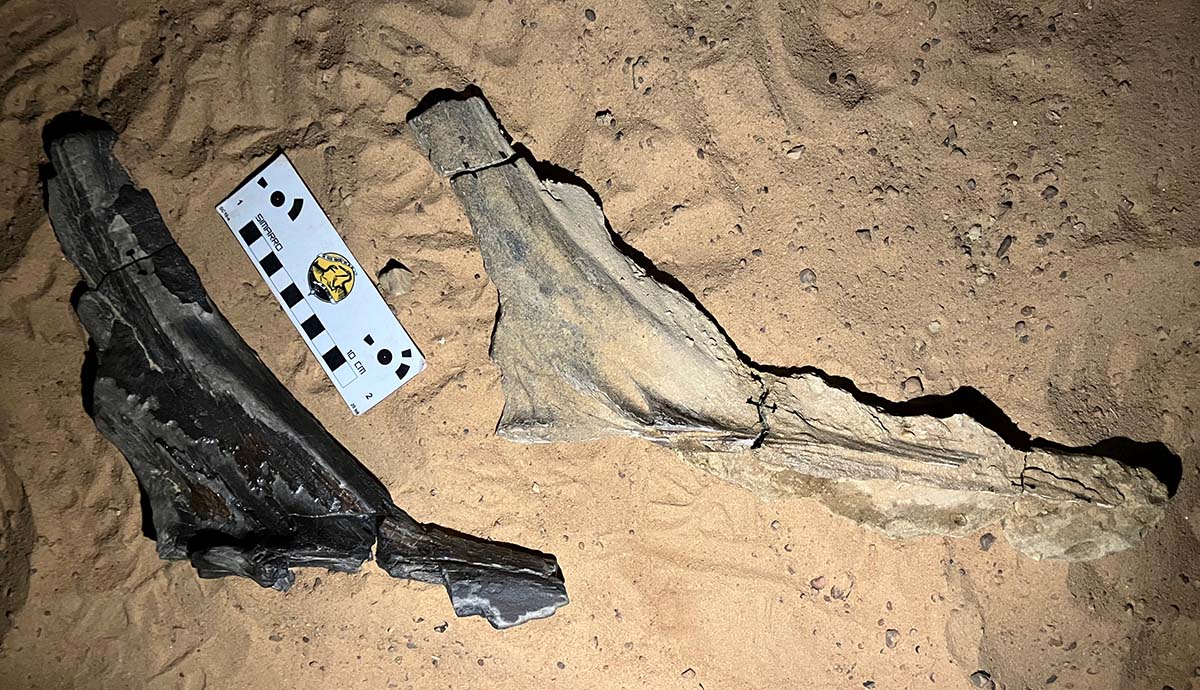
The fossils were found at the isolated Jenguebi site in Niger, located within today’s vast Sahara Desert. Reaching this area was extremely difficult, requiring researchers to cross harsh desert terrain under intense heat. Despite these challenges, the team recovered three skulls along with other skeletal remains that clearly pointed to a new dinosaur species.
The dinosaur has been named Spinosaurus mirabilis. Fossil evidence confirms that this animal lived during the Late Cretaceous period and shared the region with other large predators. The discovery also proves that more than one species of Spinosaurus lived in Africa at the same time, each adapted to a slightly different way of life.
A Giant Predator of Ancient Rivers
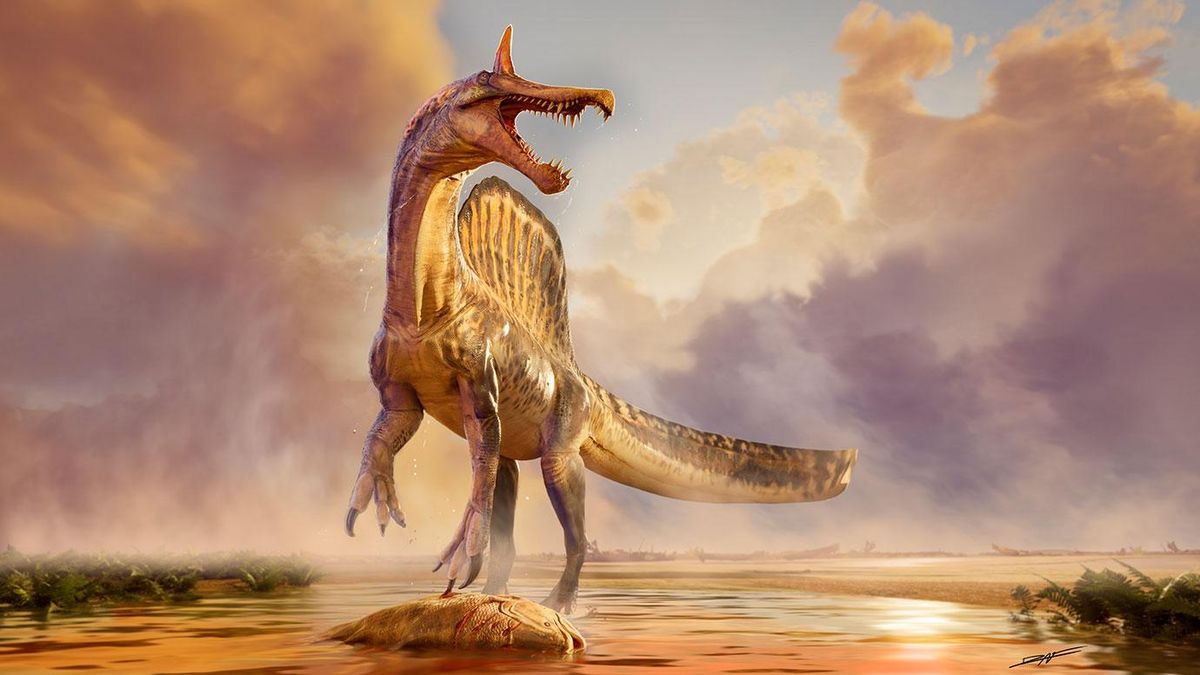
Spinosaurus mirabilis was enormous, measuring around 12 metres in length and weighing up to seven tonnes. While similar in size to other giant theropod dinosaurs, its body structure reveals a very different hunting style.
Instead of chasing prey on land, this predator dominated rivers and wetlands. Its long, narrow snout and conical teeth were perfectly shaped for catching slippery fish. Fossil evidence suggests that ancient fish such as coelacanths formed a major part of its diet.
Scientists believe this dinosaur spent much of its time wading through shallow rivers, waiting patiently before striking its prey with speed and precision.
The “Hell Heron” of the Cretaceous
Researchers have nicknamed Spinosaurus mirabilis the “hell heron” because of its unique hunting behaviour. Like modern herons, it likely stood still in water, using stealth rather than speed.
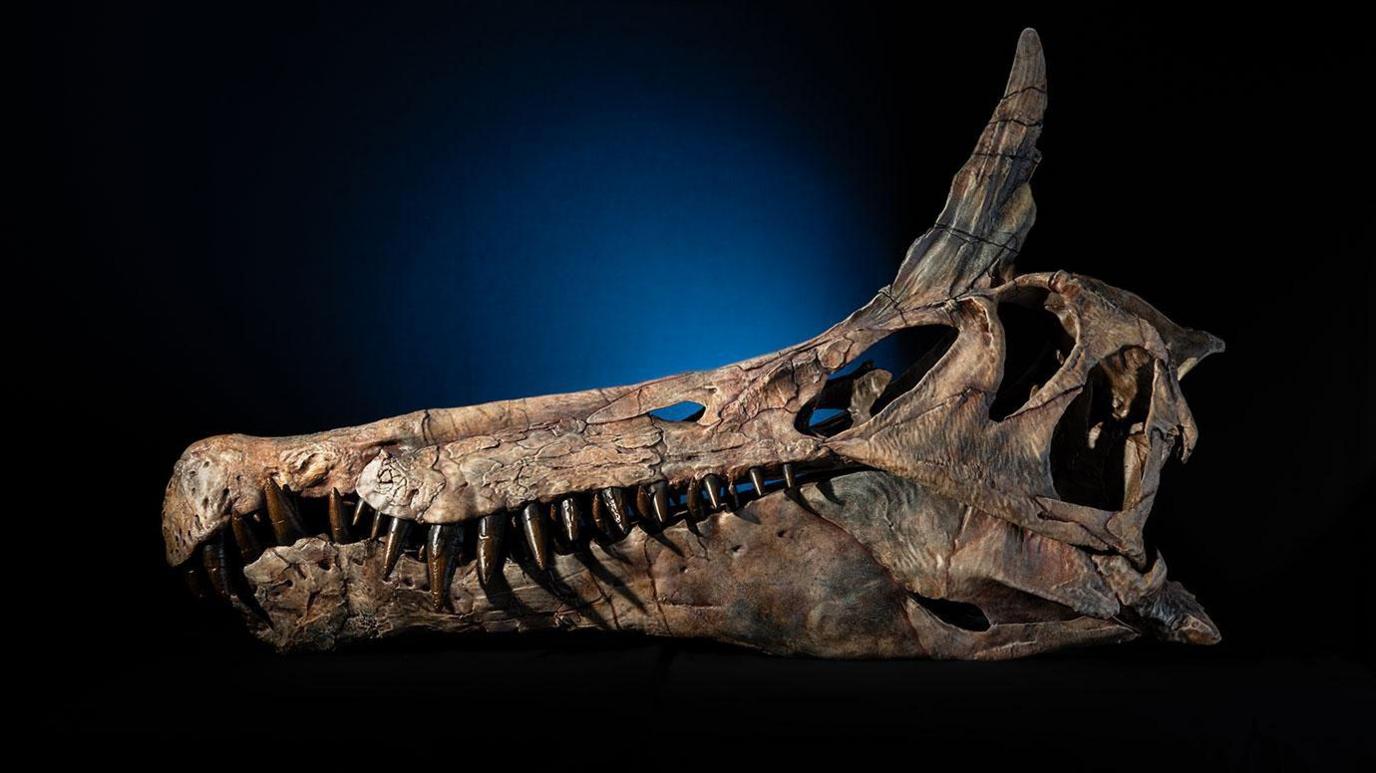
One of its most important features was the placement of its nostrils. Instead of being at the tip of the snout, they were positioned further back on the skull. This allowed the dinosaur to keep most of its snout underwater while still breathing, an excellent adaptation for catching fish.
This discovery supports the idea that spinosaurids were not typical land predators but specialists adapted to watery environments.
A Striking Crest Unlike Any Other
The most eye-catching feature of Spinosaurus mirabilis is a blade-like crest rising about 20 inches from the top of its skull. This scimitar-shaped structure is different from anything seen in other Spinosaurus species.
Compared to its famous relative Spinosaurus aegyptiacus, first described in 1915, the new species had a more elongated snout and longer hind limbs. These features suggest it was better suited for wading through rivers rather than swimming in deep water.
Scientists believe the crest was not used for fighting. Instead, it may have been covered in keratin and displayed bright colours. The crest likely played a role in attracting mates or sending signals to rivals, offering a glimpse into the social behaviour of these ancient giants.
Changing Views on Spinosaurus Lifestyle
For many years, scientists debated whether Spinosaurus was a fully aquatic dinosaur that swam in oceans. The inland location of the new fossils challenges this idea.
The Sahara Spinosaurus Discovery suggests that these dinosaurs preferred freshwater environments such as rivers and floodplains. Rather than open seas, they lived alongside forests and wetlands that once covered North Africa during the Cretaceous Period.
This evidence paints a clearer picture of Spinosaurus as a semi-aquatic predator, perfectly adapted to life between land and water.
What This Discovery Means for Science
This discovery highlights the incredible prehistoric biodiversity of Africa. It also shows how much remains hidden beneath desert sands, waiting to reshape our understanding of the past.
By revealing a second distinct species of Spinosaurus, researchers can now study how these predators evolved to fill different ecological roles. Spinosaurus mirabilis represents an extreme example of fish-eating specialisation among dinosaurs, unlike anything seen before.
The find also reminds us that Earth’s environments are constantly changing. What is now an endless desert was once a thriving ecosystem filled with rivers, fish, and giant predators.
A New Window Into Ancient Africa
The Sahara Spinosaurus Discovery is more than just the naming of a new dinosaur. It is a powerful reminder of how scientific exploration continues to uncover lost worlds. Each fossil adds another piece to the puzzle, helping us understand how life adapted and survived millions of years ago.
As research continues in the Sahara and other remote regions, more discoveries like this may soon emerge, further expanding our knowledge of dinosaurs and the ancient landscapes they once ruled.