



Siddaramaiah Longest-Serving Karnataka CM: A Journey of Power, Persistence, and Social Justice

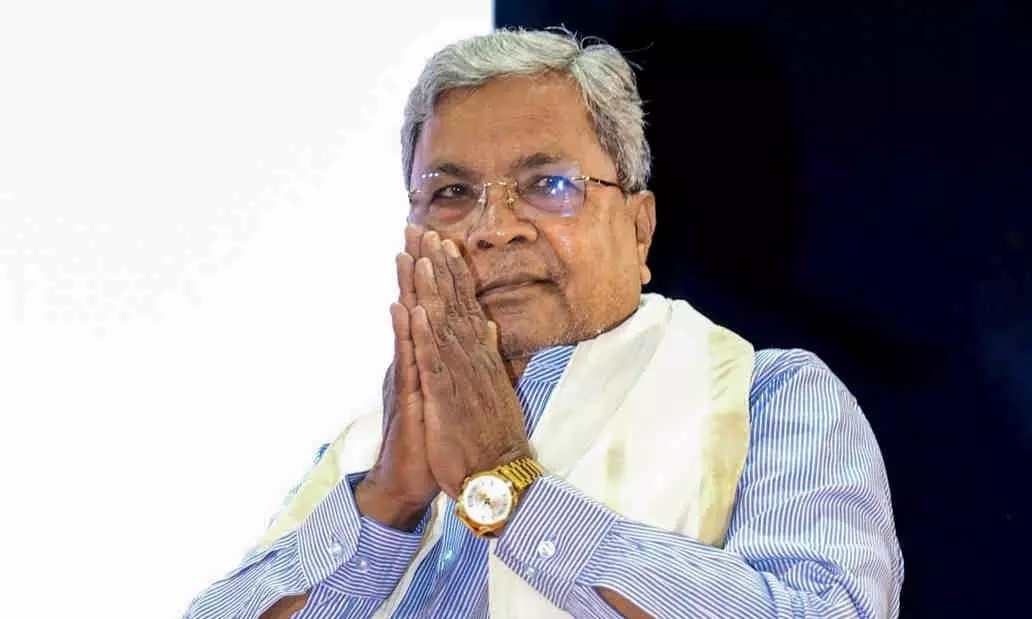
Siddaramaiah Longest-Serving Karnataka CM is not just a political headline; it is a marker of endurance in a state known for frequent government changes, coalition pressures, and shifting loyalties. By completing nearly seven years and eight months in office across two non-consecutive terms, Siddaramaiah has crossed a historic milestone. In doing so, he has surpassed the record of his mentor and former Chief Minister D. Devaraj Urs, securing his place as the longest-serving Chief Minister in Karnataka’s history by cumulative tenure.
This achievement stands out in Karnataka’s complex political environment, where stability has often been rare. Siddaramaiah’s political journey reflects not only personal persistence but also the evolution of social justice politics in the state.

Humble Beginnings and Early Life
Siddaramaiah’s story begins far away from the corridors of power. Born in Siddaramanahundi village near T. Narasipura in Mysuru district, he grew up in a modest farming family. His early life was shaped by rural realities, social inequalities, and limited resources. These experiences would later influence his political worldview.
Educated in law, Siddaramaiah trained as an advocate and briefly worked as a lecturer at Vidyavardhaka Law College in Mysuru. His exposure to legal education and grassroots society gave him a deep understanding of social structures, justice, and governance. Unlike many leaders who inherit political legacies, Siddaramaiah built his career from the ground up.
First Electoral Success and Regional Influence
Siddaramaiah entered electoral politics in 1983, winning the Chamundeshwari Assembly seat as an Independent candidate. This victory was significant, as it established his influence in the Old Mysuru region, a politically important area in Karnataka. Winning without the backing of a major party showed his personal connect with voters and his ability to mobilise support at the grassroots level.
Over the next four decades, Siddaramaiah would contest 13 elections and win eight of them. These contests spanned different political platforms and reflected his adaptability in a changing political landscape.
Political Growth Outside the Congress
One of the most distinctive aspects of Siddaramaiah’s career is that his early political grounding was outside the Congress party. He rose through the Janata Party and later the Janata Dal, working closely with leaders who shaped Karnataka’s regional politics.
During this phase, he held several important organisational roles, including president of the Kannada Surveillance Committee and chairman of the Kannada Development Authority. These positions strengthened his image as a leader committed to regional identity, language, and culture.
As a minister under Chief Minister Ramakrishna Hegde, Siddaramaiah handled key departments such as Transport, Animal Husbandry, and Sericulture. These portfolios allowed him to work closely with rural communities and farmers, further deepening his grassroots connection.
His departure from the Janata Dal (Secular) in 2006 marked a turning point. It was a decisive moment that reshaped his political trajectory and opened the door to a new phase in his career.
Joining Congress and the Rise of AHINDA Politics
After joining the Congress, Siddaramaiah redefined his political identity. He emerged as a strong advocate of social justice, building his politics around the AHINDA framework—an alliance of minorities, backward classes, and Dalits. This social coalition became the foundation of his political strength.
As the first Chief Minister from the Kuruba community, Siddaramaiah’s rise carried symbolic importance. It reflected the aspirations of communities that had long sought stronger representation in state leadership. His leadership helped consolidate diverse social groups into a stable political base.
This approach not only brought electoral success but also reshaped Congress politics in Karnataka, making social justice a central theme of governance and public discourse.
Siddaramaiah Longest-Serving Karnataka CM: Governance, Budgets, and Legislative Record
A key reason Siddaramaiah Longest-Serving Karnataka CM stands out is his extensive record in governance. He has presented 16 state budgets, more than any other Chief Minister in Karnataka. This achievement reflects both longevity and administrative continuity.
His tenure has seen a focus on welfare schemes, social inclusion, and economic support for vulnerable groups. Even during periods when his party was out of power, Siddaramaiah remained a central figure in the legislature, serving twice as Leader of the Opposition. In that role, he maintained political relevance and sharpened his role as a mass leader.
Across his terms, Siddaramaiah has balanced political strategy with administrative experience, navigating coalition pressures and internal party dynamics while maintaining a strong public profile.
Siddaramaiah Longest-Serving Karnataka CM: Breaking Records in a Difficult Political Climate
Karnataka’s political history is marked by coalition governments, defections, and short-lived administrations. In such an environment, lasting long enough to set a record is no small feat. Siddaramaiah’s cumulative tenure surpassing that of D. Devaraj Urs is therefore both symbolic and practical.
Urs is widely remembered for his land reforms and social justice initiatives, and surpassing his record places Siddaramaiah in a significant historical position. It also reflects how political leadership in Karnataka has evolved over time, adapting to new social and electoral realities.
Siddaramaiah Longest-Serving Karnataka CM: Ideas, Inspiration, and Public Reflection
On reaching this milestone, Siddaramaiah described the achievement not as a personal record but as a privilege. He has often spoken about drawing inspiration from historical and social reform figures such as Basavanna, Nalvadi Krishnaraja Wodeyar, and D. Devaraj Urs. These influences are visible in his emphasis on equality, dignity, and inclusive governance.
Reflecting on his journey, Siddaramaiah has highlighted how politics, for him, remains a means to serve the poor, backward classes, and marginalised communities. From his early days as an aspiring MLA to becoming the Siddaramaiah Longest-Serving Karnataka CM, his career mirrors the aspirations of many who seek representation and voice in democratic politics.
As Karnataka continues to navigate political change and social challenges, Siddaramaiah’s long tenure stands as a testament to persistence, strategic adaptation, and the enduring appeal of social justice in the state’s public life.