Hydrogen Train Trials India Mark a New Era of Clean Rail Transport

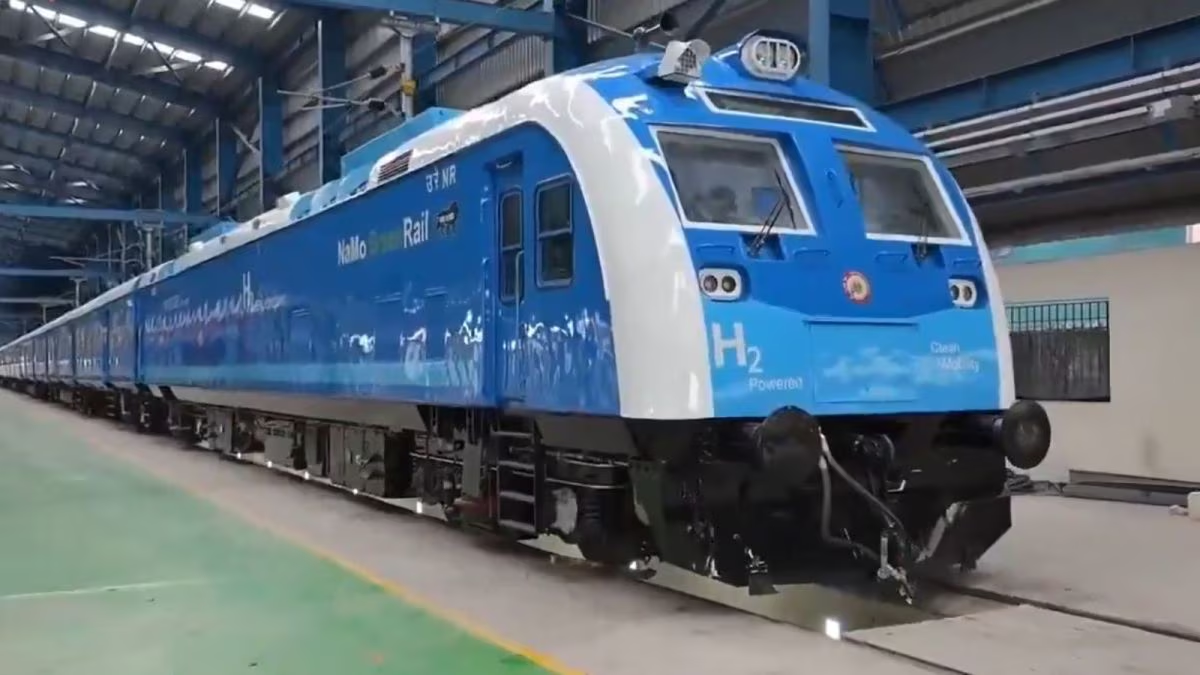
Hydrogen Train Trials India are set to place the country on the global map of green rail innovation as Indian Railways prepares to begin trial operations of its first hydrogen-powered train. This major step reflects India’s growing commitment to clean energy, sustainable transport, and reduced dependence on fossil fuels. The trials are scheduled to start on January 26, 2026, on the Jind–Sonipat route in Haryana, opening a new chapter in the story of Indian railways.
Thank you for reading this post, don't forget to subscribe!A Big Step Towards Green Mobility
Indian Railways has been working steadily to lower carbon emissions and reduce the use of diesel traction. The hydrogen train project is a key part of this effort. Hydrogen-powered trains do not emit smoke or harmful gases. Instead, they release only water vapour and steam, making them one of the cleanest forms of rail transport available today.
The Jind–Sonipat route, covering around 90 kilometres, has been chosen as the pilot corridor. This route currently relies on diesel services, making it ideal for testing hydrogen-based technology. During the trial phase, the train is expected to operate at speeds between 110 and 140 kilometres per hour. This means the journey could take close to one hour, compared to nearly two hours with existing diesel trains.
The inaugural trial run is expected to be flagged off by Prime Minister Narendra Modi, highlighting the national importance of the project.
How the Hydrogen Train Technology Works
At the heart of Hydrogen Train Trials India is advanced fuel-cell technology. The train uses electrochemical fuel cells to generate electricity. Hydrogen is produced from water and stored onboard the train. When hydrogen reacts with oxygen inside the fuel cell, electricity is generated. This electricity powers the train’s movement as well as onboard systems.
For every kilometre travelled, about 900 grams of hydrogen is used, which is derived from roughly nine kilograms of water. The train has the capacity to store nearly 3,000 kilograms of hydrogen and around 7,680 kilograms of oxygen. This allows it to cover long distances without frequent refuelling.
One of the key advantages of this system is its efficiency. Officials estimate that one kilogram of hydrogen provides energy similar to about 4.5 litres of diesel. At the same time, maintenance requirements are lower because electric systems have fewer moving parts compared to diesel engines.
International Collaboration and Indian Expertise
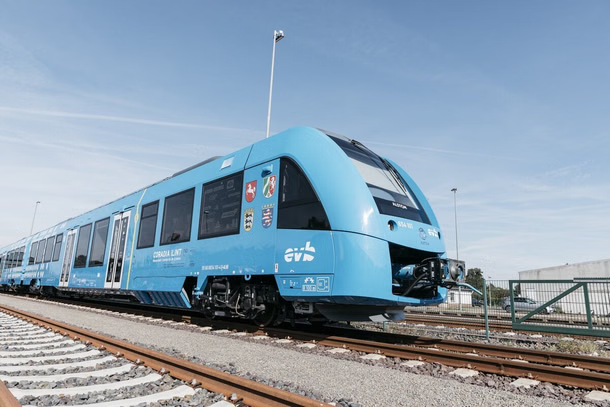
The hydrogen train project is a result of strong collaboration between Indian Railways, the Research Designs and Standards Organisation, and Spanish firm Green H. While international technical support has played an important role, much of the design and execution has been handled by Indian teams.
The coaches have been manufactured at the Integral Coach Factory in Chennai, showcasing India’s growing capacity to produce advanced rolling stock domestically. The involvement of Indian engineers and manufacturing units ensures that knowledge and skills developed through this project will benefit future rail innovations as well.
Infrastructure Supporting the Trials
To support Hydrogen Train Trials India, a dedicated hydrogen production plant has been set up at Jind. This facility has been developed with Spanish technical support and operates with a 1.5-megawatt power supply. The plant ensures a steady and safe supply of hydrogen fuel for the trial runs.
Since hydrogen trains do not require overhead electric lines, they are especially useful for routes where electrification is difficult or costly. This makes them a practical option for many regional and semi-rural rail lines across the country.
Train Design and Passenger Facilities
The hydrogen train has been designed with both performance and passenger comfort in mind. It features dual driver power cars, each equipped with 1,200-horsepower engines, positioned at both ends of the train. This configuration improves balance, control, and safety.
Fuel cells generate a 3,750-ampere direct current, which powers air-conditioning, lighting, fans, and digital passenger information systems. Automatic doors, modern safety features, and improved interiors are also part of the design.
The train is expected to serve six stations along the Jind–Sonipat route. With a carrying capacity of around 2,500 passengers, it is suitable for high-demand regional travel.
Fares, Capacity, and Economic Aspects
Affordability remains a key focus. Officials have indicated that fares during the trial phase may range between 5 and 25 units, keeping travel accessible for daily commuters. The total cost of building the hydrogen train is estimated at around 89 crore units.
While the initial investment is high, long-term savings are expected through reduced fuel costs and lower maintenance expenses. Over time, hydrogen trains could prove more economical than diesel-powered services, especially as hydrogen production becomes more widespread and efficient.
Environmental Benefits and Future Potential
One of the strongest arguments in favour of Hydrogen Train Trials India is the environmental impact. Rail transport already has a lower carbon footprint compared to road transport. Introducing hydrogen-powered trains further strengthens this advantage by eliminating direct emissions altogether.
Hydrogen trains also produce less noise compared to diesel engines, improving the travel experience for passengers and reducing noise pollution for communities along railway lines.
If the trials on the Jind–Sonipat route are successful, Indian Railways may consider deploying hydrogen trains on other non-electrified routes across the country. This could significantly reduce diesel consumption and help India move closer to its climate and sustainability goals.

Looking Ahead
The launch of hydrogen train trials represents more than just a new train service. It signals a shift in how India approaches mobility, energy use, and environmental responsibility. By combining clean technology, international cooperation, and domestic manufacturing, Hydrogen Train Trials India could become a model for future transport projects.
As the trials begin and data is collected, policymakers and engineers will gain valuable insights into performance, costs, and scalability. These lessons will play a crucial role in shaping the future of rail travel in India, making it cleaner, faster, and more sustainable for generations to come.